

1.-WHERE IS TACAMA WINERY AND WHY IT MATTERS
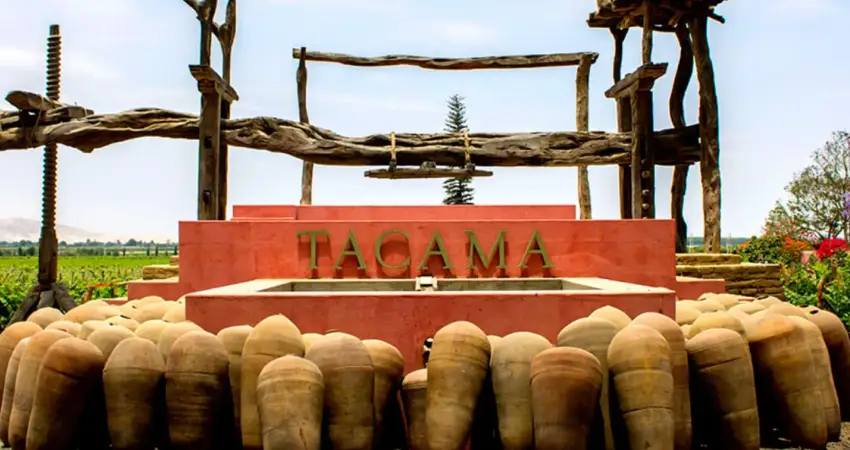
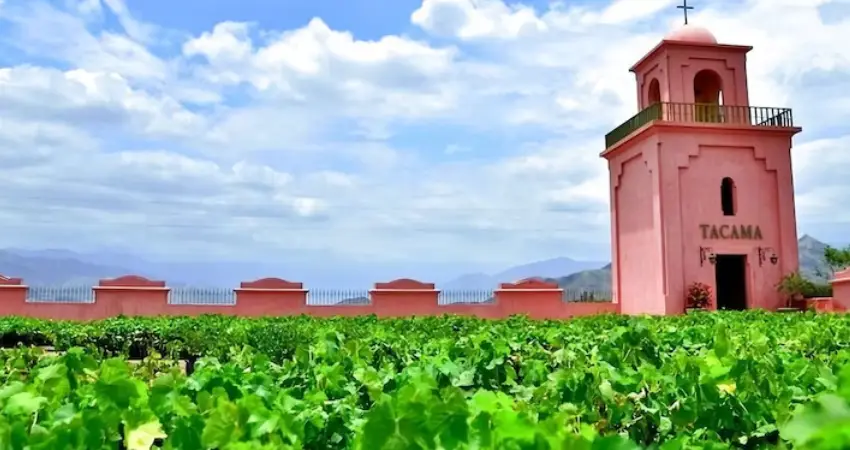
Tacama Winery is located in one of the most extreme and unique geographical environments in the entire country. It is considered one of the leading wine tourism destinations, popular and internationally recognized primarily for its excellent collection of high-quality wines and pisco varieties. This success didn’t happen overnight; in fact, Tacama Winery is renowned for its extensive history, stretching back centuries, where winemaking knowledge and tradition have been passed down and combined with innovative processes, making it a top destination worth visiting during your trip to Peru. It’s also important to mention the presence of the vast vineyards, which produce the highest quality grapes and offer travelers an immersive and sensory experience, allowing them to understand how viticulture has evolved.
1.1.- Where is it located within Ica?
The renowned Tacama Winery in Peru is located in the Ica region, which is characterized by its arid geography, surrounded by sand dunes that reach heights of over 100 meters. However, it also includes a valley area, recognized as one of the most fertile on the coast. Reaching the winery requires a journey of approximately 300 km from Lima. The area is known for its warm temperatures and generally stable climate, where travelers can enjoy sunny days and views of the extensive vineyards, making this region one of the most important in the wine market.
| “The best wine isn’t necessarily the most expensive, but rather the one you share during a trip to Peru.” |
You should also know that thanks to its privileged location, Tacama Winery in Peru has been able to collect and analyze grapes of the highest quality, allowing each one to reach a unique and optimal level of ripeness. This results in wines and piscos with very distinct aromas and flavors. This combination of climatic conditions and the environment has made it a standout winery, a heritage that has remained prominent and recognized for generations, even among wine tourism travelers throughout South America.
1.2.- History of Peru’s Oldest Winery
Since 1540, Tacama Winery Peru has been recognized as the oldest winery still operating in South America. With nearly five centuries of history, it has been part of the historical process this region has undergone, and a key driver of the development and evolution of the entire Peruvian wine industry. While maintaining traditional techniques, it has also incorporated more modern production processes, allowing it to compete in some of the most renowned international markets, such as France.
This historical process is a direct result of the evolution of agricultural traditions over generations, even long before the great civilizations that inhabited this area. For this reason, the Ica region is recognized as one of the most important, as it was a pioneer in wine and spirit production throughout history, from the colonial era to the republican period.
1.3.- The Passage of Time
Traditionally, this place was recognized as a colonial-era hacienda. However, over time and through restoration processes, much of its architectural heritage, directly linked to its history, has been preserved. It is no surprise that the passage of time also brings technological advancements, and Tacama Winery Peru has adapted to the demands of the modern industry. It has integrated cutting-edge technology into its processes, particularly in preparation and quality control, allowing each beverage to be meticulously analyzed while preserving traditional methods and techniques. This has enabled the winery to expand its product line to include wines, sparkling wines, and even popular piscos.
2.- THE TACAMA EXPERIENCE — WHAT TO EXPECT ON A VISIT
Visiting this iconic destination is a sensory experience where each sense is engaged in a particular activity. The tour through the vineyards is not just a spectacle, but an immersion into over five centuries of winemaking history. This comprehensive experience allows you to learn about grape cultivation, the process the raw material undergoes to create distinctive wines and piscos, explore various historical buildings, and participate in planned tastings where the flavors of the Ica Valley will tantalize your taste buds.
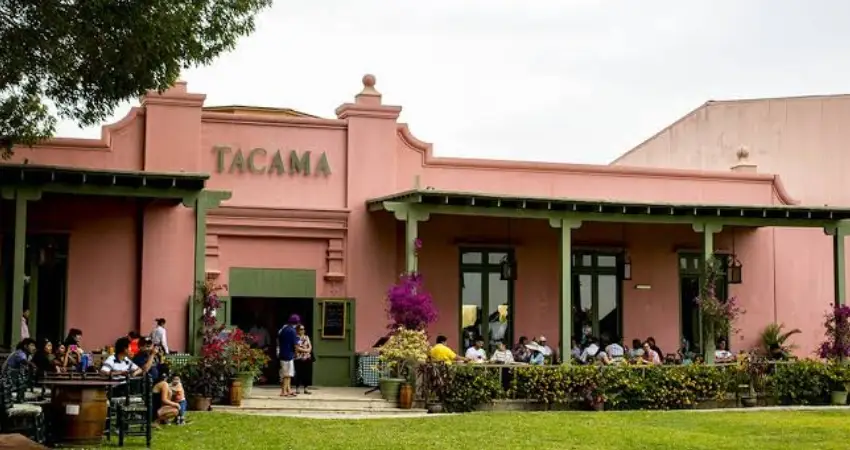
2.1.- Guided Tours of the Vineyard and Winery
This experience is one of the most popular with all visitors, as it consists of a guided tour directly into the extensive vineyards. You’ll see firsthand how each winery operates. During the tour, you’ll meet several experts who will share the history of Tacama Winery, which has existed for almost five centuries. You’ll also appreciate the unique characteristics of this region, with its varied geography, and learn about the cultivation process, recognizing how different grapes affect the flavor. This comprehensive tour provides a complete understanding of the winemaking process, from production to bottling.
2.2.- A tour to discover the grape varieties
This is undoubtedly one of the highlights of the visit. As you walk through the extensive vineyards, you’ll appreciate the wide array of colors that stand out among the grapes. Here, we learn that it’s not just the soil that contributes to the variety of flavors; the warm climate and low humidity are also directly linked, which are highly favorable for the development of each grape variety. Some of the most well-known varieties commonly used in the production of wines and piscos are:
- Cabernet Sauvignon
- Malbec
- Petit Verdot
- Sauvignon Blanc
- Chenin Blanc
- Quebranta
- Italia
- Torontel
- Moscatel
Important: Each of these varieties has different characteristics which, when used, can contribute to variations in the flavor, aroma, and even structure of the final product, making them distinctive among piscos and wines.
2.3.- Underground Cellars and Aging
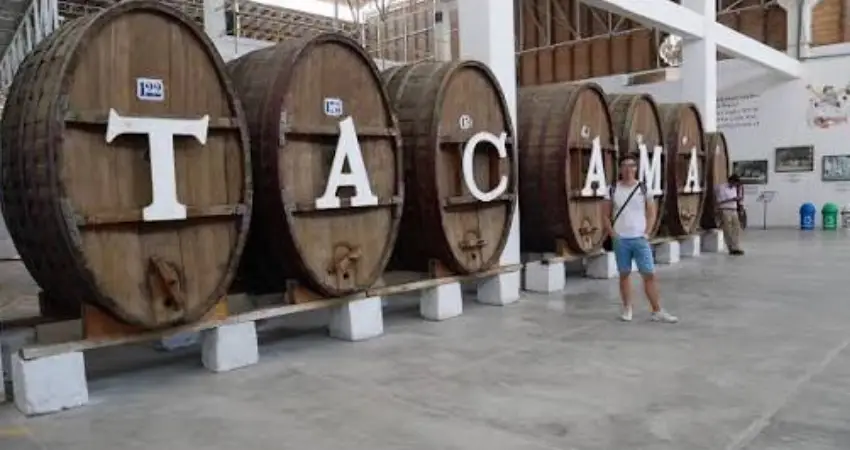
The experience also takes us to the immense cellars where the most important process of production takes place: fermentation. This is followed by prolonged storage and an aging process, with the aim of preparing the wine for aging. Various labels may wait to be opened for months or even years inside enormous barrels made entirely of oak. This allows for greater complexity in terms of flavor smoothness and a more intense aroma. Thanks to the guidance of a personal guide, we learn that every factor is vital for each bottle to deliver a better flavor, so that the combination of time, temperature, and even the type of wood used are crucial for the production of high-quality beverages.
2.4.- Tasting
This is one of the most enjoyable moments, open to all visitors, as there’s always an option to suit every traveler’s palate. It’s also the most anticipated, as expert sommeliers guide you through an experience that helps you understand and properly identify the flavors, textures, aromas, and unique characteristics of each wine or pisco produced at this vineyard. It’s also a great opportunity to savor the taste of various brands and labels, which typically include a brief history of their production process and the essential techniques for participating in this type of tasting, giving you a clearer idea of the quality you can expect from a beverage.
2.5.- Types of Wines
The variety in wine production is truly vast, a direct reflection of the immense diversity within this sector. Generally, one of the largest and most emblematic productions you’ll find here is the great red wine, very popular and recognized for its complex flavor, a blend of ripe fruits with nuances and hints of oak. The white wine is also recognized as one of the most consumed, primarily for its freshness and well-balanced character, complemented by a fruity aroma. Ultimately, it depends on each traveler’s palate and the type of experience chosen to enjoy various brands, including wines with shorter aging periods. Of course, there’s also the opportunity to savor special editions, which perfectly showcase the evolution and quality of Peru’s agricultural heritage.
2.6.- Pisco Tasting
The experience wouldn’t be complete without enjoying an extensive tasting of Peruvian pisco, the emblematic and flagship spirit for which Peruvian beverages are recognized. Here, all visitors can enjoy a more balanced tasting and learn about the differences between the grape varieties used for fishing. You’ll also learn about the distillation process, which involves natural preservation. Pisco culture is quite important in Peru, as it’s part of the gastronomic identity and is often the perfect complement that thousands of travelers worldwide hope to enjoy during a culinary experience. Drinks like the Pisco Sour or the Chicano provide the ideal balance between the flavors of food and beverage.
3.- PLANNING YOUR VISIT TO TACAMA
The most important thing for this experience is always to plan ahead, as this allows you to make the most of your visit in a unique and unforgettable way. For this, it’s important to consider essential aspects such as the transportation you need to get there, which can be easily adapted to your preferences. Good organization also ensures that when you visit each vineyard, you can enjoy the most important aspect: the peace of mind that comes with not being tied to a rigid schedule, allowing you to spend more time at your leisure.
3.1.- How to get to the winery
This winery is located in the Tinguiña area, which is not within the city of Ica itself, but a few kilometers away. However, it has good road access, making it one of the most popular destinations for travelers seeking a different kind of experience. While many travelers opt for a taxi, personalized transportation allows for better time management, giving you the opportunity to fully enjoy the winery and nearby attractions. You can book your transportation directly through your preferred travel agency, as the winery is located approximately 15-20 minutes away, though this may vary depending on traffic.
3.2.- Best time to visit
Although the winery is open year-round thanks to the region’s stable, dry climate, there is a recommended season for a unique experience. February through April is a popular time for cultural celebrations, such as the Vendimia, a festival dedicated to the grape harvest. During this period, visitors can enjoy and participate in the grape picking in a lively and festive atmosphere, which is directly related to the wine and pisco production processes. During the rest of the year, experiences are offered continuously, but the number of visitors may decrease considerably, as most choose the early months for their visit.
4.- COLONIAL ORIGINS
“It is primarily recognized that the Tacama Winery is directly linked to the arrival of European culture to Peruvian soil, which at the time was essentially governed by the Inca culture. It was these first colonizers who employed the use of grape production within this territory in the mid-16th century. The curious thing about this process is that this type of plant found within this sector an ideal and suitable place for expansion in its development, so the agricultural activity generated one of the most important economic points in history.”

5.- FAQs
- Is Tacama winery worth visiting?
Absolutely, yes. It’s one of the most important and popular tourist destinations in the Ica region, so thousands of travelers choose it to complement their experience there. The tour usually includes a walk through the extensive vineyards and participating in the pisco and winemaking process, offering a close-up look at the history that has accompanied it for five centuries.
- How do I get to Tacama winery from Lima?
First, it’s important to get to the Ica region. You can take a tourist bus like Cruz del Sur, which travels along the Pan-American Highway South and takes approximately 4 to 5 hours. From Ica, you continue on a separate bus for about 15 to 20 minutes to finally reach the winery. It’s always best to consider a pre-arranged tour so you don’t have to worry about anything.
- How far is Tacama from Ica city center?
The distance from the city of Ica to the winery is approximately 10 km. Regardless of the mode of transport chosen, the trip takes around 15 to 20 minutes, depending on traffic and the season.
- What is the oldest winery in Peru?
Bodega Tacoma is recognized as the oldest winery in Peru and one of the oldest in the Americas. Its history dates back five centuries, with operations beginning in 1540 with the arrival of the Spanish conquistadors and continuing to this day.
- Do I need to book a tour in advance at Tacama?
While same-day availability is generally available, reservations are recommended, especially on weekends, as these are the most popular times for visitors.
- How much does a tour and tasting cost at Tacama?
Prices vary depending on the experience you choose, including the season, duration, and type of experience. Options start at around S/20 per person, with premium versions starting at S/100 per person.
- Can you visit Tacama and Huacachina in the same day?
Yes, many travelers choose to visit the winery in the morning to take advantage of the pleasant weather and enjoy a tour of the vineyards, leaving their experience within the Huacachina Oasis for the afternoon so they can enjoy the sunset and either stay there or return to Lima.
It’s time to start planning your next personalized experience. Auri Peru can organize a visit tailored to your preferences and allocate ample time within this historic winery to help you enjoy a unique experience. Contact us now; we’d be delighted to help you plan your next trip.
“A trip without wine wasn’t a good trip.”