

 1.- INTRODUCTION TO FESTIVALS IN CUSCO
The ancient capital of the Inca civilization is recognized as one of the world’s best-preserved cities, thanks to a vibrant culture. This unique connection allows for authentic experiences and activities, always directly linked to Andean spirituality and beliefs through diverse celebrations held throughout the year. Throughout the year, it’s common to witness Cusco transform into a vibrant center of celebration, where artistic expressions such as dances, music, and processions fill the city’s residents with emotion, fostering participation and interaction with people from around the world.
It’s also common to observe that popular festivities in Cusco often reflect the syncretism present in the city, clearly demonstrating the influence of European culture on Andean traditions. As a result, its traditions and celebrations retain elements of both cultures. In this way, many of the celebrations that can be enjoyed in Cusco today showcase a ceremonial aspect inherent to Andean beliefs and symbolism that are later associated with more European elements such as religion or traditional art. It is also common to see that many of the festivals in Cusco Peru, are associated in some way with the natural environment, integrating the worship of mountains and the time of year according to the Andean calendar, which is directly linked to the shadows cast by the sun. Thus, a unique coexistence with European aspects can also be observed, from religious processions to the veneration of images such as saints.
3.- Unique Celebrations in Cusco
What truly attracts travelers from around the world is that each of the festivals in Cusco is unique and special, deeply connected to the local culture. This authenticity is also linked to the participation of other local communities. Unlike other tourist-oriented activities, in Cusco, the essence of the tradition with which each festival began has been preserved intact over time. The presence of cultural expressions within each celebration is also noteworthy, from traditional dances and live music to local cuisine and vibrant colors, transforming the experience into a sensory journey. Their popularity is recognized throughout Latin America.
4.- BEST TIME TO EXPERIENCE FESTIVALS IN CUSCO
The first thing to know about Cusco is that it’s not a typical city like the rest. It can even be considered a living calendar of festivities, as every month brings cultural surprises that you can participate in, combining a bit of the traditional Inca heritage with European influences. Of course, you should keep in mind that not every month is the same in terms of celebrations. There are times of the year when the celebration extends throughout the entire city as a cultural festival, and others that are more localized in traditional neighborhoods, such as patron saint festivals. Furthermore, the timing of travel is always affected, as in some cases it’s subject to availability.
4.1.- Festivals During the Dry Season
This season is the most popular among travelers because it’s the time of year when most cultural festivals are concentrated and perfectly combined with stable weather. The skies are clearer, and you can enjoy sunny days with pleasant temperatures. Rainfall is at its lowest point, making it very scarce, allowing you to perfectly combine activities like the Inca Trail or a traditional visit to Machu Picchu with experiencing the culture of Cusco.
- April – May
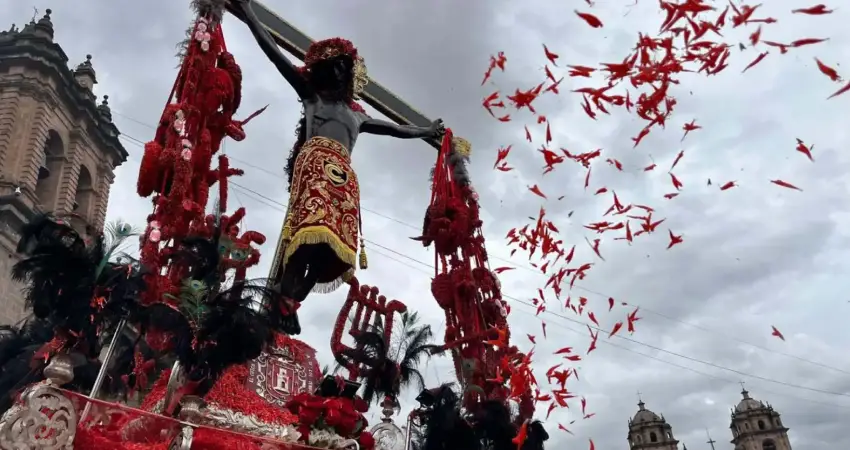
One of the favorite months for thousands of travelers looking to enjoy festivals in Cusco Peru mainly because it’s the season for Holy Week celebrations. These celebrations are centered in the historic center, where the streets are filled with color, not only on balconies but also on the ground, as decorative carpets are laid out for the processions. The most representative event of this week is undoubtedly the procession and blessing of the Lord of the Earthquakes, where the entire city gathers in the main square to give thanks for the blessings of the new year.
- June
Considered the best month to visit Cusco, it boasts one of the popular festivities in Cusco. The Festival of the Sun, or Inti Raymi, is a traditional celebration held every June 24th, where thousands of locals and travelers from around the world come together to enjoy a celebration that has been held since the time of the Inca civilization and remains unchanged to this day. Also noteworthy is the popular religious festival of Corpus Christi, where you have the opportunity to savor the city’s traditional dish, Chiriuchu.
- July
This marks the beginning of a season where celebration and joy completely fill the city. It’s the time of popular celebration for the Virgen del Carmen, who is venerated in various towns within the Cusco region, such as Paucartambo and Pisac. This is a very special time because you have the opportunity to enjoy a living tradition that has remained intact even with the passage of time.
- August
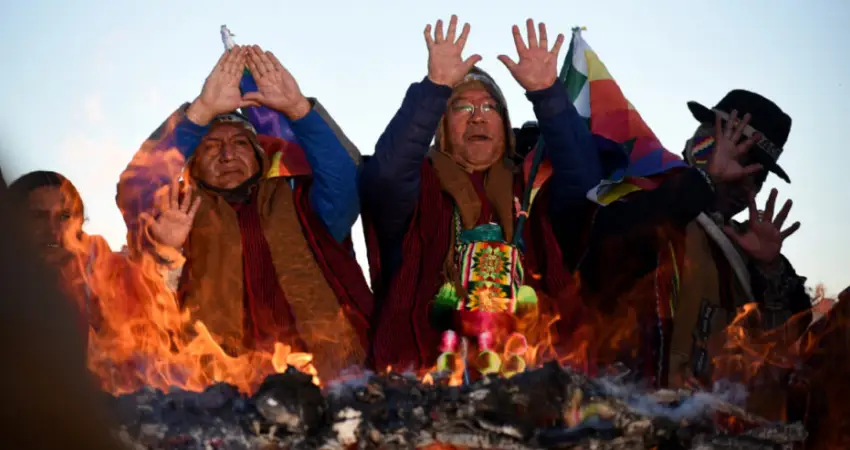
This is one of the most important months for Andean culture, as it is considered the Andean New Year, where Mother Earth, or Pachamama, is celebrated. It’s the ideal time to learn more about the mystical experience in Cusco, as many communities hold spiritual ceremonies with the purpose of offering thanks and asking for blessings for the beginning of the new year.
4.2.- Festivals During the Rainy Season
Although many travelers recognize this season as one of the most challenging, it presents a great opportunity to experience festivities in a different way. It boasts a collection of unique and special celebrations where the cultural value is undoubtedly immeasurable. It’s also the perfect time to explore the city and its iconic destinations with fewer tourists in the surrounding areas.
- November
This is a traditional time, deeply connected to Andean beliefs. November 1st and 2nd are special dates for celebrating the Day of the Dead and the Day of the Living, respectively. These celebrations represent life and death within Andean beliefs, similar to those practiced during the Inca era. This celebration takes place primarily in cemeteries, where families from Cusco visit their deceased relatives. They typically bring offerings, flowers, and food to share a moment of remembrance.
- December
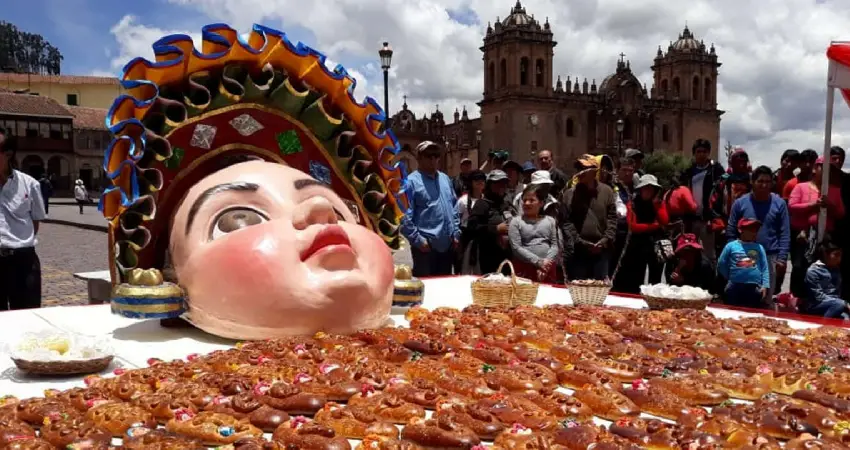
There are multiple celebrations during this month, generally focusing on a more cultural aspect where you can share with locals and visitors from all over the world. One of the most recognized and popular spaces is undoubtedly the traditional Santurantikuy market, which lasts for 3 days starting on December 23rd, where hundreds of local artisans display their artwork so that it can be purchased as souvenirs. There is also the Christmas and New Year period, which is an unforgettable experience for travelers.
- January – February
This season is important within the folkloric context as it is the time for carnival celebrations. In the Andean context, carnivals represent a significant moment in people’s lives; it is the courtship season when couples form and create the foundation of society, the family. Compared to other places, such as the north, carnival celebrations are less opulent but possess greater authenticity and connection to the culture.
5.- Weather During the Festivities
It’s important to consider that the season you choose for your trip directly impacts how you experience the festivals. Choosing the dry season offers the best weather, as it’s much more stable, with sunny days and temperatures ranging from 11°C to 18°C. However, at night the temperature drops considerably, sometimes reaching as low as -2°C, so you should pack accordingly. For major festivals like Inti Raymi, which starts in the morning and ends in the afternoon, layered clothing is essential. Due to the strong sun, you should also consider using sunscreen, sunglasses, and a hat, and stay hydrated.
The second season is based on a time that is mainly characterized by the presence of rain almost most of the time. It is important to know that the rains during this period are intense and frequent; however, the celebration of the festivals is experienced in a unique way since they possess a more particular atmosphere. Therefore, it is recommended that all participants bring a poncho and prepare the appropriate luggage so that there are no complications during the celebration.
6.-INTI RAYMI – THE FESTIVAL OF THE SUN
6.1.- What is Inti Raymi?
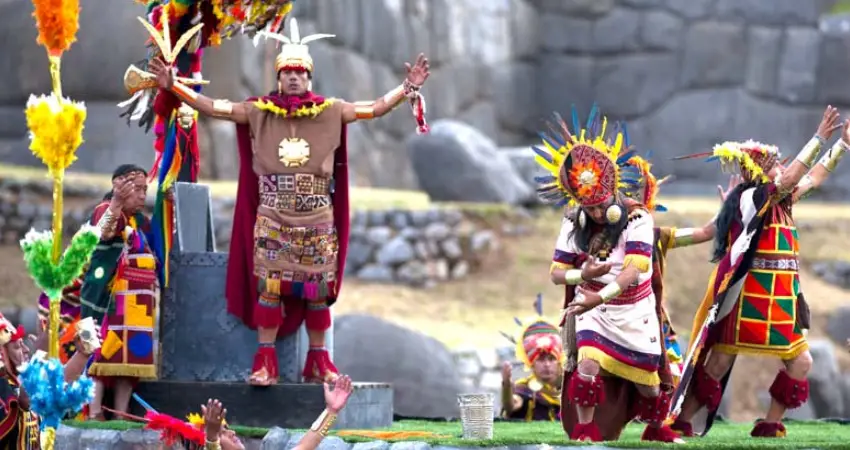
Inti Raymi is an Andean celebration whose name, in the Quechua language, means “Festival of the Sun.” It is one of the most important events in the city, dating back to the Inca civilization, due to the devotion to the sun god, who is also considered the source of life and energy. In Andean belief, the sun is considered the principal deity, and the date of its celebration coincides with the winter solstice in the Southern Hemisphere, which is also considered the new year in the agricultural world. Currently, this festival is considered the most important in the city, bringing together travelers from around the world and locals to preserve culture and tradition.
6.2.- History of Inti Raymi
This celebration is a festival that originated within the Inca culture as part of their calendar and religious celebrations. This ceremony, intended to venerate the sun god, was established by the Inca Pachacuteq in pursuit of prosperity and good harvests throughout the year. Originally, tradition dictated that the celebration could extend over several days, as there were different levels of participation, from royalty to commoners.
Worship was expressed through dances, offerings of gratitude, and religious ceremonies, usually led by an Andean priest. With the arrival of the Spanish, this celebration was partially destroyed and canceled in an attempt to impose the superiority of European culture. Over time, the Andean belief remained strong and still alive among the local people, and in 1944 it was officially restored in the city through an artistic reenactment seeking to reinstate Andean pride. This reenactment has been perfected over time and is still presented today, being the most important spectacle in the city and recognized worldwide.
6.3.- Events and Ceremonies
- Ceremony at Qoricancha
This is the starting point of the celebration, primarily due to its historical significance as a center of sun worship. Here, the main greeting takes place, constantly accompanied by music played on quenas (Andean flutes) and drums. Although many people are unaware of this, this moment recreates the special connection between the Inca people and the spiritual world where the supreme deity of their culture resides. It is a highly emblematic and symbolic moment that marks the beginning of the tour and, for travelers, the starting point of this cultural expression.
- Celebration in the Main Square
After the initial greeting, the Inca himself, along with his entire royal entourage, begins the procession through the city streets, ascending the traditional Sol avenue until reaching the main square, also known as Plaza de Armas. During this procession, hundreds of people can be seen acting alongside the Inca, reenacting scenes similar to the army that accompanied their ruler. Various symbolic ceremonies are performed, directly related to the vast power that existed within the Tahuantinsuyo (Inca Empire).
This moment is magical and visually captivating, as each of the city’s main streets is transformed into a vibrant center of color and music, and all the spectators continue along the route. Upon arriving at the square, an intermediate ceremony takes place where the Andean priest and the Inca engage in a dialogue, interpreting a special request for the sun, while various dances are performed around the square.
- Final Presentation
At the end, the ascent to the upper part of the city begins, within the main esplanade of the Saqsayhuaman fortress, which is emblematic as it is the main place where the central activity of Inti Raymi takes place. Here, a large number of actors gather who recreate, through dances, the grand celebration that was once considered the most important of the Inca culture, all accompanied by music and celebration, as well as various people who perform a representation of the symbolic ceremonies that once existed, such as the offering of the sacrifice of a black llama in dedication to the sun and Mother Earth.
6.4.-What to expect during Inti Raymi
This celebration is generally characterized by the participation of hundreds of people who express their devotion through various traditional dances, creating an incredible visual experience for all visitors. You can appreciate the wide variety of costumes, each one crafted with inspiration from different social classes, such as nobility, warriors, Andean priests, and even participants from various regions that once comprised the Inca Empire (Tahuantinsuyo). Each dance is considered a reflection and expression of Andean pride, resulting in a dynamic and entertaining spectacle.
Furthermore, the constant and complete accompaniment of music is essential to the celebration. For this, the region’s traditional musical instruments are always used, primarily pututos, zampoñas, quenas, and drums, creating an acoustic sound and lending a mystical atmosphere to all the ceremonies. This musical tradition extends beyond Inti Raymi itself, encompassing other celebrations throughout the month, including a general greeting from numerous institutions that hold parades and cultural activities within the historic center.
| “Wander often, wonder always.” |
6.5.- Ticket Information
Each year, the price of tickets to attend this cultural experience and celebration increases progressively, as its popularity has made it one of the most impressive and important celebrations in the world. This entrance ticket is issued directly by EMUFEC, the entity responsible for overseeing its development and planning. The seats included with this ticket are located within the esplanade of Saqsayhuaman, with three options to choose from: Green, Red, and Orange. Each option offers a different perspective of the festival; however, all three are perfect alternatives for enjoying these celebrations in comfort. Of course, even though the seats are numbered, it’s always recommended to arrive early to secure your spot and fully experience the festivities. Before making your reservation, it’s always advisable to consult with your travel advisor to help you choose the option that best suits your preferences.
7.- CORPUS CHRISTI IN CUSCO
7.1.- Meaning of Corpus Christi
This is one of the most important religious festivals not only in the city of Cusco but also within the Catholic faith. Its purpose is essentially to pay direct homage to the Eucharist, which represents the presence of Jesus. For the entire city, this celebration has a much deeper aspect and dimension within devotion, as it is not only a collective celebration but also an independent one in which many communities and parishes from each neighborhood gather, and where thousands of believers accompany each of their patron saints in procession. This is a moment full of spirituality and encounter where faith is reaffirmed, making it a very significant religious expression that transcends the religious sphere.
7.2.- A Combination of Andean and European Traditions
Undoubtedly, one of the most striking aspects of this city is the concept of syncretism, which refers directly to the blending of two cultures. Historically, this process began with the arrival of Spanish explorers in 1532, marking the start of the colonial era. During this time, a process of cultural imposition gradually took shape, with Catholic celebrations expanding and becoming incorporated into Andean customs. This led to a convergence of beliefs, cultural expressions, and symbolism. Furthermore, this celebration was an imposition on a similar, ancient practice in which Andean people would carry modified versions of their ancestors and even former rulers in procession. This practice was later replaced by the procession of saints and virgins.
Currently, this celebration is primarily based on the procession of various saints and virgins from different parts of the city, who are also the spiritual leaders of the churches throughout the city. Each image is carried in a procession accompanied by music and dance, as well as hundreds of people in boots who enthusiastically receive and participate in this manifestation of faith. This procession is one of the most spectacular, as it is not only about moving the images from one place to another but also about the religious significance of how they gather inside the Cusco Cathedral for their customary meeting where they share their experiences from the past year. What is most striking is that there is a predetermined order in which they must arrive at the cathedral sequentially to pay homage to the Mother of the City, also known as the Virgin of Bethlehem, and to her son, the city’s protector, the Lord of Earthquakes. This sequence is as follows:
- San Antonio
- San Jerónimo
- San Cristóbal
- San Sebastián
- Santa Bárbara
- Santa Ana
- Santiago Apostol
- San Blas
- San Pedro
- San José
- Virgen de la Natividad
- Virgen de los Remedios
- Virgen Purificada
- Virgen de Belén
- La Linda
7.3.- Traditional Food
It is also important to highlight that during this celebration, not everything is centered on the religious aspect but also on the symbolic, since it is the moment when You can enjoy the city’s traditional dish, also known as Chiriuchu, which has its origins in centuries of history, dating back to the Inca era. Its name suggests a cold and spicy dish, as it contains various ingredients brought from different regions as an offering. The villages around Cusco would gather and exchange goods, essentially bartering, to create this unique dish, which to this day is considered one of the most delicious in the world. Its traditional preparation is based primarily on guinea pig, followed by corn tortillas, dried meat (charqui), rocoto peppers, and seaweed. Over time, with the arrival of the Spanish, other ingredients were added, such as chicken, chorizo (blood sausage), and cheese.
8.-SANTURANTIKUY CHRISTMAS MARKET
8.1.- What is Santurantikuy?
One of the most incredible traditional markets you can find, exclusively in the city of Cusco, its name comes from a Quechua word meaning “sale of saints.” This traditional space, located around Christmas time and generally beginning on December 23rd each year in the city’s main square, is quite unique. It’s a place where hundreds of people gather, sharing a passion for art and tradition. These artisans and artists sell their creations to locals and travelers from around the world, who can find amazing souvenirs in this open-air market.
It is also considered one of the oldest and most historically significant artisanal strawberry traditions in South America. However, it transcends mere market appeal; it can be understood as a cultural expression that has preserved religious and artistic traditions passed down through generations, allowing them to be showcased and refined over time. In this way, local communities can also achieve sustainable economic development and share their traditions with the world.
8.2.- History of Santurantikuy
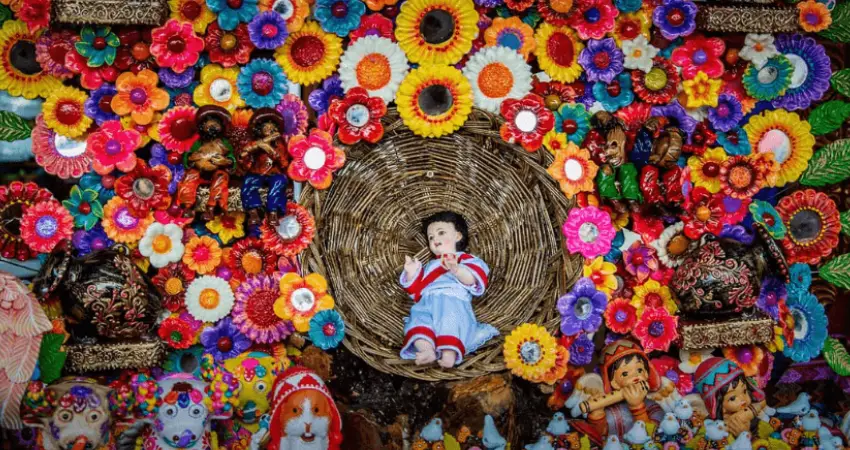
Although little known, its origins date back to the colonial era, when various artisans would gather primarily to offer and sell Catholic religious images intended for home decoration. This was almost always associated with the construction of popular nativity scenes, which resemble altarpieces featuring Maria, Jose, and the infant Jesus. This prelude to Christmas gradually evolved into a tradition, growing progressively until it became one of the most emblematic celebrations on Cusco’s cultural calendar. Undoubtedly, from the first glance, you can see the blend of European beliefs and Andean traditions, making it a representative part of the cultural heritage.
8.3.- Traditional Crafts
You should also know that among the attractions of this traditional market is the wide variety of crafts in different forms and styles. These are easy to find, as the market is divided into specific sections, allowing you to discover diverse items such as wood carvings, plaster figures, ceramic decorations, textiles, jewelry, altarpieces, and paintings. Generally, the most sought-after piece, purchased by thousands of people, is the traditional Niño Manuelito, recognized as the Andean version of the Christ Child and an important part of the homes of local Andean families.
9.- VIRGEN DEL CARMEN FESTIVAL IN PAUCARTAMBO
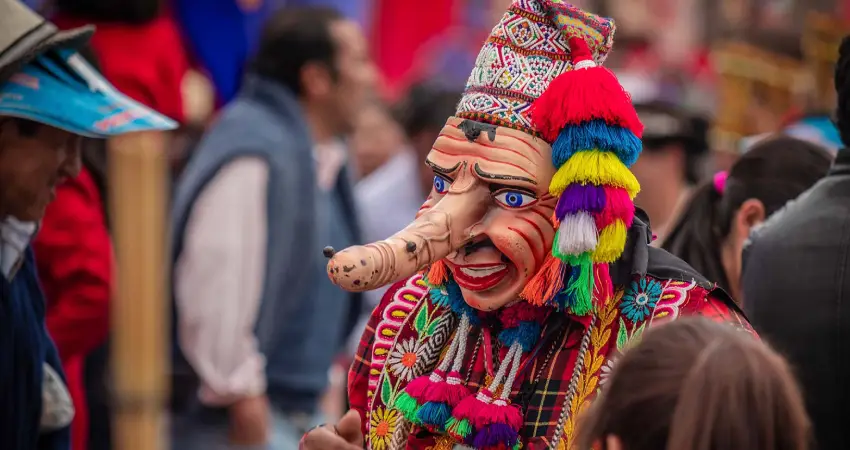
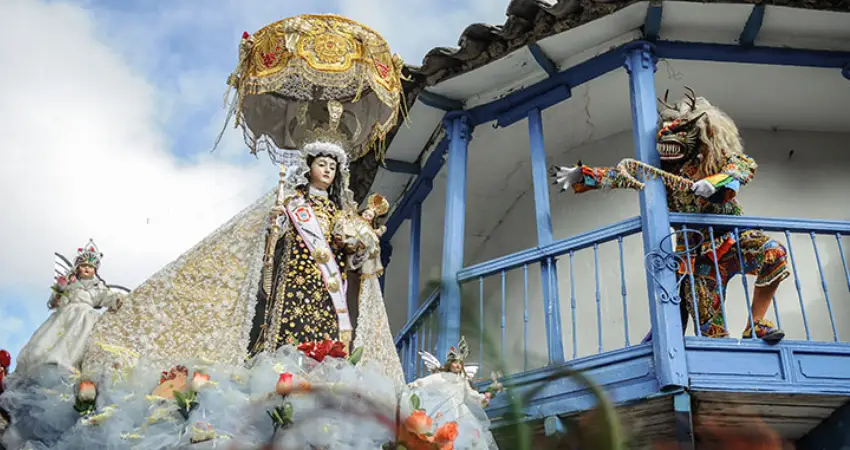
Among the celebrations held in the city of Cusco, the Virgen del Carmen festival in Paucartambo is a religious celebration belonging to the Catholic faith and a source of cultural pride for the Andean region. This celebration takes place from July 15th to 19th in the traditional town of Paucartambo, located over 100 km away. Thousands of people gather in this town to enjoy traditional music, typical dances, and a tradition that seeks to honor Mamá Carmen, considered the town’s spiritual protector. This celebration is important because it combines faith, belief, and Andean tradition, manifesting in processions, masses, and parades that showcase dances in the streets, while fireworks light up the sky in a spectacular display of color.
9.1.- History of Virgen del Carmen
Devotion to this Virgen del Carmen began during the colonial era with the arrival of missionaries alongside the Spanish conquistadors. In the town of Paucartambo, the Marian image is known as Virgen del Carmen and was embraced as the central figure of their local identity, a role that became fully established over time. Traditionally known as Mamacha Carmen, she is also seen as the official protector of the local people and represents a blend of Andean faith and traditional beliefs with the influence of Catholicism. The current festivities aim to keep the tradition alive across generations by integrating the participation of various local families, dance troupes, and neighboring communities who also share their traditional customs.
9.2.- Main Dances During the Celebration
- Saqras
Considered the most striking characters of the celebration, they are represented as mischievous individuals with demonic silhouettes who constantly seek to challenge and disrupt the order of the Catholic faith. This is all done through masks displaying fantastical decorations influenced by underworld animals, perfectly complementing the brightly colored costumes that also create a more extravagant appearance. They participate in processions, and various Saqras climb onto rooftops and balconies to observe the main procession of the Virgin. Their intention is also to depict the eternal confrontation between good and evil.
- Qhapaq Negro
This dance is traditional in the Peruvian Andes, representing the historical presence of Afro-Peruvians who arrived in this region as part of the slave regiment during the colonial era. They possess a collection of elegant costumes and perform songs that evoke emotion, along with other movements that aim to teach more about the history behind the deep historical devotion to the Virgin of Carmen. Currently, this group is identified as devoted servants of Mamacha Carmen, who are always active participants in the ceremonies of this celebration.
- Chunchos
Mentioned by many as the Virgin’s main protectors, their dance primarily demonstrates how the Amazonian villages from Kosñipata to Paucartambo are connected. They wear striking and colorful costumes adorned with feathered headdresses, masks, and spears also known as chontas. This dance also showcases the connection between the Andean region and the rainforest, highlighting some of the existing diversity. This group is one of the most respected and emblematic within the entire celebration.
10.- THE COLOR OF PURITY
“During the Inti Raymi celebration, a llama was sacrificed. However, it had to be a very particular type, an intense black, since in Andean belief, this color directly represented purity, making it worthy of being offered to the gods. This was because it was uncommon compared to other traditional llamas with lighter colors like white or brown.”
11.- FREQUENTLY ASKED QUESTIONS ABOUT FESTIVALS IN CUSCO
- What is the most famous festival in Cusco?
The city’s main festival is Inti Raymi, or the Festival of the Sun, a celebration primarily focused on the worship of the sun god and representing the agricultural new year. During this festival, Andean priests, along with the royal lineage, paid homage and gave thanks for a new harvest.
- When is Inti Raymi celebrated?
The most important celebration in the city of Cusco takes place on June 24th each year. This celebration is held in various locations, with the intention of delving deeper into the cultural traditions. These locations include Qoricancha, Plaza de Armas, and Saqsayhuaman.
- What should I wear to festivals in Cusco?
It is recommended to wear light, appropriate clothing that can be easily adjusted to changing temperatures. Ideally, you should plan your outfit in layers, adding or removing layers as needed depending on the season of your trip.
- Are Cusco festivals safe for tourists?
Yes, each of these festivals has been planned to be a safe space for all visitors, both foreign and local. Like other Ural organizations, these festivals also aim to provide advice on protecting personal belongings and safety.
- Which month has the most festivals in Cusco?
June is considered the main month for festivities in the city of Cusco. During this season, you can find a variety of celebrations, from religious ones like the popular Corpus Christi to others more focused on culture, such as Inti Raymi.
- Do I need tickets for Inti Raymi?
Yes, EMUFEC, the entity in charge of organizing these celebrations, issues various entrance tickets each year, which can be easily purchased by travelers worldwide through their website. It’s important to understand that there are three types of tickets, distributed among green, red, and orange seating sections.
- Can tourists participate in Cusco festivals?
Every visitor to Cusco during the festival season is always welcome to attend and experience these festivities firsthand. In many cases, they are invited not only to appreciate the dances but also to interact with the dancers and other cultural expressions.
- Are Cusco festivals family-friendly?
Yes, generally, the Cusco festivals are considered suitable for all audiences, and for families, they offer the perfect opportunity to interact directly with a culture that remains vibrant despite the passage of time.
Your trip to Cusco shouldn’t focus solely on the historical aspects; it’s also a great opportunity to engage directly with the culture and traditions. Auri Peru can organize a more comprehensive trip that allows you to experience the festivities firsthand, like stepping back in time. Contact us now, and we’ll organize an unforgettable adventure for you.
“Explore. Dream. Discover.”