

1.- UNDERSTANDING LLAMAS IN THE CUSCO REGION
Where to see llamas in Cusco?
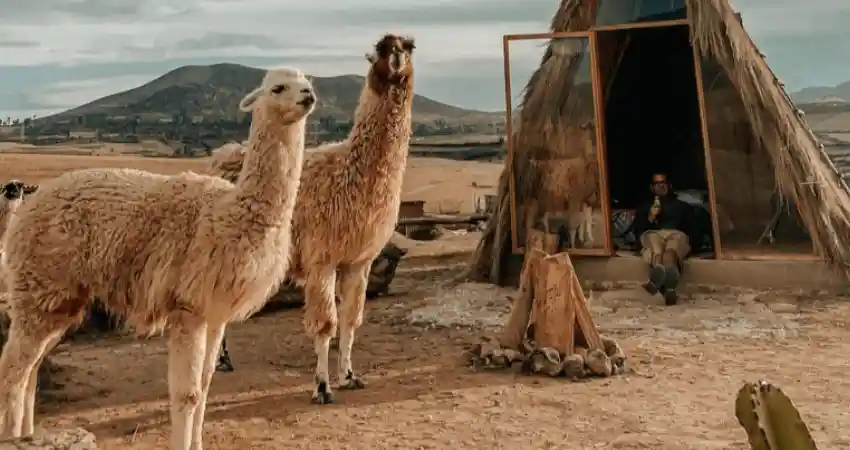
It is common to see travelers arriving in Cusco constantly confusing llamas and alpacas, as they are different but similar species. Llamas are mainly characterized by being much larger and having long, banana-shaped ears, as well as a robust build, which makes them one of the animals mainly used for carrying loads. It is also common to see that llamas are more independent and always alert. Alpacas, on the other hand, are even smaller and have a compact body with finer fur, which is mainly bred for its wool. They are characterized by being more docile and shy at the same time. In Andean belief, both species are valued as sacred animals, as llamas were used as a means of transport on the trade routes they established, while alpacas were used primarily for the benefits of their fur and wool. Thus, both were represented in ceramics, textiles, and religious ceremonies.
2.- Why llamas are important to Cusco Culture?
For the Inca culture and many civilizations that developed centuries ago, llamas played a very important and sacred role, as they were considered animals of spiritual power and are constantly present in ceremonies of gratitude to Pachamama. Thanks to their strength, they were also used mainly as pack animals for many centuries, which allowed the transport of food, textiles, and merchandise across the Andes. Today, llamas still maintain this importance and have become a living symbol of the cultural identity of the people of Cusco. They are constantly the main protagonists of rural activities when visiting Andean communities. By knowing where to see llamas in Cusco, you can enjoy an even more incredible experience, as many communities have incorporated interaction with these animals through experiences, ecological walks, and even craft fairs with the intention of giving you the opportunity to immerse yourself not only in the culture but also in the biological diversity that exists by sharing a space with these incredible animals. At the same time, this generates sustainable economic income, which helps preserve cultural traditions.
3.- Best time to see llamas
The best way to see llamas in Cusco is to do so in the surroundings of Cusco and inside the Sacred Valley. Fortunately, it is possible to do so throughout the year, however, weather conditions directly affect their activity, so you should consider that the best time of year to see llamas is during the dry season, which occurs between May and October, as the weather is much more stable, with clear skies and allowing the access roads to the various locations to be in better condition. The other months of the year, from November to January, are known as the breeding months, and during this time access to the herds is restricted, as the males of the species can become more protective and aggressive.
4.- Climate considerations
When learning about where to see llamas in Cusco, it is important to understand that altitude is one of the most important aspects when trying to understand the habitat and behavior of llamas. They adapt almost perfectly to places that are above 3000 meters above sea level and seek cool, dry environments. At higher altitudes, such as the Ausangate route or other communities located in the high Andean areas, llamas have a more natural habitat, but due to the cold, they become less active during the early hours of the day. This tells you a lot about their behavior, as the best time to see them in motion is usually at midday or in the afternoon when the sun is much stronger. In other areas that are lower in altitude and warmer, it is quite rare to find llamas outside of protected areas, as both heat and humidity can affect their well-being. So when you ask yourself, Where to see llamas in Cusco?, the immediate answer will always be in the highest places, so it is important that you are properly prepared and acclimated to the altitude.
| “Life is meant for good friends and great adventures.” |
5.- MACHU PICCHU – THE MOST FAMOUS LLAMA VIEWING SPOT
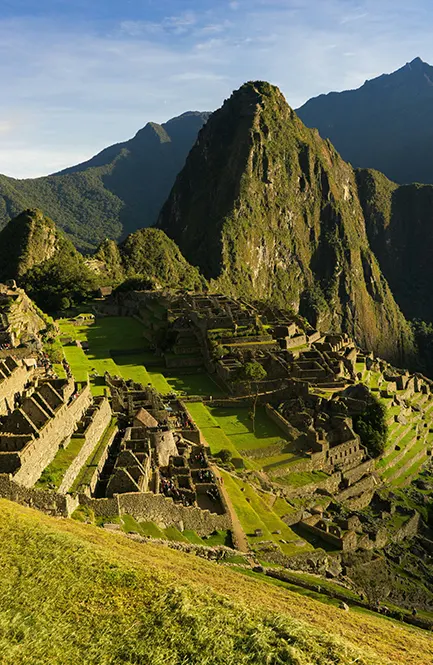
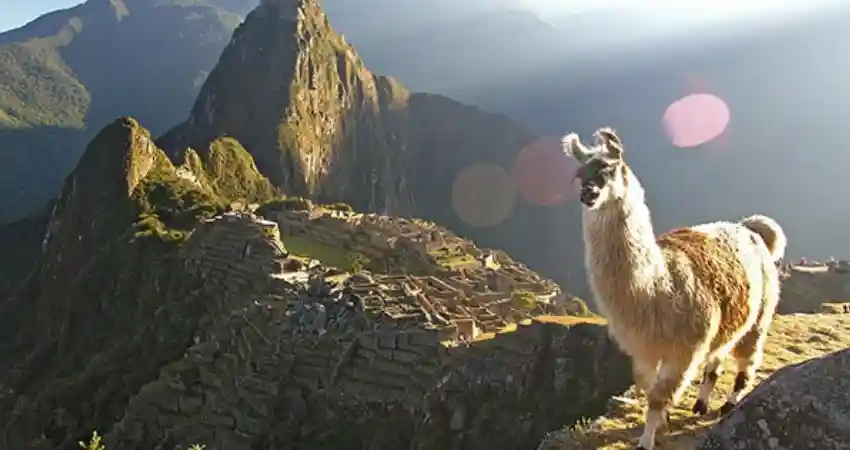
There is no doubt that one of the places where to see llamas in Cusco that never disappoints is the Inca city of Machu Picchu. This place is not only an archaeological wonder, but also a unique space where you can see llamas in a one-of-a-kind historical setting. These Andean animals live in a semi-free state within the complex and move about at their own pace, roaming the agricultural terraces, wide green esplanades, and cobbled passages that are part of the citadel. The llamas found inside are usually easier to see in the agricultural sector, where there are platforms near the guardian’s house, and also in the highest part of the archaeological complex, where you can enjoy a special view of the citadel with the silhouette of some llamas in the background. It is common to see them feeding or resting, and it is always important to remember that you should not feed them and should keep a reasonable distance, as they are part of the ecosystem that is overflowing and protected by this archaeological center. You will have multiple opportunities to photograph them, but you should always take into consideration restrictions and direct contact, as this can alter their behavior.
5.1.- How to get to Machu Picchu
Now that you know that visiting Machu Picchu is also the best way to see llamas in Cusco, you should also know how to get to Inca city. To do this, the traditional route starts in the city of Cusco, where you board a bus that takes you to Ollantaytambo, located in the heart of the Sacred Valley. From there, you continue by train to the edge of the jungle until you reach the town of Aguas Calientes, which is also considered a town at the base of the mountain. Upon arrival, you board a tourist bus that takes you to the top of the mountain, where, after a control process where you present your entrance tickets, you can begin the guided tour of Inca city. There is a daily limit on the number of visitors, and there are currently three circuits available, offering different routes that allow you to visit the upper part, the lower part, and the entire city. You can purchase your ticket on the Ministry of Culture website or through an authorized travel agency such as Auri Peru. It is always recommended to visit with a tour guide, as this will allow you to fully understand the symbolism of the citadel and each element within it. Once you arrive at the citadel, you will be greeted by a group of hosts who are free to move about. You can take your time to look for the llamas that live there and take as many photos as you like.
Remember that the llamas tend to be more active as the day goes on, so we recommend choosing times from 10:00 am onwards. During this time, the weather is much cooler and the temperature is ideal for enjoying a relaxed atmosphere. Another time when there is a lot of activity is after 15:00 pm, considered the last time slot. For many, this is an underrated time of day, as there is less risk of clouds and fewer visitors, so you can enjoy an intimate visit to the Inca citadel in the company of llamas in the surrounding area. To capture the best moments, it is always advisable to look for low angles where the citadel and the mountains are in the background, allowing you to create an unforgettable composition. These shots are considerably improved when there is soft light in the early hours of the day or at sunset. Remember that they are easily shy, so it is best to keep your distance and avoid loud noises. By respecting the natural space of the llamas, you can approach them more easily. Another important aspect is the altitude, the intensity, and a good camera that has a dynamic range, polarized filter, and UV filter.
6.- SACRED VALLEY LLAMA AND ALPACA FARMS
6.1.- Awana Kancha – The Premier Alpaca Farm
One of the places where to see llamas in Cusco is Awana Kancha stands out, a space dedicated to the protection and care of Andean camelids, including llamas, alpacas, vicuñas, and guanacos. It is a farm located 30 minutes from the city of Cusco in the direction of the town of Pisac and offers complete experiences of interaction and knowledge for travelers who want to learn about Andean camelids as well as the extensive tradition of textile art that exists. It can be visited by private transport or organized tours offering exclusive and enriching visits for adults and children. Here you can learn about the clear differences in the physical characteristics and behavior of the species, as well as how their presence was very important within Andean communities. What many people don’t know is that the farm also offers educational programs and live demonstrations that explain the processes of spinning, dyeing, and hand weaving in order to promote the cultural techniques that have been passed down for generations.
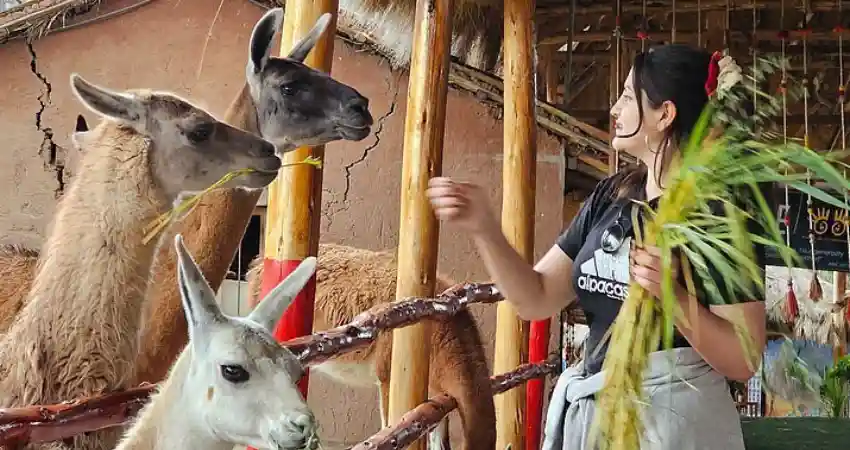
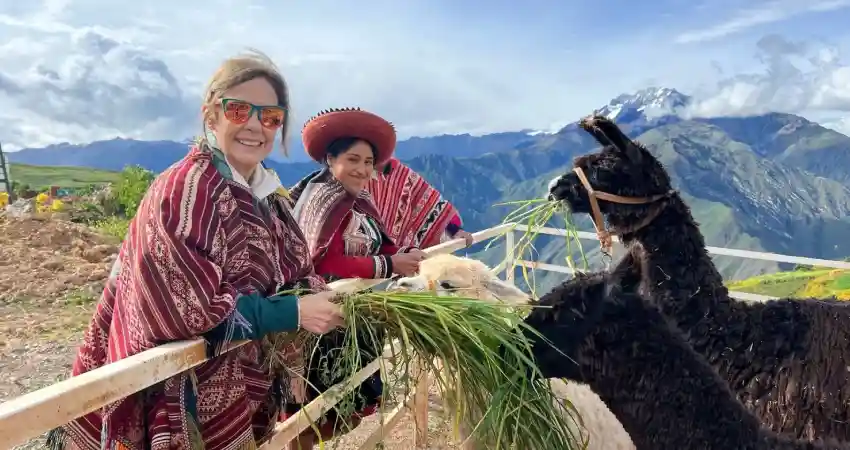
Being one of the most important places where to see llamas in Cusco, it offers a variety of activities for all travelers, from feeding them to interacting with them in a safe and supervised environment. The animals here are already accustomed to human presence, making it easier to get close to them for photographs or observation. There are also workshops and textile demonstrations where women dedicated to weaving show how their wool is dyed with natural dyes such as cochineal or molle and gradually transformed into fine textiles. This activity also seeks to promote the appreciation of craftsmanship and provides a direct connection to the culture.
6.2.- Experiences with Llamas in Chinchero
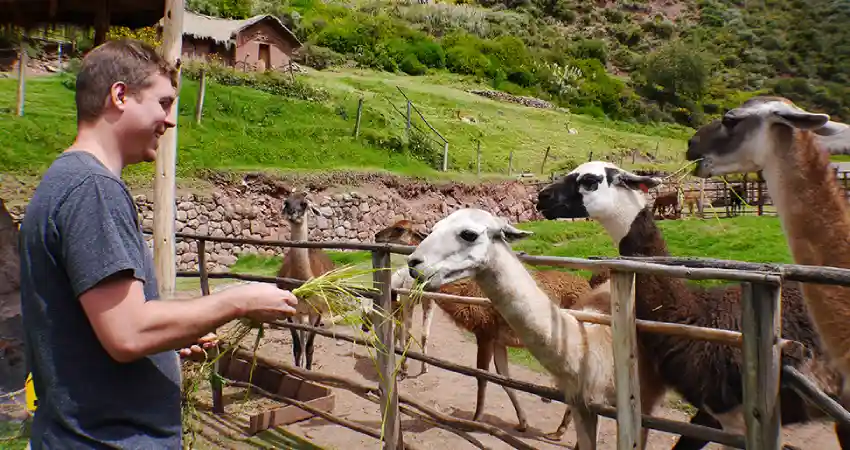
The village of Chinchero is also listed as one of the villages where the tradition of the Sacred Valley remains almost intact and, fortunately, it is currently one of the places where to see llamas in Cusco. Here you can enjoy more special experiences with llamas in a rural and community setting. Many local organizations offer community walks in the company of llamas, allowing you to relive a transcendental experience along the trade and exchange routes of Andean transportation. Many of these experiences also include everyday and seasonal agricultural activities such as planting potatoes or quinoa and participating in Andean cuisine. There is no doubt that Chinchero is one of the most important places for travelers to immerse themselves in the culture, where it is possible to interact with llamas in a natural way within the rhythm of everyday life.
6.3.- Experience with llamas in Pisac
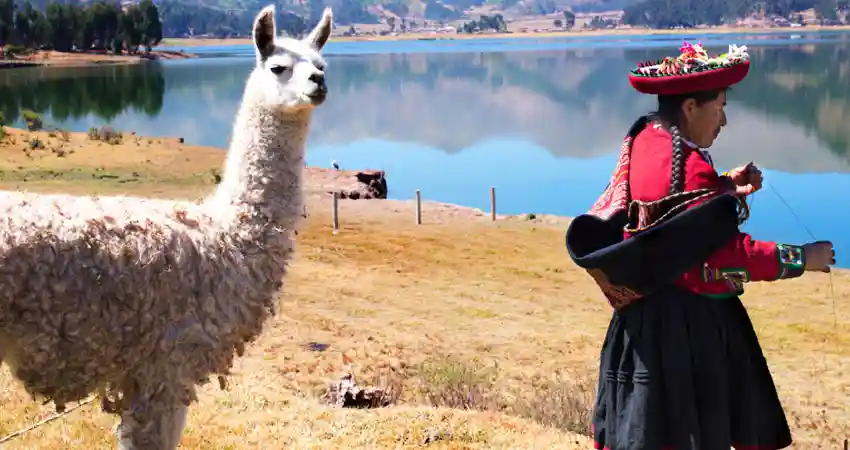
Another traditional village in the Sacred Valley is Pisac. It is popularly known for its artisan market and the archaeological center located at the top of the mountain, but it is also a perfect place to see llamas in Cusco. At the edges of the village, there are several farms and local communities where travelers have the opportunity to interact with these animals in open spaces. In addition, many of the tour options have managed to combine a visit to the local market, where you can find souvenirs and alpaca products, with some walks in the upper part of the mountain, where it is still possible to see a group of llamas roaming freely on the various terraces that make up the archaeological center. When choosing community tourism activities, you can learn about the customs and traditions that families have kept alive for generations and how they treat the camelids.
7.- ALLERGY-FREE SOUVENIRS
“When visiting the traditional markets in the Sacred Valley, you can find souvenirs made from the fiber and wool of Andean camelids such as alpacas and llamas. It is important to know that in addition to being soft, warm, and durable, this fiber does not cause any allergies since it does not contain lanolin, unlike sheep’s wool.”

8.- FAQS ABOUT SEEING LLAMAS IN CUSCO
- Where can I see llamas in Cusco?
There are several places where you can see them during your trip, but the most recommended places are Awana Kancha near Pisac, Chinchero inside textile centers, and the Inca citadel of Machu Picchu.
- What’s the difference between llamas and alpacas?
Llamas are larger in size, have banana-shaped ears, and have a robust body. They are mainly used as pack animals. On the other hand, alpacas are much smaller and have finer fur, which is constantly used for making textiles.
- Are there llamas in Cusco city center?
At times, mainly in the main square and its surroundings, they can often be seen accompanied by women dressed in traditional costumes who constantly offer photos to tourists.
- What time of year is best to see llamas?
The best time of year is during the dry season, which occurs between May and October. This season is ideal due to the stable climate and the fact that the animals are more active.
- Are the llamas wild or domesticated?
The animals found in Cusco and the surrounding area are now domesticated because they have been integrated into rural life for generations, so they are animals that are accustomed to the presence of people.
Now you know the secrets to improving and enjoying your next trip to Cusco to the fullest. Auri Peru can make your trip even more special by organizing a personalized adventure just for you. Contact us now to find out how to take the first step
“Not all who wander are lost, some are just finding themselves.”