

1.- ABOUT TAMBOPATA RESEARCH CENTER: A PIONEER IN CONSERVATION TOURISM
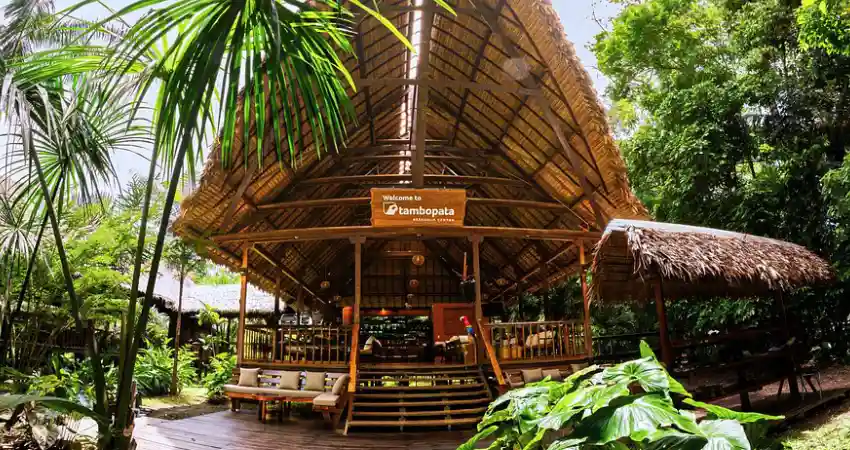
The Tambopata Research Center is known for being one of the most remote lodges in the Amazon, but despite this, it is also considered a pioneer in combining ecotourism activities with other aspects of scientific research. It was founded in 1989 and was driven by Eduardo Nycander, in addition to the support and collaboration of the Wildlife Conservation Society, seeking to study and protect the macaw populations that make their habitat there. The initiative was further developed with the support of the Rainforest Expeditions foundation in 1992, thanks to the contribution of Kurt Holle, an entrepreneur and conservationist who granted a forest concession of approximately 10,000 hectares within the Tambopata National Reserve. From the beginning, the Tambopata Research Center’s purpose was to protect biodiversity within the Amazon while creating sustainable opportunities for tourism and applied science.
For decades, the Tambopata Research Center has managed to transform this natural space into a clear reference point where responsible travelers, scientists, and thousands of nature enthusiasts can find a closeness and connection with the environment. Compared to other accommodations, the Tambopata Research Center is distinguished by its complete integration within a tropical forest. Therefore, the coexistence between the jungle, fauna, and flora permanently promotes the preservation of the ecosystem.
2.- Research Component
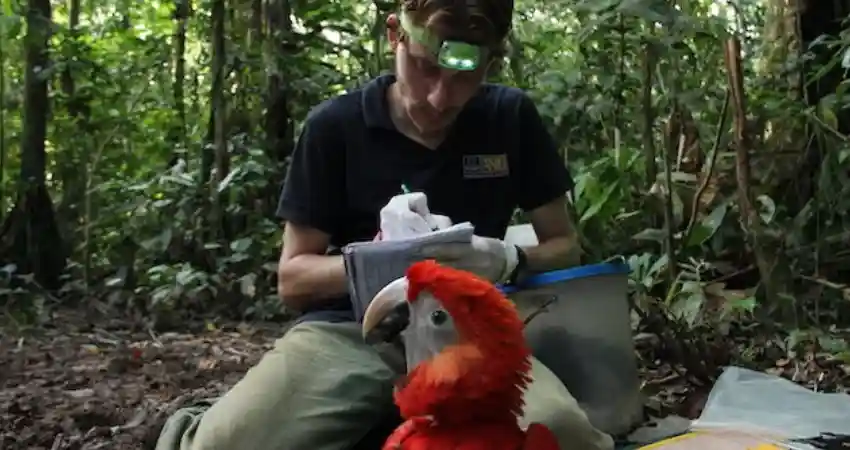
One of the Tambopata Lodge’s main objectives is to promote scientific research. This is directly reflected in the historic Tambopata Macaw Project. This is a long-term study that, over three decades, has compiled very important information on vital aspects of this species, including behavior, reproduction, and ecology, when dealing with large groups of macaws, as well as a group of Amazon parrots. It is also important to know that the Tambopata Lodge frequently hosts various researchers and scientists from around the world who are constantly searching for an ideal base for research. This way, when activities such as evening lectures are organized, all visitors have the opportunity to attend and learn firsthand about the discoveries that experts and scientists have been able to decipher. In addition, it is possible to participate in an educational program designed to deepen travelers’ understanding of the Amazon rainforest and its conservation.
| “Leave nothing but footprints, take nothing but pictures.” |
3.- Collaboration with the Macaw Society
The Tambopata Research Center has a direct collaboration with the Macaw Society and Texas A&M University, both of which have been conducting research on the ecology and preservation of multiple emblematic birds. This contribution is quite important since studies on the Clay Lick complex have demonstrated its importance and relevance. It is a meeting point where hundreds of species of macaws come together to find useful minerals for their digestion, which are key to their health and balanced diet. This alliance has allowed for considerable and important scientific advances, and visitors are constantly encouraged to participate as citizen scientists who can help implement observation data. This directly impacts the traveler’s experience and makes the Tambopata Research Center a clear example of how responsible tourism can be achieved, achieving favorable, low-impact results.
4.- LOCATION AND ACCESSIBILITY
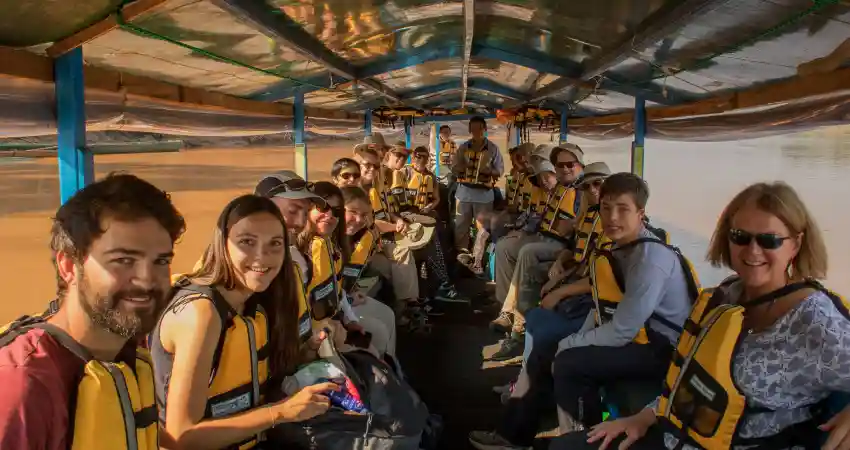
This research center is located in a remote area within the Tambopata National Reserve, located in the heart of the Amazon. Getting there is quite simple, You first need to travel from Lima to Puerto Maldonado. This can be done via a local flight with LATAM, which takes about an hour and 20 minutes. From here, the journey continues by land and then along the Tambopata River, taking a 3- to 4-hour shuttle. The trip is not just a connecting experience; it’s actually considered an experience that combines a journey, allowing you to learn more about the natural wealth that exists, observing wildlife and the vast Amazonian landscapes.
Due to its remote location, it’s in the middle of the jungle and offers a very special investment experience, free from any artificial noise and interruptions from the outside world and modernity. Furthermore, its strategic location is quite close to the world’s largest macaw clay lick. This is a very important site both ecologically and scientifically, as hundreds of birds can be seen constantly gathering together. This site also becomes a special place for wildlife observation, where various biological research projects are conducted in search of its preservation and sustainability.
5.- ABOUT THE ACCOMMODATION
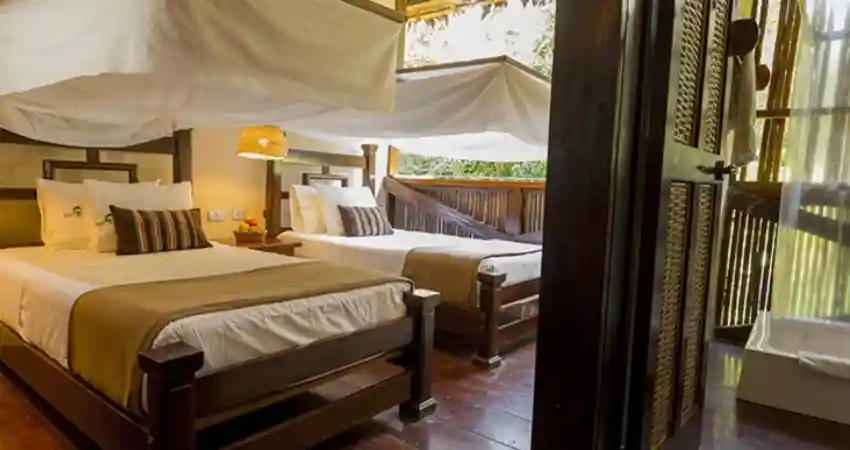
The Dodge Lodge boasts a design based on sustainability yet functional design. It features 18 rooms built with natural elements and organic architectural techniques that achieve a harmonious integration with the dense jungle. Each room has openings on the sides with direct views of the forest, allowing you to enjoy a direct connection with nature, creating unparalleled views and the ability to constantly hear exotic birds and howler monkeys even while lying in bed or in a hammock.
This lodge was primarily designed for researchers who are constantly seeking to conduct research or study the environment, but it is also suitable for travelers seeking ecotourism adventures, as the lodge has successfully combined comfort with environmental responsibility and awareness. Inside some rooms, you can see mosquito nets, private bathrooms with hot water, natural lighting thanks to solar energy, and common areas where the natural environment is explored. Without a doubt, this combination of science and rustic comfort creates an environment of special respect for the biodiversity that exists, and this research center becomes an example that can be republished to promote sustainable tourism.
6.- Room Types and Features
Each of its rooms was designed primarily to provide a comfortable and unique experience within the Amazon rainforest, while maintaining a sense of sustainability and functionality. Each room is private, yet simple, prioritizing comfort for all travelers and guests who choose to enjoy a night inside. Its construction is based on natural elements used responsibly. Inside, you can find single or double beds, depending on the traveler’s needs at the time of booking. It has bedside tables and basic shelves, as well as extensive mosquito nets that cover the ends of the beds, providing protection and peace of mind so guests can rest properly.
Being a research station, many of the rooms have shared bathrooms but maintaining the high standards of cleanliness required for their use, in addition to replicating this action in the common areas, this is a way of reflecting the community spirit that exists within this place since the practical approach adds a lot due to the remote location in which it is located, the use of showers is permanent, however, due to environmental circumstances, hot water hours are restricted, and cleaning supplies are biodegradable so as not to affect the environment, which directly reflects the line of sustainable commitment that exists. Finally, you should also know that electricity is only available at certain times of the day and this is due to the solar panel system that has been implemented in search of recycling solar energy, so the energy impact is much lower and the lifestyle is more responsible. In any case, the experience becomes a very special adventure that can be part of at any time of the year since Tambopata Research Center prices vary according to the season, with options starting at $ 630.00 dollars per night for a room.
7.- DISCONNECTED FROM THE WORLD
“Due to its remote location, it’s normal to see limitations when it comes to connectivity. The cell phone signal is very low and inaccessible, but it has fairly limited internet access that allows you to enjoy a complete disconnection from the digital world. Each of the Tambopata Research Center prices offers this opportunity for people looking to disconnect from the world for a moment.”
8.- FREQUENTLY ASKED QUESTIONS (FAQs)
- Where exactly is Tambopata Research Center located?
It is located within the Tambopata National Reserve, within an uninhabited area surrounded only by dense Amazon rainforest, quite close to the Colorado clay lick, the largest in the world.
- How far is the research center from Puerto Maldonado?
It is located approximately 100 km away. You must first take land transportation from the city to the port and then continue by boat across the Tambopata River.
- What is the journey time from Puerto Maldonado to the lodge?
Travel time may vary depending on the season; generally, it lasts around four hours total, considering land and river transportation.
- Can I drive to Tambopata Research Center?
No, the only way to reach this place, located in the middle of the Amazon rainforest, is via the Tambopata River.
- What transportation is included in the package?
Being a remote and isolated place, this trip includes general and complete inclusions so you don’t have to worry about any details, including accommodations, meals, inland activities, and various talks with specialized scientists who are constantly conducting studies in the area.
- Do I need special permits to visit Tambopata National Reserve?
Yes, it’s important to understand that entering the Tambopata National Reserve requires a special permit authorized by SERNANP (National Park Service). For this reason, the best way to experience this adventure is with a specialized, reputable travel agency that holds the required permits.
- Is the lodge accessible year-round?
Yes, it’s open year-round so travelers can visit at any time. However, you should consider that there are seasons when the experience may vary. Hiking is recommended between May and October, as rain is less frequent. During the rest of the year, there’s a greater chance of rain, which can disrupt activities and cause delays.
Now you know how special this place is, and during your next trip in 2025, we can seamlessly add it to your adventure. Auri Peru is one of the few companies that can create a personalized adventure for your next stay in Peru. Stop worrying about the minor details and focus only on enjoying yourself. Contact us now, and we’ll design a personalized adventure for you.
“ravel—where the journey becomes the destination.”