

1.- THE HISTORY OF SAN CRISTOBAL
1.1.- Inca Origins: The Qolqampata Palace and Hanan Qosqo
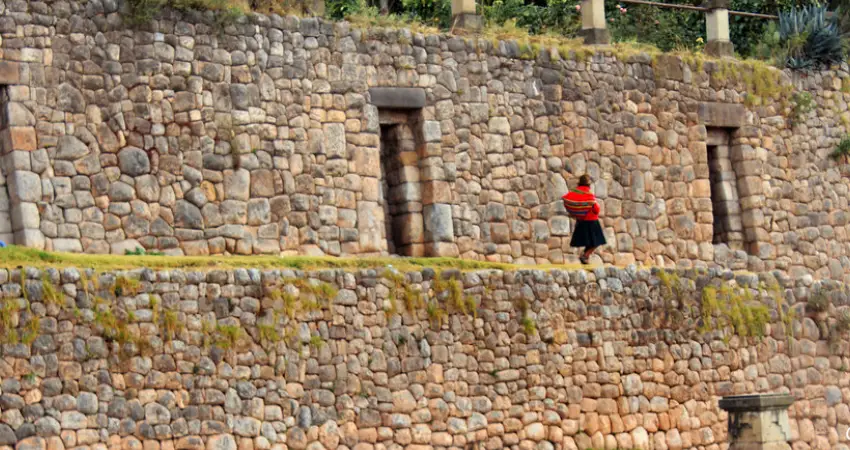
During the Inca period, the city of Cusco was also known as the capital of this culture, so it was necessary to divide it to distinguish between the nobility and the people. Thus, two factions emerged that are known to this day as Urin Qosqo (Lower Cusco) and Hanan Qosqo (Upper Cusco). The latter is where the current San Cristobal Cusco neighborhood is located. This neighborhood has a historical legacy that has been passed down for generations, yet despite the passage of time, it maintains its essence and tradition. Historically, San Cristobal Cusco bears the name Qolqampata and is primarily distinguished for being the residence where, according to some sources, one of the legendary Inca founders of the culture, Manco Capac, is said to have been the seat of power. From this location, political and ceremonial functions were centered at the beginning of the Inca civilization.
However, this location in the San Cristobal Cusco neighborhood is no coincidence. In fact, the entire mountain has a strategic and symbolic location, as it afforded a complete view of the vast valley where the city was located. It also provided complete access to the largest number of enclosures and temples distributed around what we know today as the Temple of the Sun or Qoricancha. In this way, the Inca ruler could constantly monitor all events occurring within the city while simultaneously fulfilling all the functions of his role in the cult of the sun. This is one of the symbolic aspects that marks the connection between the geographical location and the spirituality of the Andes, which over time was reinterpreted and modified with the arrival of the Spanish, consolidating the San Cristobal Cusco Peru neighborhood that we know today.
1.2.- Colonial Process: Spanish Influence
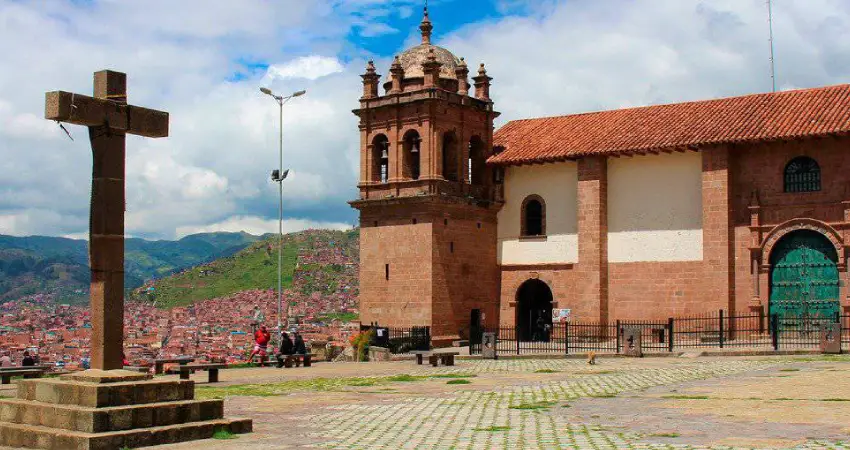
In 1532, one of the processes that would radically change the way of life in the Peruvian Andes began. With the arrival of the Spanish, the Inca culture suffered under the power imposed by European culture, so many places were destroyed and remodeled to fit the European concept brought by the Spanish. This is how the ancient area once known as Qolqampata was transformed into a traditional neighborhood known as San Cristobal Cusco, Cusco. This occurred mainly thanks to the support of an Inca nobleman who, feeling resentment toward the Inca ruler, went directly to the Spanish to achieve the conquest. This nobleman was Paullo Tupac Yupanqui, who, over time and thanks to their help, received the blessing of baptism and the mission of building a religious structure, which we know today as the Church of San Cristóbal, with the only condition that it be built on the remains of the old Inca palace.
However, this act was not solely due to its location; in fact, it was considered a strategy of imposition of power so that the people who still maintained the traditions and remained faithful to the Inca cultural system would see how the symbolic fusion of these two cultures could result in a new society. A new ordinance was established, replacing old social beliefs such as the ayni with the colonial ideal and forced labor. This church was built during the 16th century and is considered one of the first religious buildings in the city of Cusco. Its distinctive feature is its unusual location in the upper area, as well as its large tower, where the bell tower still makes the entire city visible.
1.3.- Present
To this day, the San Cristobal Cusco neighborhood, along with its church, are recognized as part of the group of national historical monuments, which are always sought to be protected and safeguarded due to their extensive historical and cultural value. This highlights not only the value of the building itself, but also its precedent, making it clearly important due to its Inca construction foundation, serving as a safeguard of history and a connection between two different cultures.
If you visit the San Cristobal Cusco neighborhood now you will be able to appreciate how its charm and essence are still maintained through the long cobblestone streets, old colonial buildings where the presence of wooden balconies stands out and a calm atmosphere that allows you to connect with the Cusco that existed at some point in history, it is also cataloged as an ideal place to take a trip back in time and pause the daily life that you have on a daily basis, in this way you can appreciate how the entire San Cristobal Cusco Peru neighborhood is a cultural meeting point that constantly celebrates festivities through processions, dances, local music and other traditions that remain alive to this day.
2.- SAN CRISTOBAL CHURCH: ARCHITECTURE AND SPIRITUALITY
This colonial church built in San Cristobal Cusco Peru, is considered one of the oldest and most important churches in the entire city. It is estimated that its construction took place in the 16th century after the Spanish conquistadors crossed two routes through Peru until they reached the city of Cusco. It is known that this building was made possible by using the remains of an ancient Inca structure that belonged to a palace of Inca origin in the Qolqampata sector. This blend of architecture also symbolizes a union between the cultural legacy of the Andean culture and the faith imposed by European culture.
| “Travel—where the journey becomes the destination.” |
Unlike other churches built entirely of stone, this church has some sections with adobe walls, which is quite characteristic of the first colonial buildings built in the city of Cusco. For this reason, the entire church has a rather sober style. However, at first glance, its extensive doorway, carved directly from stone, stands out. Inside, you can see how beams made of wood still exist. Its division and rectangular shape are also notable, which is quite common when compared to other Andean churches of similar age, since at that time, the architecture was simple.
3.- Events of 1650 and Reconstruction
In 1650, one of the most impactful natural disasters ever recorded in the Cusco region occurred. A large-scale earthquake destroyed much of the city, including this church, which was severely damaged. Of course, over time, its reconstruction was undertaken thanks to the efforts of the local residents and, at the same time, some prominent members of the indigenous nobility. Therefore, efforts were made to reinforce the entire structure, thus restoring its beauty and grandeur. Since then, the San Cristobal Cusco neighborhood, which has been known for standing still in time and continuing to move forward despite generations and centuries, has always sought to maintain its unmistakable silhouette throughout the city, reflecting a daily lifestyle similar to that of generations past.
Another aspect that is distinctive of this entire sector is undoubtedly the bell tower made entirely of stone which can be seen from various parts of the city, it is mainly characterized by having colonial bells that are original from the time in which the church itself was established, in fact many people are unaware that these bells were forged thanks to precious metals which were donations from believers and people dedicated to religion, in general the sound of bells is the beginning of religious festivities which to this day remain as part of the Andean worldview and the Catholic belief in symbolism of faith.
4.- MIRADOR DE SAN CRISTOBAL: THE BEST PANORAMIC VIEWS
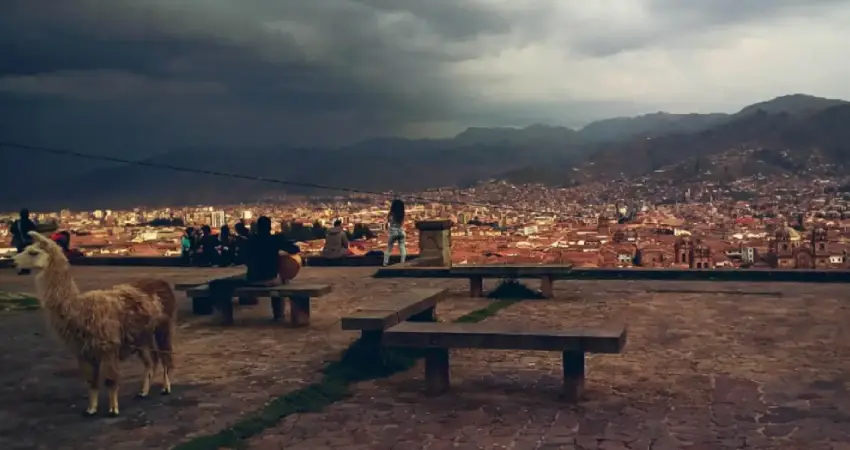
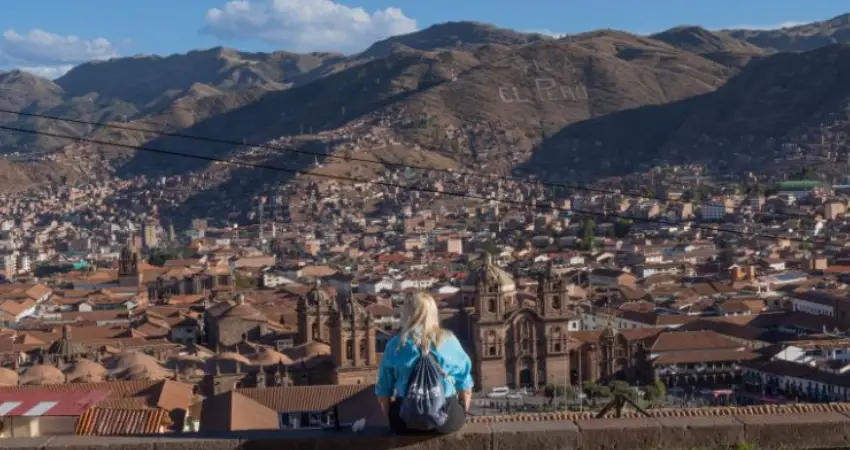
One of the main places included in this sector located in the upper part of the city is undoubtedly this peculiar viewpoint, which offers you a complete 360° panoramic view so you can enjoy the majesty and grandeur that the city of Cusco possesses even with the passage of time. When viewing the city, you can realize how time has stopped and has preserved the essence of what was once the ancient capital of the Inca culture. From this place you can appreciate one of the most complete views of the city, being able to discover how the long streets join from one place to another, connecting colonial buildings, temples, squares, and old mansions that are still in good condition.
It’s also worth mentioning that one of the most distinctive aspects of the city’s visibility is undoubtedly the red-tiled roofs, which serve as a perfect adornment to maintain its essence. Similarly, immense religious buildings such as churches, accompanied by bell towers, are located in various parts of the city. This makes it easy to distinguish the location of emblematic places you can visit during your visit, such as the Plaza de Armas, the Temple of the Sun, the Cusco Cathedral, the Society of Jesus, and many other important sites. Undoubtedly, part of this visual spectacle is also the appreciation of the mountain range that extends around the city, reaching the distant but imposing snow-capped mountains, which are directly visible from this location. You can appreciate the grandeur of the Ausangate snow-capped mountain, considered the protector of the entire Andean region. For travelers looking to discover new scenic beauty, this is the perfect setting to enjoy its grandeur.
5.- Best Times to Visit
Being a place open to travelers, this destination is accessible at any time of day and year-round, offering a unique visual spectacle. However, you should consider that there are ideal times when visibility varies. Sunrise is a favorite time for many travelers who seek to capture this iconic image in a photograph. The golden light gradually touches the rooftops, highlighting their color in an incredible way. You can also see how many shadows prevail in some parts of the valley, creating a unique atmosphere. This also occurs at the same time as sunset, when the entire city receives a warm and melancholic illumination, so the effect of the light permeates the entire area, highlighting the texture of each building and facade. Appreciating this spectacle from this viewpoint is considered an experience that helps you connect with tranquility and recover spiritual energy, the perfect complement to a day full of activities.
The best time of year to consider for your visit and planning activities is undoubtedly during the dry season, which occurs between May and October, characterized mainly by sunny and clear days, creating the opportune moment to enjoy and achieve one of the best shots you can find during your next trip. Ideal for travelers looking to capture their entire experience through photographs or for those just looking to enjoy the landscape without complications or unexpected rain.
6.- HOW TO GET TO SAN CRISTOBAL
Getting to this area is relatively simple; you can walk directly or take a tourist shuttle that takes you to this elevated area. The first option isn’t just about walking in a straight line; it actually allows you to walk along some of the city’s main streets for 10 or 15 minutes, depending largely on your pace. However, you have a very special opportunity to see some emblematic places that are hidden from plain sight. You gradually ascend to the upper part of the city, where you can get an exclusive view of various places while walking the cobblestone streets. The first thing to do is to find your way to the main square and locate Suecia Street, which allows you to gradually ascend to a certain part of the section where you find the slippery street, which is considered the most direct and has a rather peculiar name due to its steep incline. The stones have a polished silhouette, so at certain times of the year, when it rains, they become quite slippery. This is one of the most traditional streets in the city, as it is completely surrounded by colonial and cultural buildings.
The second option is much simpler and faster. Take a tourist shuttle through the nearby streets and around the main square to reach the San Cristóbal sector. It takes no more than five minutes. This option is primarily intended for travelers who are not in good physical condition or who have limited mobility. This option facilitates access and allows you to calmly enjoy the visual spectacle from its viewpoint.
7.- CONNECTION WITH SAINT CHRISTOPHER
“Over time, it became necessary to adopt a religious patron saint that could symbolically protect the entire neighborhood. Thus, Saint Christopher was chosen, representing the protector of travelers and carrying Christ on his shoulders, as the ideal, also due to a connection with the name. Since then, he has participated in the city’s festivities with the help of his faithful followers, who carry the float on their shoulders to allow him to walk through the city streets.”
8.- FREQUENTLY ASKED QUESTIONS (FAQs)
- Where is San Cristobal located in Cusco?
This traditional neighborhood is located in the upper part of the city, more precisely in the upper part of the historic center, where the Hanan Qosqo sector once stood, where a settlement called Qolqampata existed. This location is strategic, serving as a checkpoint and currently serves as an access point for visiting the Saqqsayhuaman archaeological park.
- What is San Cristobal famous for?
It has several features that make it well–known and popular among travelers. First, its colonial church, dating back to the 16th century, is considered one of the first churches built within the city. Also, the presence of an open space provides a natural viewpoint from which a panoramic view of the city can be enjoyed. Finally, the history hidden in this traditional neighborhood manages to uniquely combine the Inca and colonial legacy.
- Is San Cristobal a church, viewpoint, or neighborhood?
It has all three categories. First, it is one of the traditional neighborhoods that has belonged to Cusco since its origins during the Inca culture. It has a unique colonial church and, at the same time, it is a perfect natural viewpoint from which you can appreciate the emblematic Inca city.
- How far is San Cristobal from Plaza de Armas?
Approximately 700 meters away, you can easily walk there for about 10 or 15 minutes, depending largely on your pace, or you can speed up the trip in less than five minutes using a direct tourist shuttle.
- What does “San Cristobal” mean?
It has a religious significance; it represents the bearer of Christ, clearly referencing the historical patron saint associated with travelers. Within Catholic tradition, this saint is recognized for helping the baby Jesus cross a river, which is why it has become a symbol of protection for travelers seeking to discover the mysteries of the world.
The city of Cusco offers you not only stories but also a unique and exclusive cultural legacy that you will enjoy every moment of your stay. Auri Peru designs personalized travel experiences, seeking to immerse travelers in the essence of each destination. Contact us now and discover all the options we have available for you.
“To travel is to live.”