

1.- WHO IS PABLO SEMINARIO?
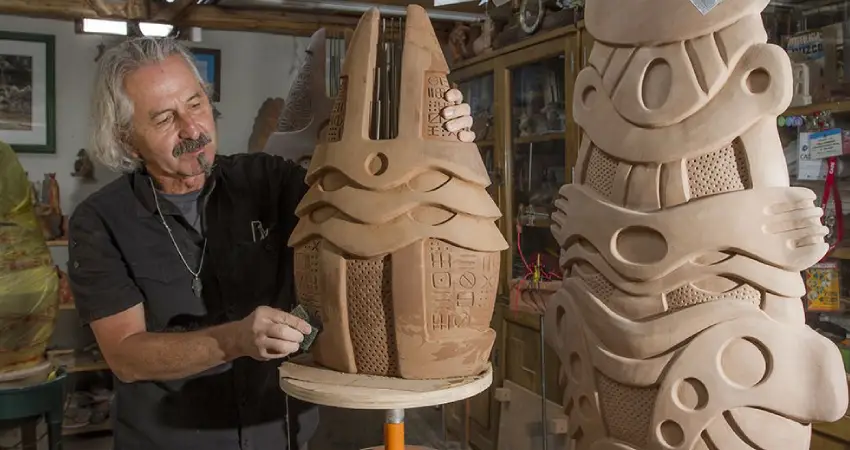
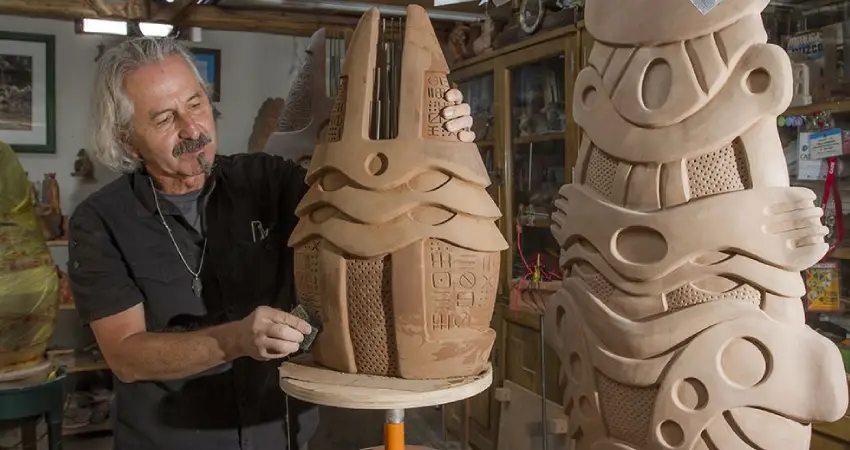
Sacred Valley ceramic classes are considered an important part of the cultural experiences a traveler can enjoy during their trip to the Sacred Valley, and for decades the Pablo Seminario Workshop has been positioned as the best option for travelers visiting the area. But to begin this transformative journey, we need to learn more about this master artisan. Pablo Seminario is considered one of the few Peruvian ceramists who has kept the artisanal tradition and legacy intact, managing to spread its importance worldwide and standing out for having reinterpreted and stylized pre-Columbian art in his own unique way. Even from a young age, he had an affinity for art, always connected to the history of ancient Andean cultures.
Thus, in 1970, he founded the Pablo Seminario Workshop in the Sacred Valley with his wife, Marilú Behar. This space was not only recognized as an innovation in artistic production, but also stands out for its successful combination of archaeological knowledge, artistic interpretation and innovation, and a constant commitment to cultural preservation. All of this has led to the Pablo Seminario Workshop gaining national and international recognition over time, highlighting its significant contribution to the arduous task of promoting contemporary Peruvian art. It is also worth noting that the Sacred Valley ceramic classes are not only a form of artistic expression but also seek to create a special connection with the culture through the revival of ancestral techniques passed down through generations.
2.- Philosophy at the Heart of the Pablo Seminario Workshop
This creation represents more than just a private ceramic workshop Cusco; it is a tribute to the profound admiration felt for ancient pre–Columbian cultures and their cultural contributions over generations. The reinterpretation style is based on symbolism found in the Nazca, Moche, and Chavín cultures. In this way, the artist seeks to create not only a work of art but also a visual language that allows participants of the Pablo Seminario Workshop to experience an immersive journey connecting the past and present, making each traditional element a fundamental part of Peruvian identity and expression. This philosophy seeks to precisely align and combine harmony with history, Mother Earth, and boundless creativity. Each piece crafted is also intended as a tribute to every master artisan who, at some point in history, dedicated part of their life to preserving this ancestral knowledge of the Andes. Thus, his transcendent thinking is based on the ideal of ceramic pieces as vehicles that help transmit knowledge of Peruvian cultural heritage to new generations.
3.- THE WORKSHOP: LOCATION AND SETTING
Considered a prestigious private ceramic workshop Cusco that connects you with the culture in a unique and exclusive way, this workshop also functions as a gallery space. Located within the traditional town of Urubamba, considered the heart of the vast Sacred Valley, the workshop is situated at 4184 Berriozábal Avenue. Its location is not a coincidence; in fact, it is quite strategic, as this town is also considered one of the access points for experiencing the Sacred Valley within a tranquil yet secluded setting surrounded by local markets, tourist attractions, and the natural beauty of the Peruvian Andes. For this reason, the Sacred Valley ceramic classes offered here are exclusive, combining art, nature, and culture.
| “Find beauty in the unexpected.” |
It’s important to understand that this workshop isn’t located within the city of Cusco, but rather in the Sacred Valley. This makes it ideal for travelers seeking to explore various tourist destinations without complications. The traditional town of Urubamba becomes a convenient stopover point where you can enjoy diverse tourist activities. It also boasts a wide variety of accommodation options, providing a place to rest for those wishing to continue their journey and discover new wonders, such as traditional villages or the world wonder of Machu Picchu.
3.1.- Details of the Internal Infrastructure
This prestigious workshop stands out for its infrastructure, which has successfully combined traditional heritage with modern techniques that aid in ceramic production. Upon entering the workshop, you’ll discover how natural elements, directly linked to Andean tradition, have been used, including clay, stone, and tiles. Numerous sculptural pieces are displayed to visually delight participants in this experience. Traditionally, the space where this workshop is located is not described as a colonial-era mansion. However, due to its surroundings, one can appreciate how the house’s architectural history seems to have been frozen in time, resulting in each passageway, courtyard, and workspace showcasing a blend of tradition and contemporary style.
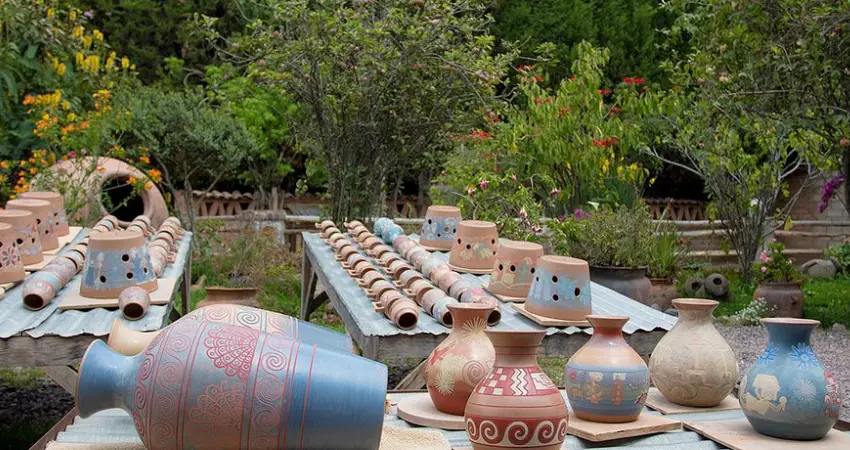
Inside, there are various spaces primarily used as exhibition areas where visitors can admire diverse pieces made from clay, such as bottles, sculptures, ceramic panels, and other items. These spaces connect directly to a creative process room where the research into forms, engobes, and various artistic techniques is displayed in detail. This entire workspace, where master artisans carry out the complete process, can be viewed from an elevated vantage point known as the gallery, allowing visitors to visually observe the process unfolding live. You can also enjoy open, outdoor spaces where the larger pieces are displayed, connecting with the landscape of the Peruvian Andes. Exploring the workshop also involves visiting the various patios and gardens, which offer a pause in the artistic journey and allow you to reconnect with nature.
3.2.- How to get to Pablo Seminario Workshop
It’s important to know that there is a considerable distance between Cusco and Urubamba, so walking isn’t feasible. Therefore, you should consider using ground transportation to reach Urubamba first. The trip takes approximately 1hour and 30 minutes, depending on traffic. You can arrange this transportation directly through your travel agency, which is considered the best option since they can make several strategic stops along the way at viewpoints such as natural overlooks or traditional villages. Alternatively, you can book transportation through an app like InDriver. Upon arriving in Urubamba, it is quite easy to find your way to the workshop, as it is well known and located on one of the main streets.
4.- WHAT TO EXPECT: THE WORKSHOP EXPERIENCE
There are two ways to enjoy a cultural immersion tour inside this popular workshop in the Sacred Valley, each with specific characteristics tailored to suit each traveler’s personal plans.
4.1.- Self-Guided Tour
This is the self-guided option where participants have complete freedom to explore the spacious workshop, visiting each of the exhibition rooms. You’ll be able to appreciate the various finished pieces with their fine details and enjoy the beautiful interior architecture. Throughout the tour, you’ll find informational panels describing each visual display, helping you understand the creative process and allowing you to witness it firsthand.
4.2.- Guided Tour
This is the most popular option chosen by thousands of travelers during their visit to this interactive Andean art workshop. It’s considered the most comprehensive, as it allows visitors to be accompanied by a member of the workshop team, ensuring that each step is interpreted and understood. Visitors also gain a unique perspective on the artisanal process, learning technical, historical, geographical, and other information about each element used, from the traditional preparation of the clay to the firing process. This tour also provides privileged access to each work area, where you can appreciate the homage to each of the ancient pre-Columbian cultures that inspire unique handcrafted pieces through practical demonstrations.
4.3.- Workshop Demonstrations
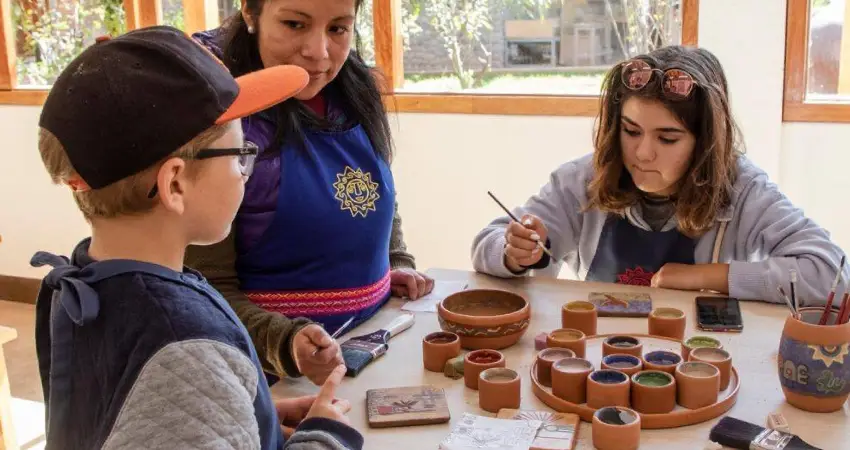
During the tour, you’ll see a group of master artisans preparing the natural clay found within the vast Sacred Valley. They begin by molding the clay, choosing the final shape, from vases and murals to sculptures and utilitarian pieces used in daily life. For this, a set of tools is used alongside ancestral knowledge, employing techniques that aid in the shaping process. All the work is done entirely by hand, thus maintaining the cultural traditions of the many Andean communities that exist to this day. Knowledge of pre-Columbian techniques is also imparted, the main one being slip, which consists of mixing liquid clay and applying it before firing in the kiln. Additionally, there is the technique of pottery-making without a wheel, recognized as the primary artisanal method by many pre-Columbian cultures, such as the Moche, and later inherited by the Inca.
Once the shaping process is complete, the artistic stage begins, employing painting and glazing techniques. Only natural pigments are used, applied solely to the surface. This process often draws inspiration from elements of fauna, Andean deities, or geometric symbols, all directly related to ancient Andean civilizations. Finally, a layer of glaze is applied to protect not only the painted artwork but also the ceramic piece itself. Finally, the last step begins, which involves using artisanal kilns to create a high-temperature firing process that can last a couple of hours. This is crucial for giving the finished ceramics hardness and resistance. During this time, visitors have the opportunity to appreciate the entire process or simply leave it for another day and continue with their activities, as the workshop also offers a service to deliver the ceramics directly to hotels or other locations chosen by travelers.
4.4.- Meeting with Pablo Seminario
Part of the immersive cultural experience is also learning about the origin of this wonderful idea. Therefore, one of the most anticipated moments for visitors is the opportunity to have a cultural encounter with Pablo Seminario himself. He is a friendly person who frequently welcomes people and visitors to the workshop to share his knowledge and promote this artistic style, which has been passed down through generations. Of course, he isn’t always there every day, but it’s more common to enjoy this encounter during the early morning hours. On the other hand, his wife Marilú Behar, along with close family members, manages the workshop, so they are frequently there and can offer you equally amazing company. This is a cultural immersion experience but with the feeling of being at home.
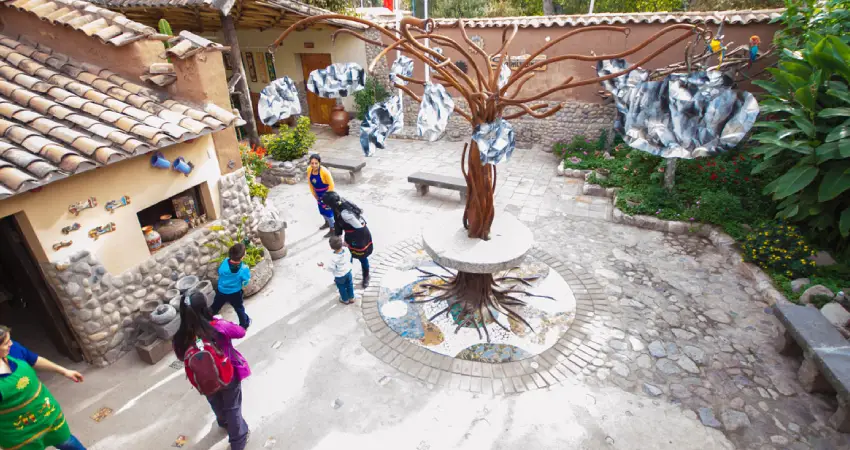
Photography is generally permitted within the exhibition areas and other internal spaces of the workshop, such as the garden or the shop. Of course, it is also important to understand that the work of the artisans must be respected at all times, and any kind of distractions should be avoided. It should also be noted that photography of the design processes or pieces in progress is not permitted at any time, as all designs are the intellectual property of the workshop and their preservation is very important. The best place for many travelers to take photographs is the main courtyard, where some large ceramics are displayed, and also the art galleries.
5.- AWARDS AND RECOGNITION
“Pablo Seminario is one of the few contemporary master artisans and artists who has achieved widespread recognition in Peru thanks to his efforts to promote ancestral knowledge nationally and internationally. He has been awarded the Diego Quispe Tito Medal by the Diego Quispe Tito National University of Art, highlighting his dedicated work in art and culture.”
6.- FAQs (FREQUENTLY ASKED QUESTIONS)
- Where is Pablo Seminario Workshop located in Cusco?
This prestigious workshop is located within the traditional town of Urubamba, the heart of the vast Sacred Valley, approximately an hour and a half from the city of Cusco. Its strategic location makes it quite accessible, as it is very close to the main road that connects to the town of Ollantaytambo, making it a convenient stop for many travelers.
- What are the opening hours of Pablo Seminario Workshop?
Generally, it is open Monday through Saturday from 9:00 am to 5:00 pm, and on weekends from 9:00 am to 1:00 pm. These hours may vary depending on the season or local holidays, so it is important to plan your visit in advance.
- How much does it cost to visit Pablo Seminario Workshop?
The admission is free for all participants. You can freely explore each of the exhibition halls and outdoor areas, such as the garden and the retail space where the shop is located. If you’d like a guided tour, please note that advance booking is required, and there may be a small fee.
- Do I need to make a reservation to visit?
While a reservation isn’t necessary, advance coordination is important to ensure a smooth visit. For larger groups, prior communication is recommended to properly coordinate viewing areas for the live workshops.
- Can I meet Pablo Seminario in person?
While you may be able to meet me in person, it always depends on his availability, as there are times when work is very busy, making it difficult. However, being a very kind person, he and his wife, Marilú Behar, warmly welcome all visitors.
This experience is a unique way to immerse yourself in a cultural tradition that has been passed down through generations and is preserved to this day. Auri Peru is one of the few companies that helps you plan this experience in a personalized way, ensuring that you can have direct contact with this master craftsman. Contact us now and start your next trip.
“Travel far enough, you meet yourself.”