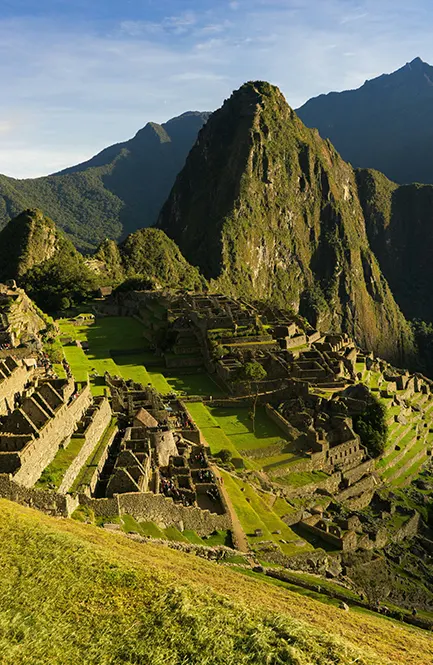


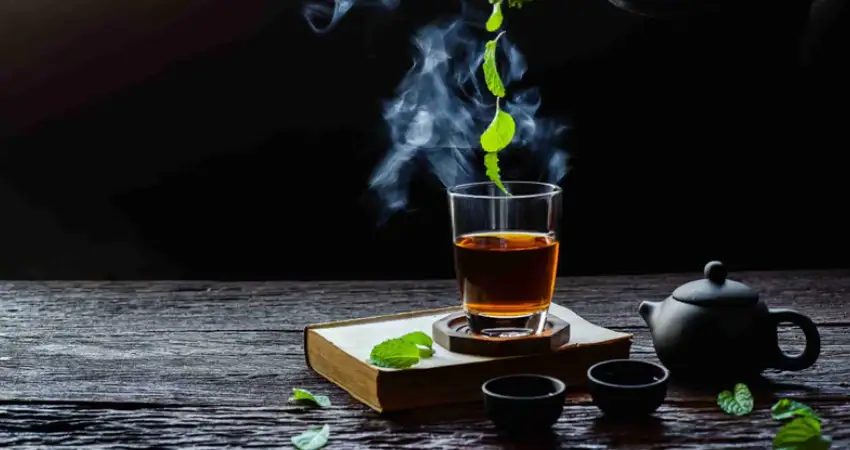
For travelers, trying muña tea can also be a simple way to connect with the Andean traditions that are still alive in Peru. Auri Peru incorporates these authentic cultural details naturally into personalized trips, helping guests experience Peru not only through its main attractions, but also through the local foods, customs, plants and traditions that give each destination its particular character and essence.
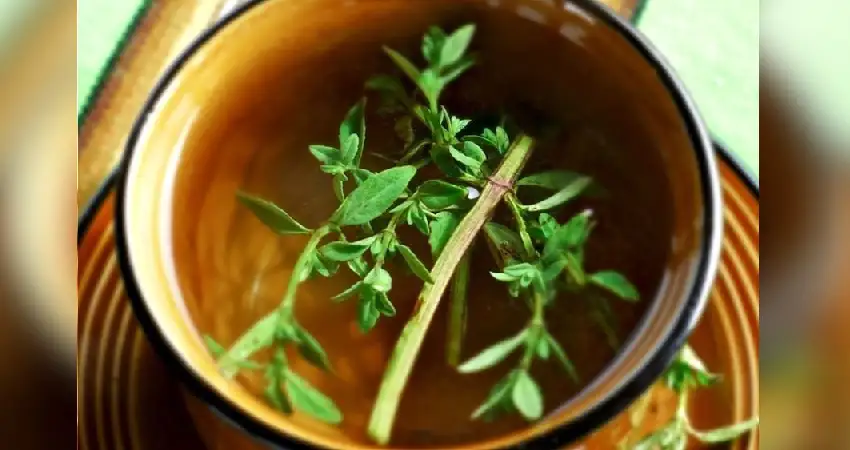
A portion of muña mate with small pieces of branches from the muña plant.
WHAT IS THE MUNA TEA
The base of the Muna Tea from Peru is the muña herb itself, a medicinal herb also called Minthostachys Mollis, it is also known as the Andean mint because of its similar taste, it is a bright green plant that can be found mainly in highlands like the Andes very close to cities like Cusco or Puno. The particularity of this medicinal plant is that it maintains its peculiar color even in dry season where rain is scarce and the cold is stronger.

Cup with muña tea and a piece of the muña plant next to it
THE ORIGINS OF THE MUNA TEA
The Muna Tea Peru has accompanied the people of the Andes for hundreds of years and has become a very important element of alternative or natural medicine. The use of Muna Tea in the Andes was consumed not only for the taste but also for the properties it contains, like the coca leaf, Muna Tea was also used during ceremonies or religious rituals for the belief that it had protective powers over people.
During the time of the Inca culture, Muna Tea was mainly used to treat digestive and respiratory problems, it was considered as an analgesic and since then its use has transcended to the present time. Although technology and medical advances have evolved, the people of the Andes will not leave aside their customs and within that is always present to consider first the Muna Tea and other elements of alternative or natural medicine.

Representation of the Andean belief in the use of medicinal herbs such as muña and coca
TRADITIONAL PREPARATION AND CONSUMPTION OF MUNA TEA
In order to taste Muna Tea from Peru correctly you must follow a very simple process, you will first need to obtain:
- Dried Muña leaves: You can buy them in traditional markets.
- Sweetener: The normal is sugar, but you can replace it with honey.
- Hot water: Preferably freshly boiled.

Small container with various dried muña leaves
Preparation
- Step 1: First you must heat water in a thermos or heater until it is at boiling point.
- Step 2: Place in a cup first the leaves of the muña and then the hot water, cover with a small plate so that the flavor is concentrated in the cup.
- Step 3: Leave to infuse for at least 5 minutes.
- Step 4: Sift the contents into a different cup and add the sweetener of your choice.
- Step 5: It is ready for you to enjoy your Muna Tea from Peru.

Metal container where water is boiled to prepare muña mate
“Don’t follow the trail. Go instead to where there is no trail and leave a footprint.”
MUNA TEA BENEFITS
Muna Tea Perú is more than just a mint flavor, it is important to consider that it has medicinal properties, being a natural source of personal well-being for the body, its health benefits are multiple and useful for everyone. Of all these, the main benefits of Muna Tea that you can enjoy are:

Sample of how the properties of muña can be used to relieve stomach pain.
-
Traditionally Used for Digestive Well-Being
Muña (Mintostachys mollis) has an extensive history of use within traditional Andean medicine for digestive discomfort, including stomach pain, gas, nausea and intestinal cramps. An ethnobotanical study in Huancavelica identified it as one of the most frequently used plants locally for digestive diseases, while experimental animal research has also explored possible gastroprotective effects. These findings support its traditional use, but do not establish that muña tea is a clinically proven treatment for digestive diseases in humans.
-
Colds and Respiratory Complaints
In several Andean communities, muña infusions have traditionally been consumed for coughs, colds and other respiratory conditions. Within recent pharmacological training these ethnomedicinal uses continue to be documented. However, there is not enough clinical evidence to say that drinking muña tea acts as an expectorant, decongestant, or proven treatment for bronchitis and other respiratory diseases.
-
Potential Anti-Inflammatory and Analgesic Activity
Experimental studies by the Catholic University of Lima have reported anti-inflammatory and analgesic activity in preparations made with Minthostachys mollis, including extracts, decoctions, essential oils and topical formulations. It is important to note that much of this research has been conducted in the laboratory or in animal models, so it should not be interpreted as proof that a regular cup of muña tea will relieve muscle, joint, or inflammatory pain in people.
-
Traditionally Associated ith a Calming Effect
Muña has also been described within ethnopharmacology with traditional sedative or calming uses. However, there is currently not enough clinical evidence to recommend a specific amount, such as one or two cups, or to describe muña tea as a treatment for stress or anxiety. For travelers, it is more accurate to consider it a traditional aromatic herbal tea than a medically proven relaxation therapy.
-
Contains Compounds with Antioxidant Activity
Laboratory research has identified antioxidant activity in some extracts and essential oils obtained from Minthostachys mollis, and recent scientific reviews recognize antioxidant activity among the biological properties being investigated for the species. However, this does not mean that drinking muña tea has been clinically proven to slow aging or protect the human body from age-related cellular damage.
FEEL THE FRESHNESS OVER THE ANDES
“Its use is quite practical for many things, it also serves as a natural repellent, for its properties it is used in orchards to protect the crop from pests.”
For travelers seeking both cultural authenticity and wellness experiences, enjoying a cup of Muna Tea while admiring the breathtaking landscapes is a must. It’s a small but meaningful part of many Peru luxury tours that blend comfort, tradition, and connection with nature.
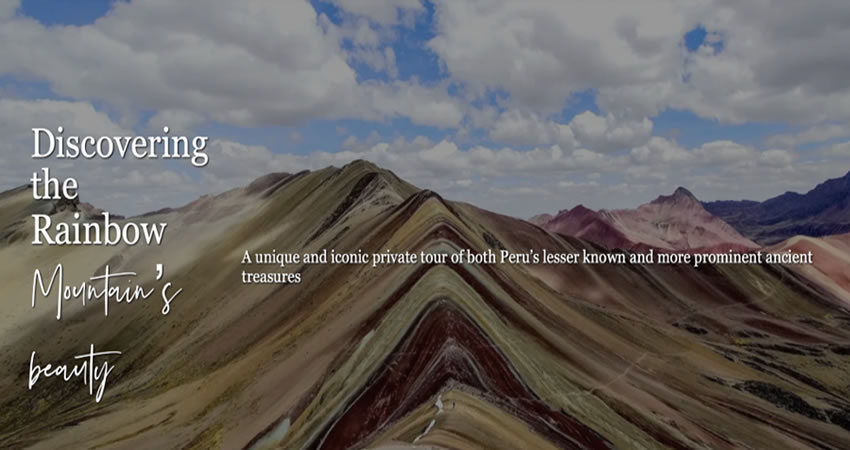
“Visiting high altitude places like Rainbow Mountain represents a new challenge, it is better to be prepared and ready for the adventure.”
Altitude sickness is also known as “Soroche”. This discomfort occurs constantly among travelers who seek to visit unique places but that are at high altitudes such as the Peruvian Andes. In order to adequately treat this discomfort, the use of 2 traditional herbs is used, which thanks to their properties help everyone who consumes them feel an almost instant improvement, but what makes them different? we show you in the following table.

Travelers over the Peruvian Andes mountains feeling tired and headache
| DETAILS | MUNA TEA | COCA |
| Scientific Name | Minthostachys mollis | Erythroxylum coca |
| Origin | Peruvian Andes | Peruvian Andes Central and South American Andes |
| Traditional Uses | Digestive, respiratory, anti-inflammatory | energizing, digestive, analgesic, nervous system stimulant |
| Form of Consumption | Infusion (tea), inhalation of vapors, essential oils | Chewing of leaves, infusion (mate de coca), candy |
| Main properties | Carminative, expectorant, anti-inflammatory, analgesic | Energizers, digestive, analgesic, stimulant |
| Benefits for altitude sickness | Relieves dizziness, nausea and general malaise, improves breathing | Increases energy and oxygenation, reduces headaches and nausea |
| Flavor | Strong and refreshing mint | Earthy and slightly bitter taste |
| Cautions | Moderation in consumption, avoid in cases of pregnancy without consulting a doctor. | May test positive for drugs, avoid in cases of hypertension or heart problems |
| Availability | Widely available in local markets and health food stores | Widely available in local markets and health food stores, restrictions in some countries |
Luxury trip tour Peru vacations often include unique cultural moments like the tasting of herbal teas, allowing visitors to immerse themselves in the ancestral traditions of the Andes while enjoying stunning views and personalized service.
FREQUENTLY ASKED QUESTIONS
-
What is Muna Tea?
Muna Tea is a traditional Peruvian herbal infusion made from the Minthostachys Mollis plant, also known as Andean mint. It is widely used in the Andes for its digestive, respiratory, anti-inflammatory, and relaxing properties.
-
What are the benefits of Muna Tea?
The Peruvian Ministry of Health reports that muña has properties that help relieve indigestion and intestinal colic, promote wound healing due to its anti-inflammatory effects, and more. It also notes that excessive use can cause liver problems.
-
How do you prepare Muna Tea?
To prepare Muna Tea, you need dried Muna leaves, hot water, and a sweetener like sugar or honey. Boil the water, add the Muna leaves, cover the cup, let it steep for 5 minutes, strain, and sweeten to taste.
-
How does Muna Tea help with altitude sickness?
According to the recommendations of the Peruvian government, it is known that muña has very particular characteristics that help with energy recovery, relief from dizziness and in some cases also for headaches, since these are some of the symptoms of altitude sickness, it also helps in the adaptation process.
Have you already discovered all the Muna Tea benefits, do you feel like trying it? This drink is available for you when you arrive at one of the hotels you choose for your next trip. Auri Peru can make this not only a memorable trip but an experience that exceeds your expectations, contact us now and take the first step in designing your next adventure.
“Life is not measured by the number of breaths we take, but by the places and moments that take our breath away.”