

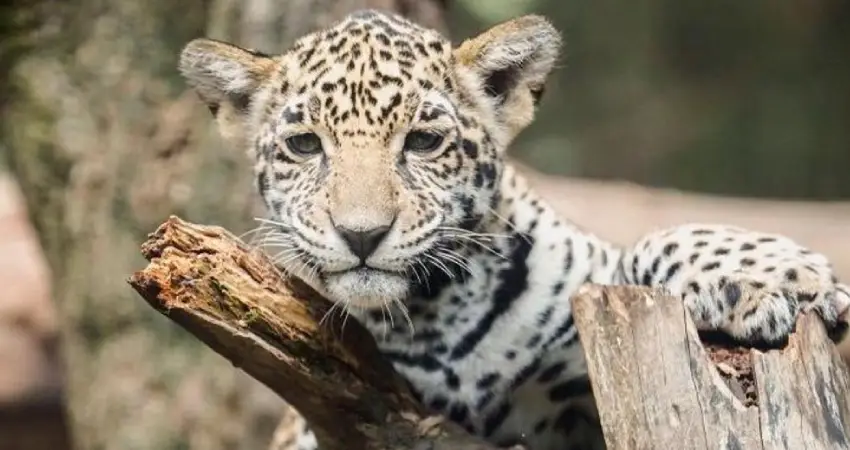
1.- UNDERSTANDING THE JAGUAR: PERU’S APEX PREDATOR
For generations, the jaguar in Peru has been considered the most important feline in the Americas, ranking as the top predator in its ecosystem. The majority of its population is found in the Amazon region, where it is directly linked to strength and natural balance, maintaining a strong cultural connection throughout history and even being venerated by ancient Peruvian civilizations. Learning about the jaguar in Peru allows one to better understand the rich biodiversity that exists alongside conservation efforts and local beliefs.
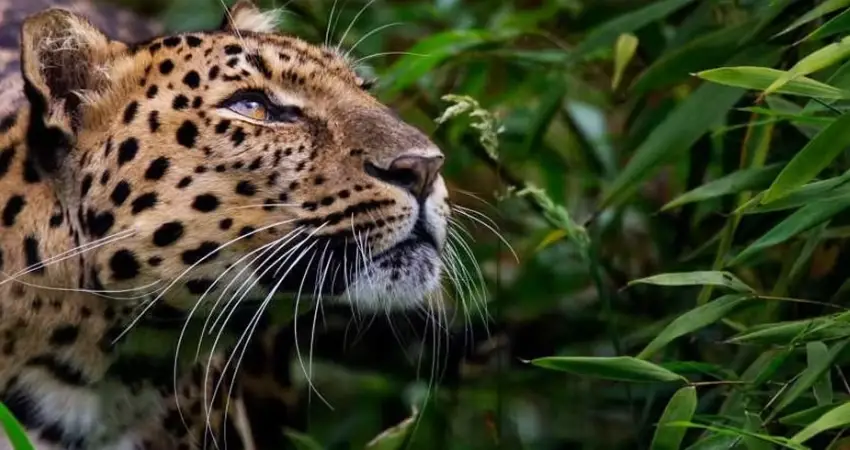
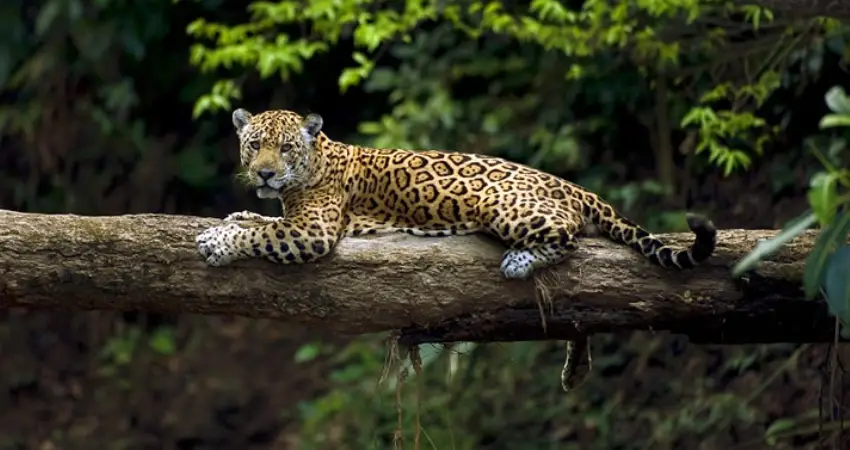
The jaguar in Peru belongs to the Felidae family and is scientifically known as Panthera onca. It is a robust species adapted to the tropical rainforest, where it excels in hunting both on land and in water. Its compact body is easily recognizable, yet muscular, with a powerful jaw capable of crushing bones and shells. You should also know that the jaguar in Peru has a particular characteristic regarding gender: males are larger than females, making them easy to identify. When observed, their coat is characterized by a golden hue with black spots all over their body, arranged in rosettes. Each jaguar has a unique pattern, allowing for individual identification.
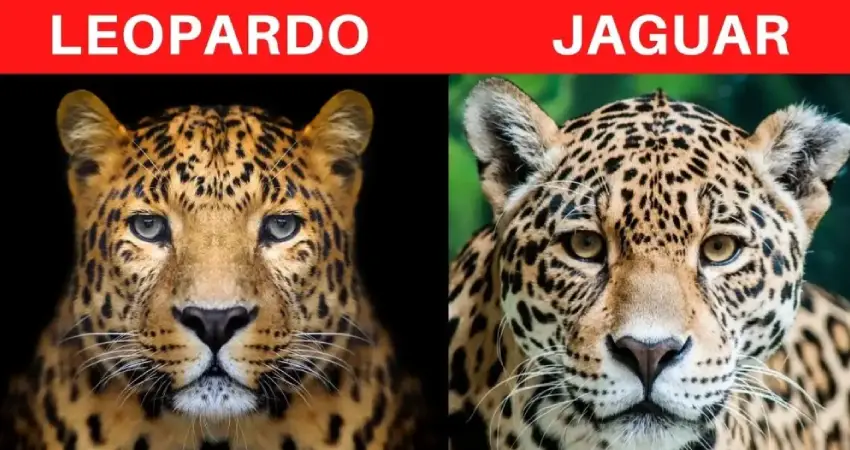
2.- Jaguar in Peru vs. Leopard
These two felines are often confused due to their similar traits. However, it’s important to understand that they are completely different species. While the jaguar in Peru has a more robust body and a broad head, its body is marked with rosettes containing internal spots. The leopard, on the other hand, is generally much more slender in terms of muscle mass, with the largest population found in Africa and Asia. Another key difference is that the jaguar is one of the few large cats that is an expert swimmer, allowing it to maintain a balanced diet among aquatic fauna.
3.- JAGUAR HABITAT AND DISTRIBUTION IN PERU
By immersing yourself in information about the behavior and characteristics of the jaguar, you understand that it is not just another animal belonging to Peru’s natural environment. In fact, it is considered one of the most representative wildlife species, and its presence has been directly linked to the preservation of ecosystems, taking into account a suitable plan that seeks its care and preservation over time. It can generally be found in regions with moderate altitudes where it can easily maintain a suitable lifestyle with hunting patterns and find refuge to ultimately complete its reproductive cycle. However, it is important to understand that, due to the distribution of recorded specimens, one can also observe a wide variety of biodiversity and geography within Peruvian territory, making continuous forests crucial for its survival.
3.1.- Locations to find the jaguar
The majority of its recorded population is found primarily within the Amazonas region, very close to cities that are adjacent to jungle areas such as Madre de Dios, Loreto, Ucayali, and within Manu National Park. This is because they share a geography of dense forest where the presence of fast-flowing rivers shows a wide diversity of species that are part of the jaguar’s prey list, making this environment a suitable habitat for the species to thrive and develop undisturbed. It is also possible to observe this feline within the cloud forests that are generally found in intermediate locations between the Amazon region and the Peruvian Andes. These places are considered unique ecosystems because they possess a balance between humidity and dense vegetation that allows the jaguar to move and obtain prey at intermediate altitudes, where it can even expand its hunting range.
It has also been recorded that jaguars occupy smaller areas near the mountain range; however, this is not a coincidence but a strategy, as it helps protect biological corridors, allowing them to easily move between the variety of ecosystems and resulting in a wide genetic diversity. The population of this species fluctuates because constant monitoring is quite difficult, as this feline is very elusive and generally moves and interacts at night. For this reason, measures have been taken to intensify monitoring efforts, allowing Peru to be recognized as one of the places with the largest jaguar population in South America, but this always considers only the areas designated as protected sectors.
3.2.- Important Aspects of a Jaguar’s Habitat
The ideal habitat for a jaguar has several characteristics that should be considered before settling there. The first and most important is undoubtedly direct access to water. For this, jaguars always seek proximity to rivers, lagoons, or ponds, as these provide an ideal location where other animals can congregate and become prey. This facilitates their natural hunting behavior and instincts. Jaguars also seek proximity to ecosystems suitable for other species, where they can find prey of various sizes, such as capybaras, tapirs, and other species that contribute to the jaguar’s balanced diet. Finally, another important aspect they consider when choosing a suitable habitat is dense forest cover, which also serves to protect their safety through camouflage. This is further affected by their interaction with humans, as the jaguar’s distinctive white coat attracts many poachers.
| “Live the life you have imagined—on the road.” |
4.- JAGUAR BEHAVIOR AND BIOLOGY
It is important to know that this feline is one of the most specialized species in existence, as it can easily adapt to the diverse ecosystems found in the tropical and subtropical regions of the country. In fact, the jaguar’s biology and behavior clearly demonstrate its position as the apex predator in this region, possessing skills and abilities that go beyond mere physical prowess. Its strategic intelligence during hunting sets it apart from other large felines. Understanding its routine, lifestyle, hunting methods, and organizational system also reveals the important role this species plays in maintaining the natural balance.
4.1.- Hunting Techniques and Prey
Generally, its diet consists of medium and large mammals such as capybaras, deer, and tapirs, while also including a variety of reptiles and birds in its diet. This wide variety of prey readily demonstrates its remarkable ability to adapt to diverse ecosystems. It is also taken into account that this species possesses a unique bite that can easily crush the skull of its prey, making it one of the most powerful bites, capable of reaching bones and breaking shells. In this way, it skillfully takes down robust animals, requiring minimal physical exertion and minimizing risk during the hunt.
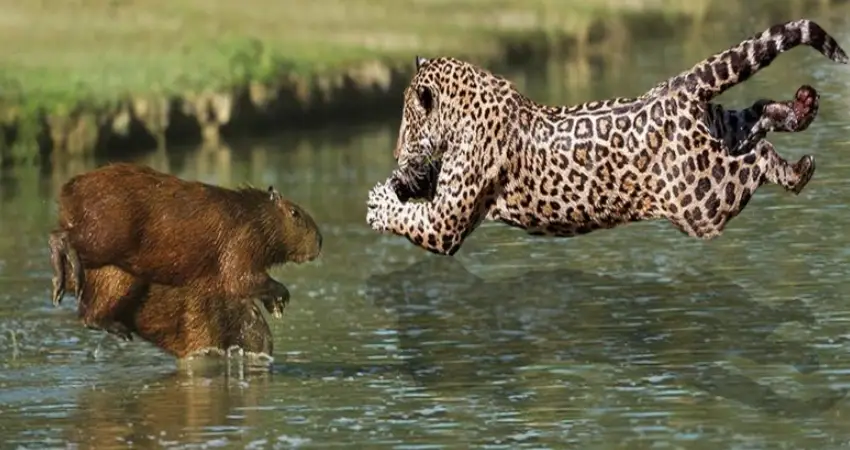
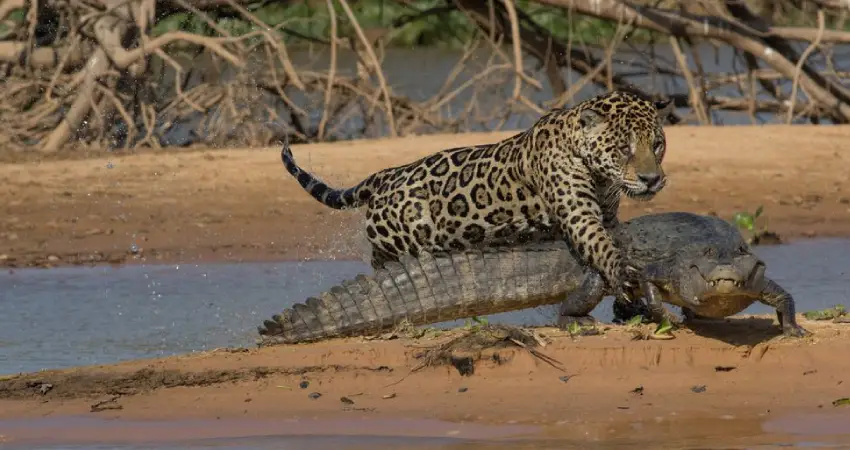
Unlike other felines, the jaguar is considered a distinguished swimmer. When it spots prey, it readily enters rivers or lakes to capture it. This ability has become particularly prominent in the Amazon, where a wide variety of bodies of water are part of the landscape. Here, it generally maintains a balanced diet of medium-sized caimans and aquatic turtles. To hunt, this feline silently ambushes its prey, launching highly precise attacks and maximizing the power of its jaws, which can subdue its victims in a matter of seconds.
4.2.- Daily Life
Jaguars are generally more active at dawn and dusk. This serves a purpose, as it significantly reduces competition with other predators, sharpening their senses and facilitating stalking when they spot prey. Of course, this variation in activity is always subject to prey availability and the season. During the dry season, they are most active, as they tend to congregate around water sources where they can more easily find prey.
4.2.- Territorial structure
This animal is generally quite solitary, as it has been shown to only interact with other members of its species during the breeding season. Each individual possesses its own territory, which it effectively and quickly defends. For this reason, this feline establishes its territory using visual markings such as scratches on surrounding trees, complementing this with olfactory actions such as leaving scattered urine and even constant roars. This type of communication has resulted in the species having a lower frequency of confrontations for territorial dominance.
5.- BEST PLACES TO SEE JAGUARS IN PERU
5.1.- Manu National Park
This protected area is considered one of the most important not only in Peru but in the world, containing one of the highest percentages of biodiversity. It is a unique and ideal destination for wildlife observation, especially for spotting jaguars. Thanks to the extensive area of primary forests within the park, a unique and optimal environment and habitat is created, allowing for the development of this species. Jaguar sightings have been most frequent near Lake Salvador, one of the most well-known spots in the park. This is mainly because it is a common hunting ground where jaguars may be seen moving before returning to the dense forest, primarily during the dry season. Of course, there’s no guarantee of seeing this feline in action during your visit. However, Manu National Park has the highest rate of sightings, especially for travelers with extended stays. Getting there is quite easy; the experience usually begins in the city of Cusco, where you can board tourist transport to reach this location. Fortunately, guided tours are available.
5.2.- Tambopata National Reserve
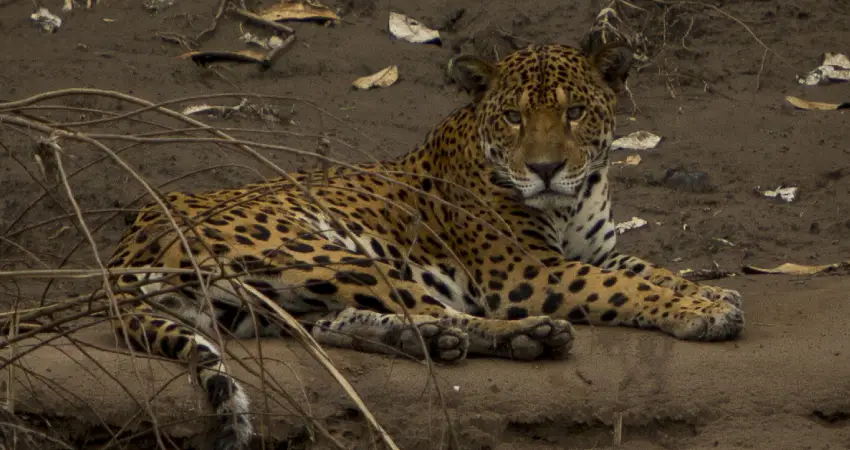
Classified as one of the main areas where jaguar activity is constantly recorded and monitored. It also assists in the study and monitoring of other emblematic species. Generally, you should visit the rivers or clay licks (collpas) where you can enjoy direct and indirect sightings, depending on the season. In addition to the presence of jaguars, the reserve is also popular for its variety of macaws and parrots, which frequently visit the clay mines where jaguars are often seen prowling. During your visit to this reserve, you’ll enjoy various activities, such as boat trips along the rivers and lakes, where you’ll have the opportunity to observe these felines resting or roaming. To reach this area on your next trip, it’s important to first travel to Puerto Maldonado, the starting point for a journey to this protected area.
5.3.- Pacaya Samiria National Reserve
Without a doubt, this reserve is considered the most popular in Peru. It’s also known as the “jungle of mirrors” due to the high concentration of rivers and lagoons that are well-preserved in the north, resulting in a high percentage of jaguars in excellent health. Due to the diverse network of rivers, a clear path can be observed where jaguars constantly move, increasing the likelihood of sightings during travel planning. Of course, the probability of spotting this feline is never guaranteed, but it gradually increases as the seasons change. These sightings mainly occur during the dry season when groups of animals congregate along the riverbanks. For travelers seeking to reach this area, it is important to first travel to the Iquitos region, where a river journey begins to reach the Amazonian lodges located in the surrounding area.
6.- BLACK JAGUAR IN PERU
“An interesting fact about this species is that there is also a melanistic variety known as the jaguar, which is popularly recognized as the black jaguar in Peru. At first glance it seems to preserve a completely black and dark tone, however in some points where the light coincides exactly, you can see how it preserves some rosettes; its presence occurs mainly within the jungle where the percentage of humidity is higher.”
7.- FREQUENTLY ASKED QUESTIONS (FAQS)
- Can you see jaguars in Peru?
Yes, in fact, for nature lovers seeking to disconnect from the world, this is one of the main motivations for organizing an experience within the Amazon region. Throughout the country, you can find diverse populations of this species, generally located within state-protected areas that preserve ecosystems for the development of these felines.
- Where is the best place to see jaguars in Peru?
There are several places to choose from, always depending on your starting point. It’s generally recommended to consider Manu National Park if your experience begins in the city of Cusco. However, if you wish to start from Lima, it’s best to consider nearby places like the Tambopata National Reserve or the Pacaya Samiria National Reserve.
- What are the chances of seeing a jaguar in Peru?
Generally speaking, the chances of spotting them are low, even considering the destinations where their presence can be observed. To increase your chances of seeing this species in action, it’s recommended to plan a trip of five to seven days, as the species is quite elusive with visitors.
- When is the best time to see jaguars in Peru?
It is generally recommended to plan a jaguar-watching trip during the dry season, which means scheduling activities between May and October. During this time, water levels drop, forcing jaguars to descend to areas near rivers.
- How much does a jaguar tour in Peru cost?
Wildlife-watching experiences can cost from $1200.00 dollars per person and up, depending on the duration of the tour, the experience category, the type of accommodation, and the time of year.
- Are jaguars dangerous to humans in Peru?
Jaguars are generally not dangerous, but caution is always advised in the area being visited. Therefore, all participants are asked to fully respect the established safety protocols for their visit. However, caution should always be exercised.
- How many jaguars are in Peru?
Due to their wariness of humans, it is difficult to arrive at an exact count of jaguars. However, it is known that Peru has one of the highest concentrations of jaguars in South America.
- Do I need a guide to see jaguars in Peru?
Yes, visiting these Amazonian destinations requires the company of an official tour guide for safety reasons. To fully appreciate the natural environment, an interpretation of each location is essential, and a safety protocol must be followed to ensure your adventure is safe and free of potential risks.
Although jaguars are elusive, there are always opportunities to encounter them and appreciate their majesty. Auri Peru is one of the few companies that provides well-organized and structured services, ensuring your trip is not only fun but also safe. Contact us, and together we’ll enjoy this iconic beauty of Peruvian wildlife.
“Adventure is worthwhile in itself.”