

1.- QUICK ANSWER: PERU’S GEOGRAPHIC POSITION RELATIVE TO ECUADOR
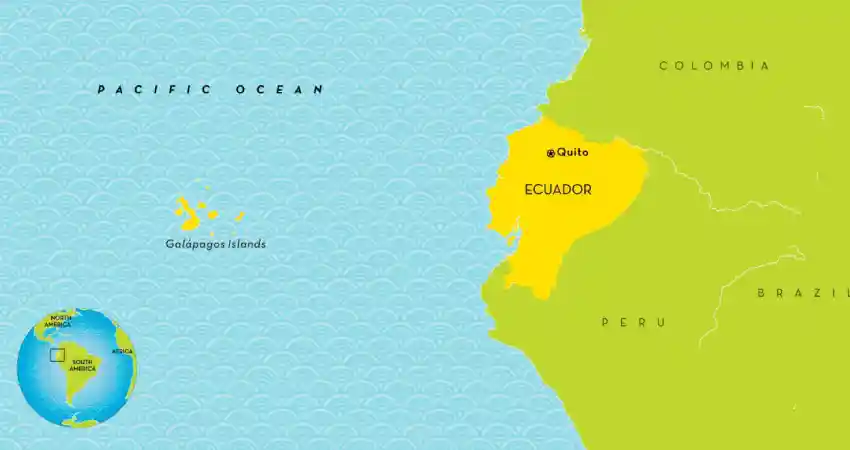
To answer the question that many travelers ask, Is Peru North or South of the Ecuador?, we must first understand the geographic information. Peru is located south of Ecuador and is part of the American continent. These two countries share a land border that connects them, in the case of Peru to the north, and in the case of Ecuador to the south. Their location is strategic, as it has been very important from a geopolitical perspective. In terms of trade, it represents a great commercial and cultural contribution to both countries, as they have historically established a relationship marked primarily by their proximity on the map.
In general, South America extends its territory longitudinally from Colombia and Venezuela to the north, and Chile and Argentina to the south. Following this geographic register, Ecuador is located north of Peru and is directly close to the Pacific Ocean. Peru bordering countries are Ecuador and Colombia to the north, Brazil to the east, Bolivia and Chile to the south, and finally, to the west, it reaches the Pacific Ocean. In this way, Peru becomes one of the most important points in the entire continent, as it connects the Andean region between the north and south.
More specifically, when trying to answer the question, Is Peru North or South of the Ecuador?, it also refers to its border, which boasts a wide variety of landscapes and offers diverse tourist options for travelers, from mountainous areas to the vast heights of the Andes mountain range. There is also the possibility of immersing yourself in the enigmatic jungle or tropical valleys. You can also visit some cities near this border, such as Tumbes, Piura, and Cajamarca, if you visit Peru. Loja, El Oro, and Zamora-Chinchipe are also located in Ecuador. Historically, this border has been a media center for diplomatic agreements in the development process of both countries. It is currently one of the main trade routes, in addition to binational projects and a center for cultural exchange, which has strengthened the relationship between the two countries.
2.- BORDER REGION BETWEEN PERU AND ECUADOR
After learning the answer to the question, Is Peru North or South of the Ecuador?, we can begin to understand more geographical details by understanding that the border stretches for more than 1,529 kilometers and contains diverse ecosystems stretching from the Pacific Ocean coast, the Andes Mountains, and the Amazon rainforest. This wide geographic variety has made the border complex in terms of biodiversity. However, throughout history, this area has also been the subject of conflicts and struggles between the two countries for sovereignty. Currently, it is a point of bilateral exchange and cooperation for development and activities that promote sustainability, conservation, and trade.
2.1.- Border Crossings
Another important aspect to consider is that not only are the Peru bordering countries important, but also the cities strategically located in the border area.
- Tumbes – El Oro Province, This crossing is considered the most frequented for crossing from one country to the other. It has a modern infrastructure, which allows for more efficient immigration control processes.
- Piura-Loja: This border crossing is primarily characterized by leading to more rural areas, making it a key point for commercial activities.
- Cajamarca-Zamora–Chinchipe: This is the least traveled due to its direct connection to the Amazon; it is primarily used for integration projects.
2.2.- Natural Landmarks
There are also places where the border is primarily characterized by nature, varying from rivers, mountain ranges, and even extensive valleys. Among these, the Zarumilla River stands out; it has a different purpose, serving as a boundary in the coastal region. Further inland, we can see that the high Andes mountains also represent a boundary between the two countries, serving as a natural barrier. Finally, in the eastern part, we can see how the Amazon rainforest serves as the boundary between the two countries.
2.3.- Historical Context of the Border
Another aspect to understand the answer to the question, Is Peru North or South of the Ecuador?, is to understand the historical context. The border that unites both countries has historically been the scene of various conflicts and battles aimed at territorial domination. These conflicts originated in the 19th century and were established after the independence of both countries. Due to the ambiguity between the borders imposed on both countries since the colonial era, this led to disagreements in the vast areas belonging to the Amazon rainforest. All of these conflicts became complicated at more than one point, becoming unique events in history due to the armed confrontations that occurred, the most well-known being the False Paquisha conflict (1981) and the Cenepa War (1995). Because an adequate mediation process was not found, constant strife and tension existed in the relationship between the two countries for decades.
3.- TRAVELING BETWEEN PERU AND ECUADOR: WHAT TRAVELERS NEED TO KNOW
Traveling between these two countries becomes a unique and incredible experience. However, many people still wonder, Is Peru North or South of the Ecuador?. When they learn the answer, they realize that the reality is that this experience is both accessible and enriching, as there are multiple land border crossings connecting both countries. This allows people to travel without complications, bypassing immigration controls, which are organized and provide basic services that are functional on both sides of the border.
| “Traveling—it’s the only therapy you can buy.” |
3.1.- Tumbes – Huaquillas Crossing
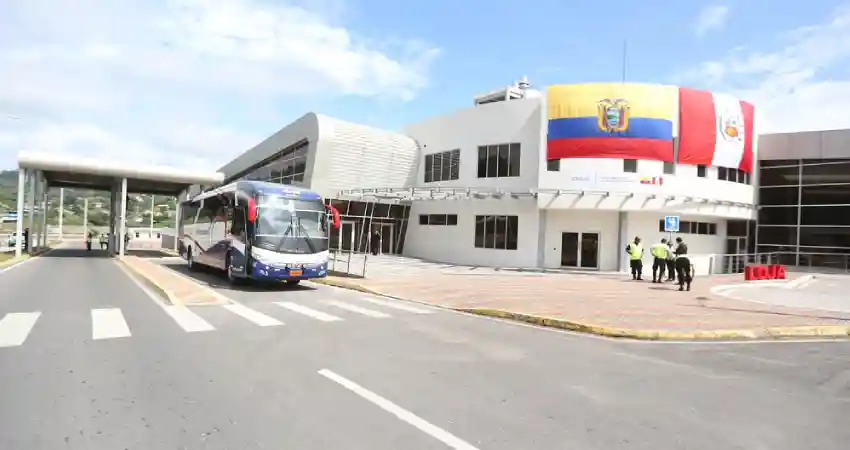
This is considered the most popular crossing between Peru and Ecuador, as it is located quite close to the city of Aguas Verdes in Tumbes (Peru) and Huaquillas in El Oro (Ecuador). It is open year-round and has a good, modern infrastructure, so the immigration offices located here also assist with the border control process. For many travelers who choose the coastal route, this is the most convenient border crossing. It is the perfect option for travelers looking for a combination of relaxing experiences, such as visiting beaches in northern Peru, and then continuing their journey to the Ecuadorian coast.
3.2.- La Tina – Macara Crossing
This is the least-traveled border crossing, yet it is quite efficient. It is located between the cities of La Tina in Piura (Peru) and Macara in Loja (Ecuador). It is used primarily by travelers looking to enjoy rural areas or are passing through to access southern Ecuador directly. Its facilities are much simpler, but it represents a calm and comfortable crossing for travelers with regular traffic, which speeds up the border control process for locals and travelers.
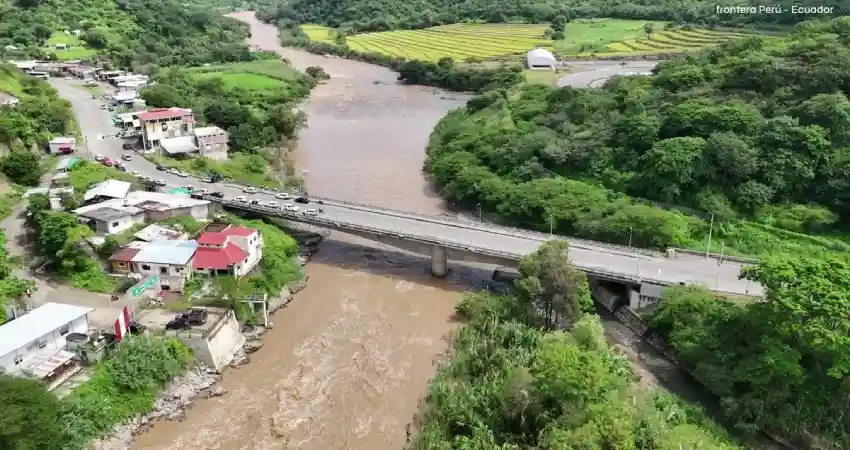
3.3.- Other crossings
There are also other entry routes that are considered secondary due to their low popularity. This is the case of the route between Cajamarca and Zamora – Chinchipe or Santa Rosa – Chacras. These are more distinctive due to their mountainous or jungle geography, so these crossings are primarily used by travelers with specific itineraries and those seeking a more unconventional experience.
4.- TRANSPORTATION OPTIONS
Traveling between these two countries is extremely easy. There is a land option, which not only provides a way to get from one place to another but also allows you to enjoy the wonderful landscapes along this route. There is also an air option, which reduces travel time and is more accessible for many travelers. Each option is tailored to different travel styles and budgets.
4.1.- Land Routes
There are several land routes to choose from, as the coastal cities are connected by major highways, such as the Pan-American Highway and the Longitudinal Highway of the Sierra. Starting from Guayaquil, it is easy to reach the border cities of Tumbes or Piura. In the case of Loja, there are also routes that lead directly to Cajamarca or the northern Andean region of Peru. Each route is ideal for travelers looking for a more complete investment experience, so private transportation is recommended.
4.2.- Air Connections
There are no direct flights on this route between the border cities, only local options. From the capital of Lima, you can travel directly to Quito, and in the case of Guayaquil, you can travel directly to Piura by using a regional airline, which directly facilitates the connection between places. For those looking to optimize time by covering long distances, this is the best option.
4.3.- Bus Services
In both countries, there are international transportation options that provide access to travel between Peru and Ecuador. The main routes considered are Guayaquil to Mancora, Guayaquil to Piura, and Quito to Chiclayo. You can choose from several companies such as CIFA, Transportes Loja, or Ecuador Hop, which are the best cross-border services, providing a comfortable, safe, and affordable experience.
5.- KEY CITIES AND DESTINATIONS NEAR THE PERU-ECUADOR BORDER
5.1.- Tumbes
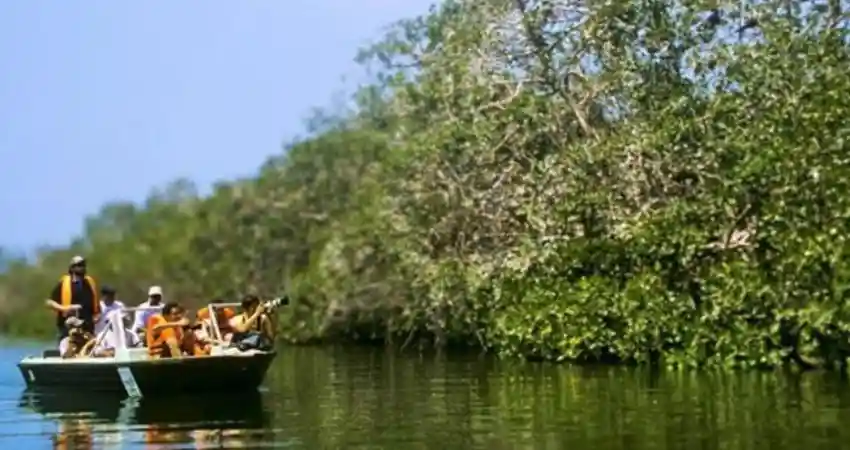
This is the region closest to the north of the Peruvian coast and for travelers looking to reach Ecuador, it becomes an ideal stop to restock supplies or simply rest. It is popularly known for its collection of warm beaches, mangroves, and for having some of the best seafood cuisine in the entire region. It is an ideal spot to delight the sun and the sea, and is also considered the entry point for other unique destinations such as Mancora, Zorritos, and Punta Sal.
5.2.- Piura
Located a little further south of Tumbes, this city is also well-known for its perfect combination of colonial origins and contemporary urban life, providing easy access to tourist destinations in northern Peru. It has an airport, making it a strategic point for travelers arriving from Ecuador by air.
5.3.- Cajamarca
A city located in the middle of the Andes, its geography is somewhat different from what one might expect on the coast. It holds significant historical significance, as it was the point of capture of the Inca Atahualpa during the conquest. Its colonial architecture is also a popular cultural destination for travelers seeking to immerse themselves in Peru’s history. From this point, you can access the Namballe-Zumba crossing, which is perfect for travelers looking to explore eastern Ecuador.
5.3.- Machala
This city is located a few kilometers from the Huaquillas and Aguas Verdes crossings. It is a coastal city belonging to Ecuador and is popularly known for its extensive banana production as well as its commercial activity. Due to its proximity to the border, it is the most frequented crossing point for travelers on their way to enter or leave Peru.
5.4.- Loja
This city has an Andean character due to its musical and artistic traditions. It is located quite close to the La Tina and Macara crossings, making it a quieter space with heritage significance and completely surrounded by nature. For travelers looking to visit Podocarpus National Park afterward, it is the perfect route.
5.5.- Guayaquil
Considered the largest city in Ecuador, although it is not directly located on the border, this city is a very important hub when it comes to connecting to Peru. It has an international airport as well as a transportation system, including buses, which facilitates more frequent travel to Tumbes, Piura, and Mancora, facilitating access. This modern city is full of diverse tourist attractions, such as the Malecón 2000 and Santa Ana Hill.
6.- PEACE AGREEMENT
“After the Cenepa War, great international pressure was exerted to resolve this conflict. Furthermore, the political will of both countries led to the signing of the Brasilia Peace Agreement on October 26, 1998. This treaty is considered a historic milestone and officially resolved and ended the territorial disputes that existed between Peru and Ecuador.”
7.- FREQUENTLY ASKED QUESTIONS
- Is Peru North or South of the Ecuador?
Peru is located south of Ecuador. The two countries share a long border that connects in the western region of the American continent.
- Is Peru directly south of Ecuador?
Yes, but it is directly south of Ecuador. Taking the southern regions of Ecuador, such as El Oro or Loja, as a reference point, it is possible to reach Peru directly through Tumbes or Piura.
- How far is Peru from Ecuador?
This border is approximately 1,529 km long. The distance between them is not great; they are located right next to each other. However, in the case of the main cities, there is an average distance of 700 km by road.
- What countries border both Peru and Ecuador?
Peru shares borders with Ecuador, Colombia, Brazil, Chile, Bolivia, and the Pacific Ocean. Ecuador shares direct borders with Colombia, Peru, and the Pacific Ocean.
- Is Ecuador north of Colombia too?
No, in this case, Ecuador is directly south of Colombia. That is, Ecuador’s northern border connects in parallel with Colombia, which is part of the Amazon region.
- Which country is bigger, Peru or Ecuador?
Peru is currently considered a much larger country than Ecuador, as its territory stretches across 1.28 million km², making it the third largest in South America. Ecuador, on the other hand, is only 283,000 km².
Together, we discovered the answer many travelers have asked: Is Peru North or South of Ecuador? Now the fun part of planning your next adventure begins. Auri Peru is one of the few companies that can provide you with a complete adventure in both countries. Contact us now, and we’ll be your ideal travel partner.
“Leave nothing but footprints, take nothing but pictures.”