


1.- INTRODUCTION TO THE CUSCO-LA PAZ JOURNEY
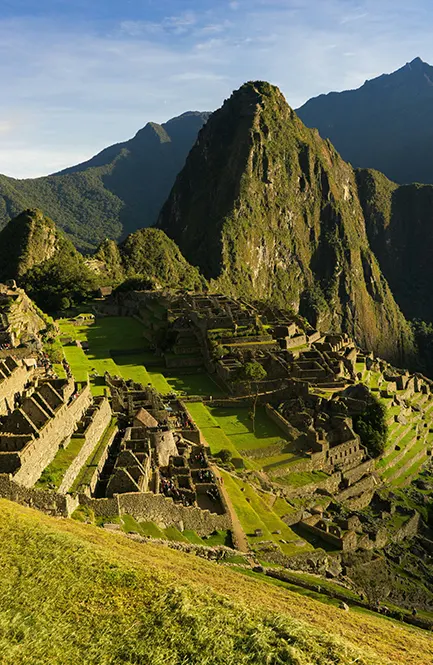
The journey from Cusco to La Paz Bolivia, is considered one of the best adventures a traveler can enjoy during their stay in Peru, as it not only allows you to discover the legacy of Inca culture but also one of the most emblematic spots in the Peruvian Andes, located in the neighboring country of Bolivia. During the journey from Cusco to La Paz Bolivia, you can discover amazing landscapes as well as traditional villages and the impressive Lake Titicaca, which has witnessed the emergence of cultures that have remained throughout history. This is not just a trip between two places; it is an experience that allows you to connect with Andean life, history, and geographical diversity.
By learning how to get to La Paz from Cusco, you have the opportunity to find an authentic investment in the cultural heart of South America. This route connects two countries that share a common lineage based on indigenous roots and have preserved their identity for generations. You can appreciate the presence of Inca agricultural terraces in the surroundings of the city of Cusco, as well as having the opportunity to visit the highland markets within the city of La Paz.
2.- ROUTE OVERVIEW AND PLANNING ESSENTIALS
This trip from Cusco to La Paz Bolivia, has a total length of approximately 640 km and may vary depending on the route you choose. The journey usually includes travel along Andean highways and strategic stops at iconic locations such as the city of Puno, Lake Titicaca, Copacabana, and finally the border between Peru and Bolivia.
3.- Average travel time from Cusco to La Paz Bolivia
- Direct bus: 14 to 16 hours
- Bus connections (Cusco – Puno – Copacabana – La Paz): 3 to 3 days
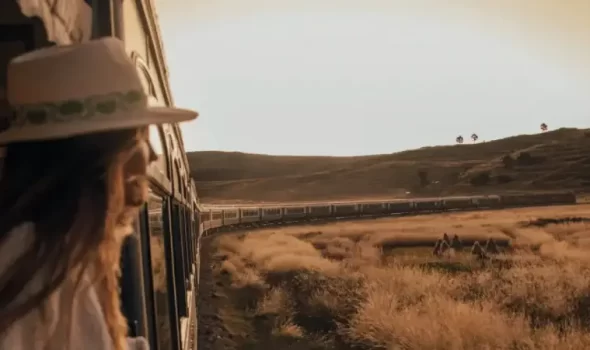
- Combination of train (Cusco – Puno) and bus (Puno – La Paz): 2 to 3 days
- Direct flight (Cusco – Lima – La Paz): approximately 6 hours, including the stopover in Lima
4.- Best time to travel
The trip from Cusco to La Paz Bolivia, can be made at any time of the year, but it is always recommended to plan your trip during the dry season, which occurs between May and October. This time of year is ideal because the skies are clearer, there is very little rain, and the roads are much more passable. In addition, visibility is excellent, so you can enjoy the experience to the fullest and the view of the landscapes becomes a unique panorama.

5.- Time difference
There is no time difference between Peru and Bolivia. Both countries are in the GMT -5 time zone, which greatly facilitates coordination for border crossings and transfers that are scheduled in advance. However, it is advisable to adjust your plans due to the border’s opening hours, transportation, and other possible delays due to weather conditions and geographical altitude.
6.- Border requirements
Travelers from South America do not need a tourist visa to enter Bolivia when traveling from Cusco to La Paz Bolivia. However, it is mandatory to have a valid passport that is valid for more than 6 months from the date of entry, or a valid identity document for CAN and Mercosur countries is also acceptable. Travelers from other countries may require a visa, so it is important to check the Bolivian consulate’s website.
The border crossings are located in Desaguadero or Kasani, which is quite close to Copacabana. At both points, there is an immigration checkpoint for travelers seeking to enter Bolivia or on the contrary, those traveling from La Paz Bolivia to Cusco Peru. The immigration process begins with the exit stamp from Peru and then the entry stamp to Bolivia inside the offices at the border. It is important to note that this entire process can be quick, taking less than 30 minutes, or it can take up to 2 hours, depending mainly on the number and flow of travelers.
It is likely that after enjoying the wonders of Peru, you will still have some Peruvian soles in cash. During this trip from Cusco to La Paz Bolivia, you will also have the opportunity to exchange it at currency exchange offices and obtain the official currency of Bolivia, the boliviano. For this, it is advisable to have small bills so that the exchange is faster. Of course, in Bolivia, bolivianos, US dollars, and Peruvian soles are currently accepted, but not in all establishments, only in the largest shopping centers. For local stalls, it is always recommended to use only bolivianos.
7.- Schedules
The border has immigration offices and these are available to travelers from 08:00 am to 20:00 pm, of course depending on the situation may vary depending on the date, it is always recommended to cross the border during the early hours as this allows you not to wait for long queues or inconveniences that may occur due to weather changes. For this you must carry printed documents as well as evidence of the exit tickets, their processes can be very bureaucratic so be patient.
8.- TRANSPORTATION OPTIONS FROM CUSCO TO LA PAZ BOLIVIA
This experience allows you to learn about and discover the cultural richness that exists in the South American Andes. The most incredible thing is that there are multiple ways to do so, and all of them have been adapted mainly to the preferences of travelers, with alternatives such as tourist buses if you want to immerse yourself in this natural beauty, or direct and fast flights for those who want to optimize their time.
8.1.- Bus Travel – The Most Popular Option
This is the traditional way to enjoy the trip from Cusco to La Paz Bolivia, or in the opposite direction from La Paz Bolivia to Cusco Peru. It is quite popular because it is the most economical and cultural option, allowing you to fully immerse yourself in two great styles that everyone wants to experience. You also have the opportunity to delight a series of unique Andean landscapes, with stops to enjoy traditional villages.
8.1.1.- Main companies
Transzela
The experience provided by this bus company is really comfortable and safe because it provides a safe and direct connection between Cusco, Puno and even extends operations to La Paz, this alternative is ideal for travelers seeking to know part of southern Peru and connect with the neighboring country of Bolivia in an efficient and comfortable way, the buses have a double-decker feature and reclining seats in addition to the on-board service that stands out for its good attention.
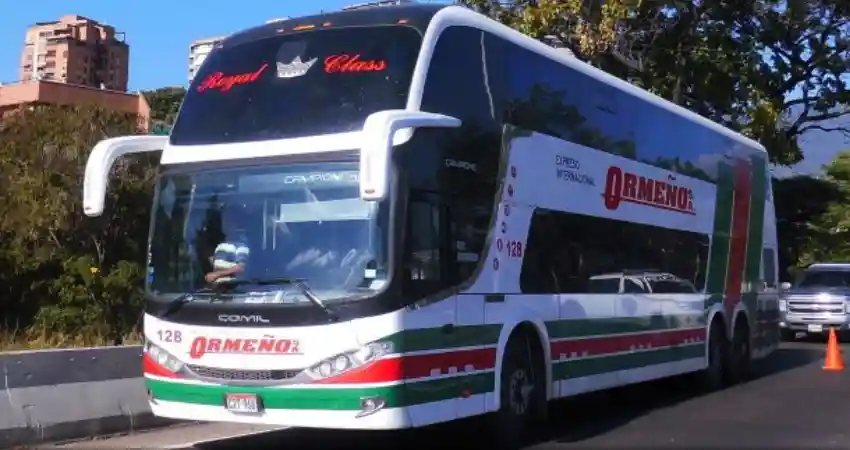
Ormeño
This company offers international routes, giving you the opportunity to enjoy the entire trip connecting Peru and Bolivia without having to transfer in Puno. For trips from Cusco to La Paz Bolivia, there is a direct route from Puno to the Kasani border, which is very close to the city of Copacabana.
Bolivia Hop
This is the popular version of tourist service that is preferred by backpackers, as this company constantly makes strategic stops at various points along the route to La Paz, including Lake Titicaca, Copacabana, the border itself, and other destinations. It also offers a complete service so you can enjoy a hassle-free trip.
Trans Salvador
This is one of the few companies that offers both alternatives, between direct travel options or connecting trips from the city of Cusco to La Paz. For this, not only are daytime schedules considered, but also nighttime service with the intention of optimizing time for travelers who seek to discover a little more.
CABLE CAR SYSTEM
“The city of La Paz is also known as the city with the most extensive urban cable car system in the world. This system covers around 30 km and stands out as one of the most modern, environmentally friendly, and economical means of transport currently available, providing access between La Paz and El Alto, as well as other surrounding areas, which helps with urban traffic.”

Bus trips from Cusco to La Paz Bolivia, can usually take between 14 and 16 hours, depending on the type of trip, as there may be direct trips or some strategic connections. In all cases, the trip always goes to Puno, which is considered a key point where the preferred route to the Bolivian border is chosen, the most popular being Desaguadero and then Kasani.
8.2.- Travel by plane
This alternative is mainly intended for travelers who seek to prioritize and optimize their travel time, thus avoiding the long hours involved in land travel and efficiently reaching their desired destination. Currently, there are few companies that offer this route, but the main ones are LATAM and Boliviana de Aviación (BoA), which offer direct flights to La Paz. However, at some preferred times, a stopover in Lima is taken into account.
The most important thing to know is that direct flights between Cusco and La Paz are not frequent, so the regular travel time for this option is around 5 or 6 hours, including the stopover. In some cases, the connection can be much more efficient and faster, so the average time can be reduced. However, you should check the itinerary in advance. Typically, a flight of this type can cost between $120.00 and $250.00 dollars per person, depending on the season in which the trip is planned.

9.- Transportation and private tours
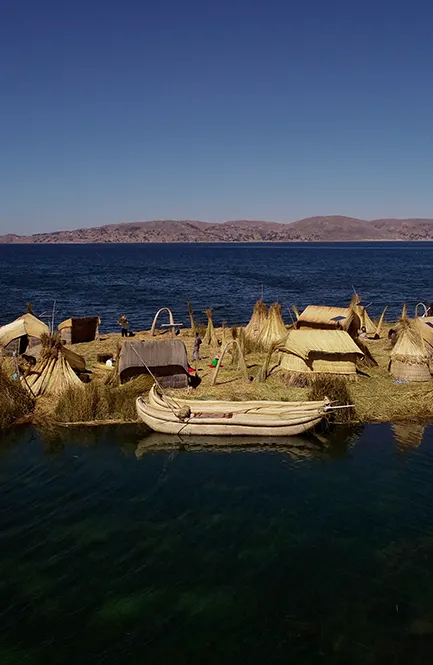
There is also the possibility of a more comfortable, flexible trip that includes exclusive activities and experiences where your cultural immersion is prioritized in a personalized way. It is for this reason that many agencies have implemented travel experiences that can be extended considering 3 or 4 days to better enjoy the trip from Cusco, considering visits to unique places such as Puno, Lake Titicaca, the Uros islands, Copacabana, the island of the sun and others while enjoying the road to La Paz, this alternative is designed to combine the services of transportation, accommodation and permanent accompaniment by a guide which ensures that not only the destinations are visited but also can be understood in purpose.
On the other hand there is also the alternative of making it partially flexible, this way you can hire only the transportation and personally visit each of the destinations, this optimizes the visiting time in places where personalized stops are made where comfort for families and small groups is the most important thing, this option can be regularly more expensive since transportation has a cost per day which is organized in advance.
10.- DETAILED ROUTE DESCRIPTION
10.1.- Cusco to Puno Segment
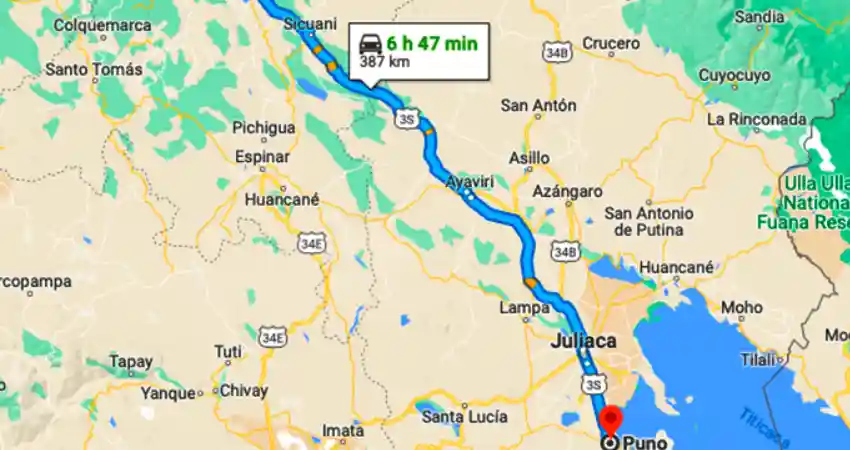
To learn how to get to La Paz from Cusco, it is important to first understand each of the stages of this journey. which begins, of course, in the city of Cusco, where travelers who choose the land experience board a tourist bus, private transportation, or the train. In most cases, they depart during the early hours of the day or late at night, depending on the experience chosen. Most depart from the same bus terminal in the city or from strategic points to reduce congestion. As the journey progresses, the road climbs progressively, offering spectacular views of Andean valleys and snow-capped mountain landscapes, terraced fields, and herds of sheep, alpacas, llamas, and other Andean wildlife.
In some cases, strategic stops are made in Andean villages such as Andahuaylillas, which has become quite popular due to its Baroque-style church, Raqchi, an ancient Inca archaeological site dedicated to the worship of the god Wiracocha, the pass considered the highest point of the entire trip, reaching over 4,335 meters above sea level, and finally the town of Pukara, which is quite famous for the cultural contribution of the Torito de Pukara, a symbol of protection for couples and families. Finally, the trip takes you to the city of Puno, which is located on the shores of Lake Titicaca and constantly welcomes travelers in a festive environment with characteristics typical of the highlands. It is important to take some time to rest here to help your body adapt to the altitude, which reaches 3,800 meters above sea level, so that you can enjoy a more peaceful journey to our destination in La Paz.
10.2.- Puno to Copacabana (Bolivia) Segment
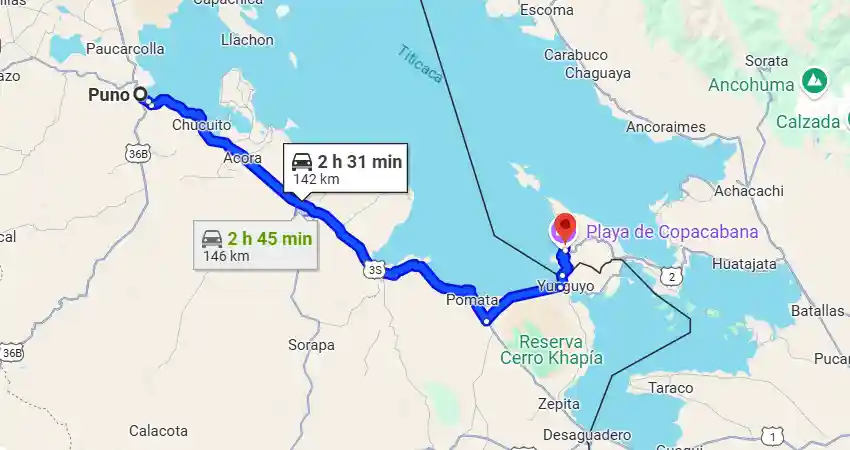
After resting in the city, there are two alternatives for continuing the journey. The traditional option is by land, but there is also the alternative of an activity on the lake, which allows you to visit the natural islands of Taquile and Amantani and the artificial islands of the Uros. In both alternatives, you must finally reach the town of Yunguyo, which is very close to the border post known as Kasani. This is where the border control process takes place, as well as the immigration process for leaving Peru and entering Bolivia. It is usually a simple process and is done on foot between the two offices.
After the checkpoint, it is 8 km to the town of Copacabana, which is considered a picturesque Bolivian town also located on the shores of Lake Titicaca. It is quite famous not only for its warm welcome but also for the Basilica of the Black Virgin, a religious site. Upon arriving from this place, it is possible to enjoy activities such as visiting the city or the lake to see the Island of the Sun, which is considered one of the most sacred places in Andean belief. It is recommended that travelers spend the night in Copacabana to enjoy the attractions in the surrounding area.
10.3.- Copacabana to La Paz Final Segment
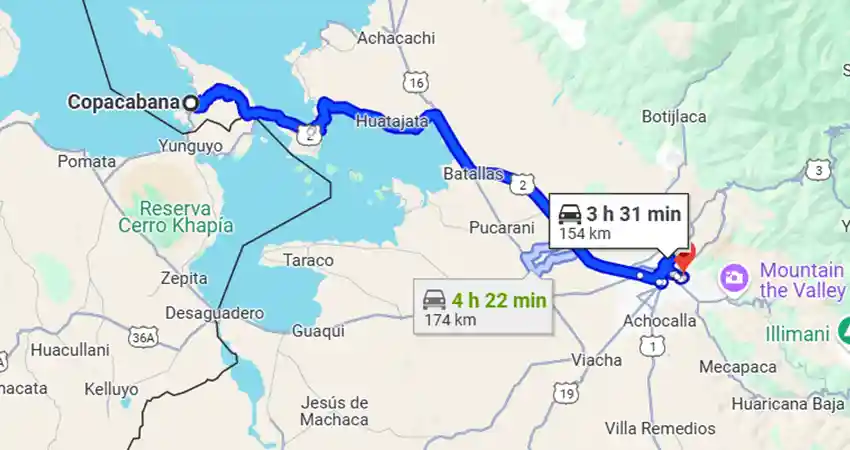
The final leg of the journey from the city of Copacabana is by land to La Paz. This road runs along part of Lake Titicaca and allows you to enjoy the deep blue landscape of the lake with its extensive green hills, where many communities of Aymara origin have developed their lifestyle in a natural way. This last section can take around 4 to 5 hours.
Undoubtedly a very important and particular moment of this trip is the crossing of the triquina strait, this is characterized by being a space where vehicles must embark on rafts to cross the lake as there is a small strait not yet built, this is precisely the charm that this trip has because while passengers use boats to cross, buses are transported separately making the experience more interactive and fun at the same time. Continuing with the trip you can gradually see a spectacular descent into a deep valley that is completely surrounded by mountains and from there you can see the incredible snow-capped Illimani, which is considered the protector of the city. Finally you arrive to the city of La Paz which is located inside a huge canyon, regularly the transports leave you at the bus station or if it is the case of a private transport they take you to the hotel anyway from this point it is possible to explore freely the city or continue the trip if you want to know other places like Uyuni and Sucre.
| “Travel is the only thing you buy that makes you richer.” |
11.- FREQUENTLY ASKED QUESTIONS (FAQs)
- How long does it take to travel from Cusco to La Paz?
This varies depending on the transportation you choose. If you are looking for something fast and hassle-free, then opt for a flight that can take around 5 or 6 hours depending on connections and transfers, considering the stopover in Lima. If you have some time in between, then a direct bus would be ideal, taking between 14 and 16 hours. However, if you have more time, then the experiences and activities are the alternative aboard a tourist bus for around 3 to 4 days.
- What is the best way to travel from Cusco to La Paz?
When looking for an economical alternative that includes adventure, it is recommended to opt for the bus, which allows you to visit destinations such as Puno, Copacabana, and La Paz. On the other hand, if you are looking for comfort and speed, then a flight with a stopover would be ideal.
- How much does it cost to travel from Cusco to La Paz?
Prices may vary depending on the type of trip you are looking for. The standard tourist bus can cost from $50.00 dollars per person, flights are considered from $120.00 dollars per person, and private tours from $250.00 dollars per person. Each of these prices may increase depending on the season and category you choose.
- Do I need a visa to travel from Peru to Bolivia?
Most travelers who are members of South America do not require a visa to enter Bolivia, only a valid passport or ID card if they are members of the Andean Community. It is advisable to check the Bolivian consulate’s website to find out if your country requires a visa.
- Is it safe to travel from Cusco to La Paz?
Yes, it is considered one of the safest routes for both tourists and locals. The tourist infrastructure that has been built in both countries is really good, so safety is one of the priorities that is taken into account.

This information is very important if you are looking to start planning your next adventure to discover Peru and Bolivia. Now all that remains is to choose the right time to begin your adventure. Auri Peru will be your perfect companion during this experience, as we prioritize your comfort and safety. Contact us now and find out about the options we have available for you.
“Get out of your comfort zone and into the unknown.”