

1.- WHAT IS CIRCUIT 1 IN MACHU PICCHU?
In a constant quest to promote the preservation of cultural environments as well as cultural heritage, the Ministry of Culture has implemented an admission system based on the difference in circuits. This seeks to adequately balance the flow of travelers through established routes within the Inca city. This way, travelers are separated into different groups who come to visit different sectors with different and unique attractions. In the case of Circuit 1 Machu Picchu, it seeks to prioritize the spectacular panoramic views from the top of the citadel, as well as an overview of the various central archaeological sites, which create a unique panorama.
2.- Circuit 1 Machu Picchu: Upper Terrace
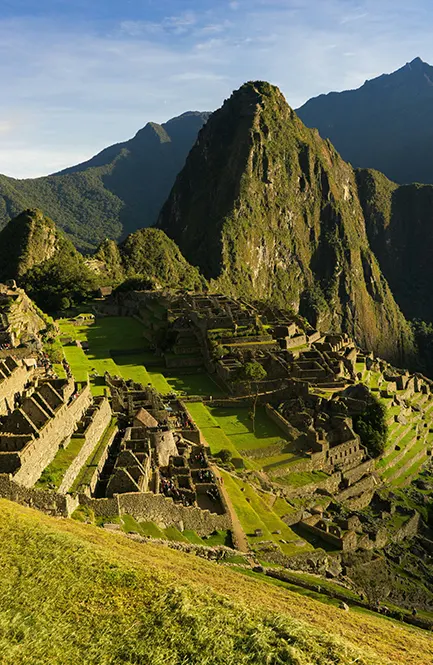
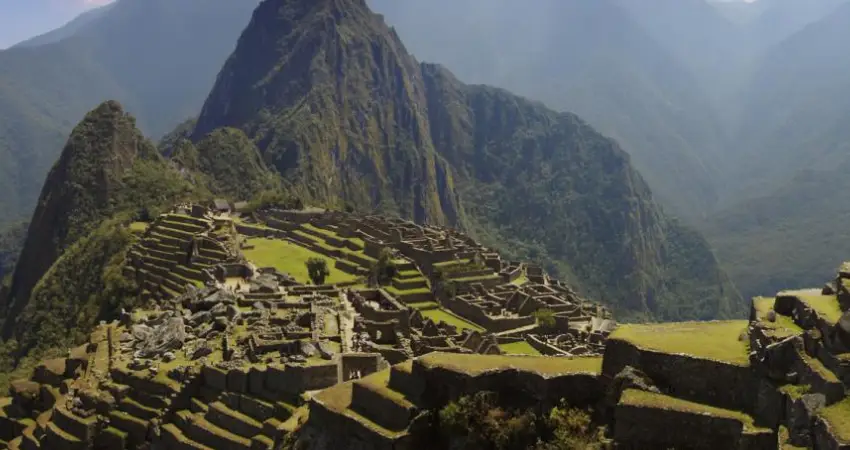
Circuit 1 Machu Picchu is considered one of the main route options travelers can enjoy during their visit to the World Wonder thanks to its spectacular views. This primarily encompasses the upper area, where you can enjoy an exclusive view of the sprawling citadel atop a mountain, as well as the immense Huayna Picchu mountain in the background. For many, this represents one of the main attractions they want to explore during their visit. This experience is primarily recommended for travelers seeking to witness the grandeur of the citadel but do not wish to undertake a long hike through its narrow paths. It is also an ideal alternative for those who simply want to admire its beauty through photographs.
Its name derives from the panoramic route due to the wide variety of views it offers travelers who choose Circuit 1 Machu Picchu during their visit to Inca city. Compared to other routes that focus only on the inner track of the archaeological sites, these routes are based on observation areas, which are ideal for capturing the natural and cultural beauty of the site. This also provides access to emblematic sites such as the Guardian’s House, which is one of the main places many want to visit, as it is considered a classic part of the popular photo that everyone knows of this archaeological site.
In the same way there are many travelers who do not know whether to choose Machu Picchu Circuit 1 or 2., so it is good to know what the difference is and the main thing undoubtedly focuses on the range of visibility and the demand it requires, the rest of the circuits base their route on immersing travelers within the cultural and historical context that exists within the temples, main squares and other enclosures that have a religious purpose, while Circuit 1 Machu Picchu Central travelers experience only in the upper part allowing you to access not only the panoramic views but also to spaces that are at a much steeper height where the visa has no comparison, despite the fact that this represents a greater physical demand becomes a tentative alternative for those looking to delight their vision with one of the greatest visual spectacles in the world.
3.- WHAT YOU’LL SEE ON CIRCUIT 1: MAIN ATTRACTIONS
There’s no doubt that Circuit 1 Machu Picchu is considered a perfect opportunity to showcase the visual charm of this Inca citadel to the thousands of travelers who arrive each year. It offers a collection of panoramic views that are considered emblematic and traditional, as they are the main sights that everyone knows through postcards or traditional photos on social media.
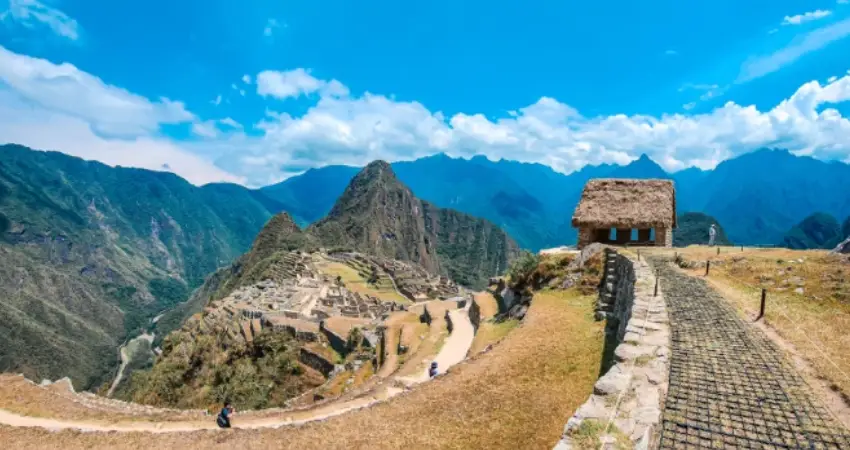
This Circuit 1 Machu Picchu also allows travelers to visit the popular Guardian’s House, listed as one of the main emblematic destinations to visit during your visit. It is primarily characterized as a small building located at the highest part of the citadel. However, its function is what stands out, as it was intended to be a control and access point for the various paths that existed to access it. For this reason, its location today invites travelers to take a brief moment of contemplation of the beautiful citadel to capture the best photographs. This is the main point where you can get a unique panoramic view not only of the Inca citadel but also of the immense Huayna Picchu mountain located in the background. This same mountain is featured in various postcards, books, and even international magazines that promote visits, making it the ideal place to take a photo.
It also highlights the agricultural domain of this ancient culture, through extensive terraces that served primarily agricultural purposes but at the same time managed to stabilize the entire territory between the mountain and the citadel, thus creating a support that prevented landslides in the event of adverse climate changes. Some of these spaces were used in multiple ways, including symbolic ceremonies that represented a spiritual relationship, always with an Andean purpose and oriented toward agricultural results, which is why it is known that the Andean worldview was one of the main axes of belief for social development.
4.- Partial views of the urban sector
If you’re still wondering, What is Circuit 1 in Machu Picchu?. You should know that this access gives you a unique view of the entire citadel. However, you can only appreciate the beauty of the buildings located at the bottom, as it does not allow you to continue along the paths to descend to the citadel. However, you do have a direct view of the main plaza, allowing you to appreciate the mastery that existed in the buildings, as well as their relationship with symmetry and how their urban organization was adequately distributed. Likewise, you can get distant views of the ceremonial buildings and temples distributed throughout the entire urban area.
| “Go see the world before it’s too late.” |
Since you cannot descend from the upper part, the same occurs with the enclosures inside. You cannot directly visit the Intihuatana area, which was cataloged as one of the most important places within the citadel since it allowed the interpretation of the solar position through a projection of shadows, the tempering of the three windows that stands out for its symmetry and for the peculiar presence of these three windows through which an astronomical interpretation was also had at various important moments of the year such as solstices or equinoxes. From the top you can also appreciate the space where the sacred rock is located, notable for being a silhouette carved into a single rock of the same Inca city that many people hold has a direct relationship with the symbolic and ceremonial.
5.- WHO SHOULD CHOOSE CIRCUIT 1?
Circuit 1 Machu Picchu is designed primarily for travelers looking to focus their experience on capturing the panorama through photographs. For this reason, the upper terraces and natural viewpoints located at the top offer a classic view recognized worldwide. Professional photographers or travelers simply seeking visual memories choose this route, as they can enjoy a special harmony between Inca architecture and nature.
This experience is recommended for travelers who have previously visited the citadel. This is because when visits to interior sites such as the plaza or temples are not included, the focus is on enjoying the exterior areas rather than exploring every space within the World Wonder. It is considered a glimpse from a different angle, thus prioritizing scenic beauty for travelers. Circuit 1 Machu Picchu seeks to complement what many travelers have previously enjoyed on previous trips, so its route options are less extensive, allowing travelers to appreciate its grandeur without having to revisit it. It’s also ideal for travelers who have limited time in their plans, which doesn’t allow them to explore the sprawling citadel only by viewing and appreciating it from an iconic location. This is demonstrated by the fact that the trail that takes you to this upper part is well-marked and not very physically demanding, allowing travelers to enjoy it at their leisure.
It’s also known that Circuit 1 Machu Picchu is a perfect alternative for travelers with certain physical limitations who can’t travel between locations for long periods of time. In fact, this circuit offers accessible spaces where the physical demands are much lower and the geographical space is larger, allowing for reduced mobility to be less of a challenge for other travelers, ensuring a comfortable and safe experience for all.
6.- CIRCUIT 1 COMBINED OPTIONS: MOUNTAIN ADVENTURES
You should take into account that, in addition to the traditional and normal entrance to Circuit 1 Machu Picchu, there are also three other options that give you privileged access to other complementary destinations located within the same sector.
6.1.- Circuit 1 + Machu Picchu Mountain
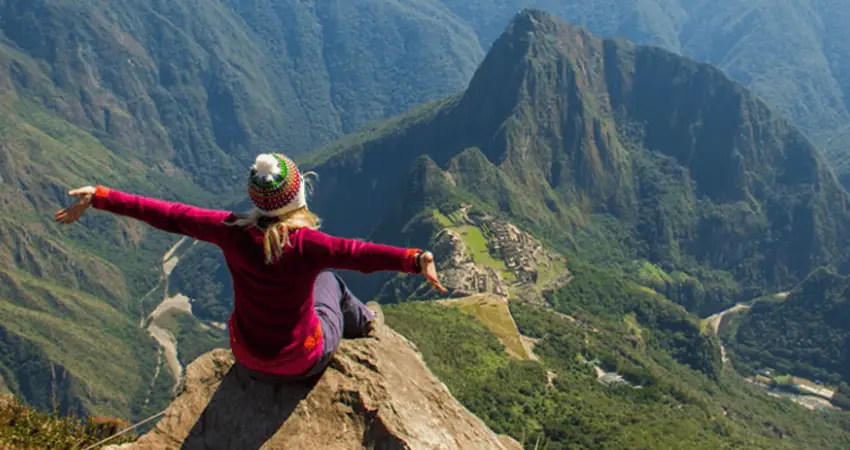
In Circuit 1 Machu Picchu, this is the first available route, also known as Route A. It is primarily characterized by allowing travelers direct access to the top of the mountain located behind the Inca city of the same name, Machu Picchu Mountain. This is known as the highest point within the entire territory of the Inca city and offers an incomparable panoramic view. Compared to the ascent of other mountains such as Huayna Picchu, this is distinguished by its less steep geographical characteristics, although it is notable for its much larger area. Within the Andean worldview, it is also emphasized that this mountain, like others, played a fundamental role as a protector and sacred place in the cultural perspective. Thus, reaching the highest part of the mountain is interpreted not only as a physical experience but also as a symbol of spiritual connection achieved with the essence of Inca culture.
It is a long hike, so an additional three hours are allotted over the regular visit you can make inside the Citadel. Fortunately, the entire trail is well marked, so you can be confident along the path without complications. You should also consider that there are small spaces with a considerable slope. Its difficulty is considered moderate to high due to the distance traveled. Therefore, it is recommended that travelers always bring sunscreen, plenty of water, and preferably be in good physical condition. It is open to visitors year-round; however, it is always recommended to visit during the dry season, which occurs between May and October each year, since the lack of rain makes the hike more stable and allows for safe completion.
| Price | Foreigner | Peruvian | CAN countries |
| General | s/ 200.00 | s/ 112.00 | s/ 112.00 |
| Student | s/ 125.00 | s/ 80.00 | s/ 80.00 |
| Minor
(3-17 years old) |
s/ 118.00 | s/ 80.00 | s/ 80.00 |
6.2.- Circuit 1 + Inti Punku (Sun Gate)
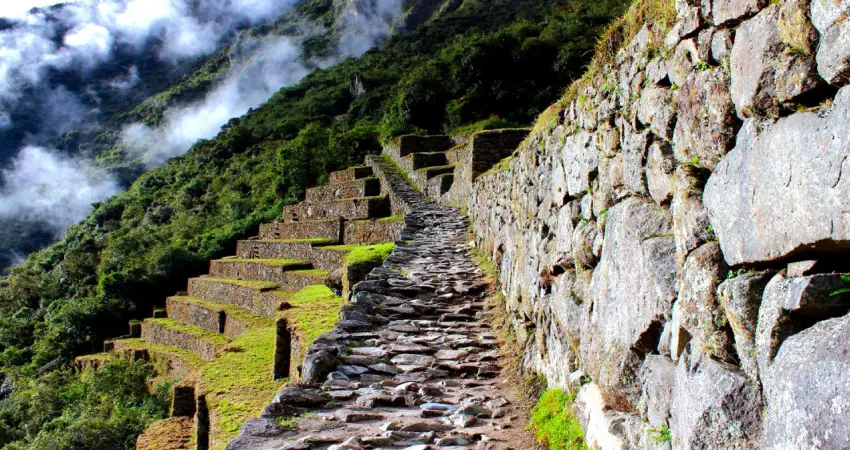
For travelers still undecided about choosing between Machu Picchu Circuit 1 or 2, this is the answer you’ve been waiting for. Circuit 1 Machu Picchu also allows you to access the area known as Inti Punku or Sun Gate, also known as Route C, which is of transcendental importance as it is classified as one of the traditional historical entry points to the Inca city of Machu Picchu. It is characterized by being a complete structure made primarily of stone. Its primary purpose was to provide control and is directly related to religious ceremonies dedicated to sun worship, as it is the first place where the sun’s rays reach the surface during the winter solstice. It is also a popular spot as it is considered the end point of the Inca Trail experience, a four-day trek through the mountains undertaken by thousands of travelers. From the Citadel, there is a fully marked path that allows you to enjoy this panoramic view safely and appropriately, allowing you to connect with the essence of what is experienced on the final stretches of the ancient Inca Trail.
It is estimated that it will take approximately 2 hours to complete this experience. It is relatively long, so travelers who venture out to explore it should maintain a steady pace and be in good physical condition. Its difficulty is considered moderate, as there are some steep steps in certain areas, so you should consider specialized hiking shoes. Upon reaching the highest point, you can enjoy a unique and spectacular view of the entire Inca citadel, as well as the extensive mountain range found in the surrounding area. This natural viewpoint is ideal for travelers looking to enjoy the early hours of the day. Please also note that it is only available during the dry season, between May and October, mainly for safety reasons.
| Price | Foreigner | Peruvian | CAN countries |
| General | s/ 152.00 | s/ 64.00 | s/ 64.00 |
| Student | s/ 77.00 | s/ 32.00 | s/ 32.00 |
| Minor
(3-17 years old) |
s/ 70.00 | s/ 32.00 | s/ 32.00 |
6.3.- Circuit 1 + Inca Bridge
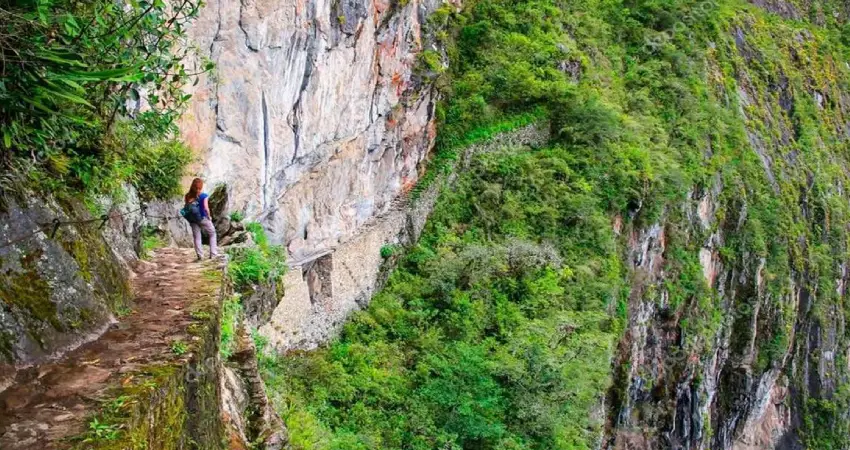
The beauty and grandeur of the Inca culture’s architectural ingenuity are not only concentrated within the citadel itself but also in the surrounding area. Among these, the traditional and emblematic Inca Bridge stands out, also known as Route D. It is a structure that was peculiarly built at one end of the cliff. It is immediately apparent, at first glance, as a discreet access route for travelers arriving at the Citadel on that side. Its construction is based primarily on logs and stones, so it is understood that its location was related to defense against possible invasions. The trip to this place is quite short but well signposted, including some safety flags, as it contains sections where the width decreases considerably, making it a point of caution. Currently, this bridge cannot be crossed, only to be appreciated from a distance.
It is estimated that an additional 40 minutes will be required to adequately enjoy this complementary destination, making it the perfect alternative for travelers seeking to enjoy a unique view of a different place without taking long walks that require great physical exertion. It is also the perfect place for travelers seeking to partially immerse themselves in the natural beauty that extends around the Inca citadel, capturing beautiful photographs. It has an average difficulty due to its proximity, however, it is important to consider that it is only open during the dry season, which occurs between May and October each year, for safety reasons, since when it rains, the road becomes more slippery and dangerous.
| Price | Foreigner | Peruvian | CAN countries |
| General | s/ 152.00 | s/ 64.00 | s/ 64.00 |
| Student | s/ 77.00 | s/ 32.00 | s/ 32.00 |
| Minor
(3-17 years old) |
s/ 70.00 | s/ 32.00 | s/ 32.00 |
7.- RESERVATIONS AND POLICIES
Entrance tickets to Machu Picchu must be booked at least three months in advance, and even more so during peak season, which runs from May to October each year. This season is ideal for travelers to plan their experience, as the weather is more suitable and stable throughout the day. This way, hiking experiences can be carried out safely. This booking process is quite simple and can be done directly on the platform run by the Peruvian Ministry of Culture, tuboleto.cultura.pe. You can complete the steps using an intuitive system. However, it’s important to choose the appropriate circuit, one of any of the route options that best suits your needs.
You’ll then be given the option to make the corresponding payment using a credit or debit card. This is the safest way to make a reservation for this visit. You can also book through authorized travel agencies, however, please verify that they are properly associated with the Ministry of Culture. To do this, you can use the general list of service providers in Peru. It’s important to note that, due to the latest regulations issued by the Ministry of Culture, there are no modifications or cancellations regarding reservations for Machu Picchu entrance tickets. This is primarily to ensure that the ticket allocation process is fair and that there are no subsequent irregularities.
8.- THE CONQUERORS DIDN’T FIND IT
“There is no doubt that one of the main reasons why this Inca citadel is in such good condition today is because the Spanish conquistadors who arrived in Cusco in 1533 never managed to discover its existence. It remained hidden from public view for more than three centuries, and was finally discovered in 1911 by Hiram Bingham, who made it known to the world.”
9.- FAQs ABOUT MACHU PICCHU CIRCUIT 1
- What is Circuit 1 at Machu Picchu?
It is also popularly known as the Panoramic Route and is primarily characterized by providing access to the highest area within the Inca city of Machu Picchu. Its experience is based on the higher elevations where the panoramic views are exclusive and excellent.
- Can you see the Intihuatana on Circuit 1?
No, currently, circuit one only allows access to the upper part of the citadel, where the natural viewpoints are located next to the guardian’s house. However, you cannot descend to the urban area due to restriction policies. This can only be done on circuits two or three.
- Is Circuit 1 better than Circuit 2?
Much depends on the type of experience each visitor is looking for. Circuit one is primarily designed for those travelers who enjoy panoramic views or want to capture their experience through photography, in addition to those who have previously visited the interior of the citadel. Circuit 2 is primarily intended for travelers arriving here for the first time, as it offers a more comprehensive experience.
- How long does Circuit 1 take at Machu Picchu?
This circuit has been designed especially for travelers who don’t have much time to visit the citadel. Therefore, your visit is also short and can vary between one hour and one hour and 30 minutes. It’s important to note that the maximum time allowed is two hours.
- Can you get the classic Machu Picchu photo on Circuit 1?
Yes, in fact, this is the ideal place to enjoy this panoramic view, as the famous postcard photo is taken from the viewpoint next to the guard house. This is included in the first circuit visit.
Are you ready to start your next adventure to the Inca city of Machu Picchu?. Auri Peru can help you plan a personalized adventure that allows you the time you need to explore and appreciate the beauty of this emblematic citadel without complications. Contact us now and discover everything we have for you.
“Every journey starts with a single step.”