

Quick Answer
Sangalle Oasis lies at the bottom of Peru’s Colca Canyon, below the town of Cabanaconde. The direct trail is approximately 4.5 km (2.8 miles) and takes around 2–3 hours downhill. The climb back is considerably harder, so many hikers spend the night in a simple lodge before returning early the next morning.
From the canyon rim, Sangalle looks like a small patch of green beneath enormous rock walls. Getting there takes more planning than stopping at a viewpoint: there is a road journey, a steep descent and, eventually, a demanding climb back out.
This guide from Auri Peru Travel brings those practical details together, from the choice of trail to overnight accommodation and the best time to set out. For the wider region, see our Colca Canyon Peru guide.
What Is Sangalle Oasis in Colca Canyon?
Sangalle Oasis, also known as the Valle de Sangalle, lies near the Colca River in the district of Cabanaconde, Arequipa. Unlike the usual canyon viewpoints, this is somewhere you reach by walking down into the landscape rather than observing it from above.
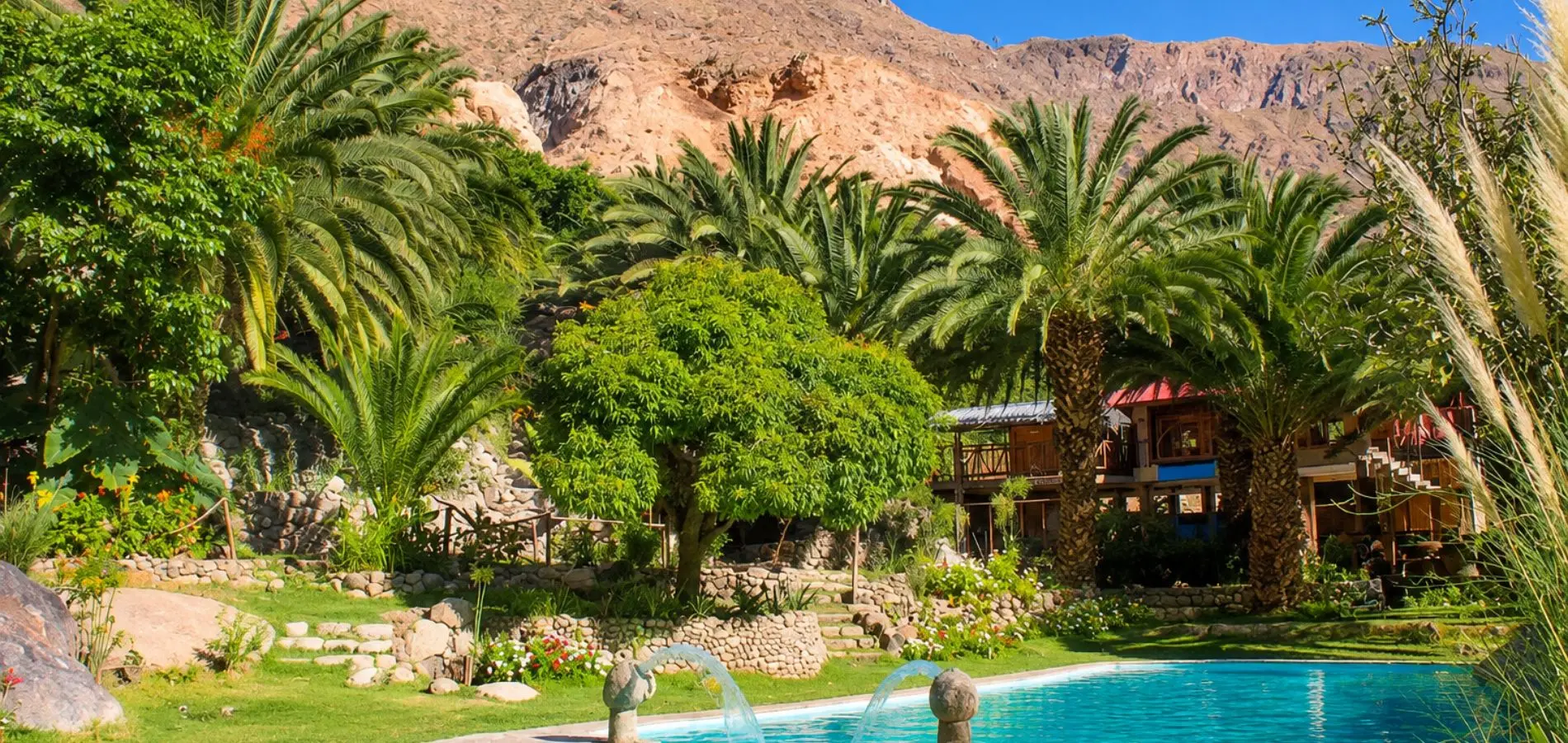
Fruit trees and other vegetation thrive in its warmer, sheltered microclimate, contrasting with the dry, rocky slopes above. Before it became a trekking stop, the valley supplied fruit to nearby communities along mule paths that still form part of the hiking routes.
Today, travelers come for the scenery, basic lodges and a chance to rest after the descent. Sangalle is not a resort or a roadside attraction; the walk is central to the visit.
Sangalle Oasis Quick Facts
| Detail | Information |
|---|---|
| Location | Colca Canyon, Arequipa, Peru |
| Nearest starting town | Cabanaconde |
| Altitude | Approx. 1,900 m (6,234 ft) |
| Direct trail distance | Approx. 4.5 km (2.8 miles) |
| Descent time | Approx. 2–3 hours |
| Main activities | Hiking, sightseeing, swimming |
| Accommodation | Rustic lodges and camping areas |
Where Is Sangalle Oasis and How Do You Get There?
Cabanaconde is the road-accessible starting point for a visit to Sangalle, not the oasis itself. From the village, you still need to make your way down into the canyon. This distinction matters when planning transport: arriving in Cabanaconde does not mean the walking is over.
Getting from Arequipa to Cabanaconde
The usual road journey follows Arequipa, Chivay and Cabanaconde. MINCETUR lists public bus service to Chivay and local transport onward to Cabanaconde; traveling by private vehicle gives you more flexibility with stops and timing. Either way, allow several hours for the journey and extra time for connections. An overnight stay in Cabanaconde before hiking can be a more comfortable option than trying to fit a lengthy road transfer and a steep descent into an already crowded day.
Confirm the return transport schedule before you commit to a hiking day, especially if relying on public connections.
How to Reach Sangalle Oasis from Cabanaconde
The direct trail descends from the Cabanaconde area on a steep, winding mule path. It is worth asking locally where the current route begins and whether conditions have changed. San Miguel viewpoint is associated with the longer route toward San Juan de Chuccho, so do not assume every trailhead leads along the shortest way to Sangalle.
There is no regular vehicle transfer down to the oasis. Plan the hike around daylight and remember that the uphill return takes longer than the descent.
Sangalle Oasis Trek: Routes, Hiking Time and Difficulty
Two routes are commonly used to reach Sangalle: the direct descent from Cabanaconde and a longer circuit via San Juan de Chuccho. The right choice depends less on the scenery—both offer canyon views—than on how much walking you want to do and whether you can spend a night along the way.
Direct Trek from Cabanaconde to Sangalle Oasis
The most direct route starts in Cabanaconde, where a winding trail descends toward the canyon floor. The walk covers approximately 4.5 km (2.8 miles) and usually takes between two and three hours. Much of the path is steep and rocky, so even though the distance is relatively short, the descent can be tiring, especially for the knees.
The direct path makes sense if your priority is to reach Sangalle with enough time left to rest, rather than spending most of the day walking through other villages.
Extended Trek via San Juan de Chuccho
A longer alternative follows the trail toward San Juan de Chuccho, a small settlement tucked into the canyon. From there, the route continues through Cosñihua and Malata before reaching Sangalle.
MINCETUR estimates roughly four hours to San Juan and another two and a half hours onward to Sangalle. Those are walking times, excluding stops; consider dividing the route across days rather than treating it as a quick detour.
How Difficult Is the Hike Back to Cabanaconde?
The steep ascent to Cabanaconde is usually the hardest part of the trek. From the oasis, you must gain around 1,400 meters in elevation, with limited shade along some sections. Allow roughly three to four hours or more for the climb, depending on your pace and the conditions.
If the uphill effort sounds doubtful, do not judge the outing by the easy-sounding downhill time. Plan an early start, carry enough water and consider a night at the oasis rather than committing to a rushed same-day return.
Sangalle Oasis Trekking Routes
| Route | Estimated time to Sangalle | Main difference |
|---|---|---|
| Direct from Cabanaconde | 2–3 hours | Shortest descent |
| Via San Juan de Chuccho | Approximately 6.5 hours | Longer trail through Andean villages |
Sangalle Oasis Altitude and Weather
How High Is Sangalle Oasis?
Sangalle Oasis sits at approximately 1,900 meters (6,234 feet) above sea level, considerably lower than Cabanaconde, which stands at around 3,300 meters (10,827 feet). This difference of roughly 1,400 meters helps explain why the return hike can be particularly demanding, despite the relatively short distance.
For a broader understanding of elevation changes throughout the region, explore our Colca Canyon altitude guide.
What Is the Weather Like Inside the Canyon?
The canyon floor often feels warmer than Cabanaconde. You may start in cool morning air and encounter much stronger heat on exposed sections of the trail later in the day.
Temperatures and conditions can change throughout the hike, making lightweight clothing, sun protection, and an additional layer useful, particularly for early morning departures or overnight stays.
What to See and Do at Sangalle Oasis
Natural Scenery and Photography
Sangalle’s appeal is its setting rather than a long list of attractions. Fruit trees and palms stand beneath immense dry canyon walls, a contrast that becomes clearer as you approach on foot.
The view back up the canyon and the changing light are rewarding subjects for photography. There is no need to add another excursion simply to appreciate the place.
Swimming Pools and Rest Areas
Some of the small lodges have pools and resting areas, a welcome option after the descent. These are facilities belonging to accommodations rather than guaranteed public swimming areas.
If you are only visiting for the day, ask whether non-guests can use a pool and whether it will be open. A quiet afternoon in the shade may be the main pleasure of being here.
Where to Stay at Sangalle Oasis
What to Expect from Sangalle Oasis Lodges
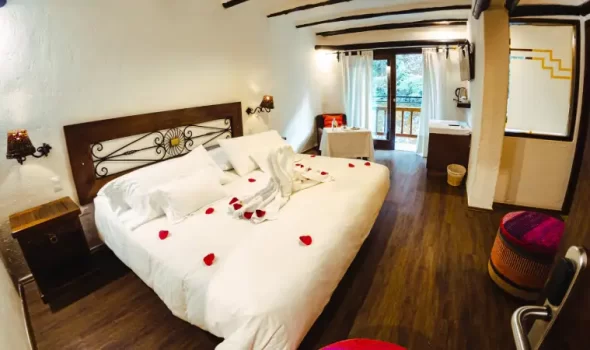
Sangalle’s accommodation is simple. The reward is sleeping at the bottom of the canyon, not hotel-style service. The small rustic lodges offer straightforward rooms, with facilities that differ considerably from one property to another.
Before descending, confirm your reservation, meal arrangements, bedding, showers, electricity and how payment is accepted. Do not assume every property offers the same services or that you can arrange everything after reaching the oasis.
Is It Better to Stay Overnight or Visit for the Day?
Staying overnight gives you time to enjoy Sangalle and tackle the climb rested the next morning. A practical plan is to reach Cabanaconde the day before, hike down the following morning and climb out early after a night at the oasis.
A same-day return is feasible for hikers comfortable with a long uphill effort, but leaves less time at Sangalle and less margin for delays. If you prefer comfortable hotels, it may make more sense to stay elsewhere in the Colca Valley and decide separately whether the hike is right for you.
Best Time to Visit Sangalle Oasis
Dry Season vs. Rainy Season
The drier months, generally April to October, are usually the more reliable choice for trekking. There is less rain on the trails, although dry conditions are not guaranteed. PROMPERÚ’s climate guidance describes these broad seasonal patterns for the Andes.
From November to March, rain is more frequent and the path can become slippery. Ask locally about recent weather and any trail restrictions, especially after heavy rainfall, rather than assuming the route is always suitable.
Best Time of Day for Hiking
Starting early in the morning is particularly important when hiking back to Cabanaconde. The steep ascent offers limited shade in some areas, and temperatures can become uncomfortable as the day progresses.
For travelers spending the night at Sangalle, leaving shortly after sunrise is a practical way to avoid the strongest daytime heat and complete the climb at a more comfortable pace.
Essential Tips for Visiting Sangalle Oasis
What to Pack for the Trek
Bring shoes with good grip, sufficient drinking water for the full hike, sun protection and a light extra layer. Trekking poles can help on the descent. A charged phone with an offline map is useful, but should not replace local route advice; pack a flashlight if you may walk near dusk. Carry essential personal items and some cash, and check which supplies your lodge provides before relying on them.
Colca Canyon Entrance Tickets
Sangalle falls within the Colca tourist circuit, which requires a Boleto Turístico managed by AUTOCOLCA. Its published price for adult foreign visitors outside the Latin American category is S/70, with different rates for other visitors.
The ticket covers circuit entry, not transport, guiding, meals or accommodation. Carry identification. AUTOCOLCA provides online ticket information and authorized sales points including Chivay; check its official prices and purchase instructions before traveling.
Should You Hire a Guide?
Some experienced hikers follow the direct trail independently, but a local guide can be valuable if you are unfamiliar with steep canyon terrain, prefer support with the longer village route or want help coordinating transport. MINCETUR recommends a guide; the inventory does not say one is mandatory for every visitor. In either case, check current trail conditions before setting off.
Frequently Asked Questions About Sangalle Oasis
Can You Reach Sangalle Oasis Without Hiking?
Not by road. Most visitors reach Sangalle on foot from Cabanaconde. MINCETUR also describes mule transport for the return ascent, arranged locally through lodges, but availability should never be assumed.
How Long Does It Take to Hike Back from Sangalle Oasis?
Allow approximately three to four hours for the climb to Cabanaconde, or longer if you need frequent breaks. The ascent is considerably more strenuous than the descent, so leaving early in the morning is recommended.
Is Sangalle Oasis Suitable for Beginners?
This is not an easy first hike. Active travelers with some walking experience may manage the direct route, but anyone unfamiliar with long, steep climbs should carefully assess the effort and consider local guidance.
Can You Stay Overnight at Sangalle Oasis?
Yes. Several rustic lodges and camping areas offer accommodation within the oasis. Facilities are basic and vary between properties, so checking the availability of meals, bedding, and showers before arriving is advisable.
Can You Visit Sangalle Oasis on a Day Trip from Arequipa?
For most travelers, it is impractical. Getting to Cabanaconde takes several hours by road, and the direct round-trip hike alone can take around five to seven hours or more. Allow at least one night in the Colca area instead of trying to rush both journeys into a single day.
Is Sangalle Oasis Worth Visiting?
Not every traveler needs to hike to the bottom of Colca Canyon to appreciate it. But for those who enjoy challenging trails, quiet landscapes, and a simple night surrounded by canyon walls, Sangalle offers a memorable change of pace. The steep climb out and basic accommodation are part of the decision, not details to overlook.
If you would rather explore the wider valley at your own pace, Auri Peru Travel can help shape a private itinerary around your interests. Explore our Colca Canyon tours from Arequipa for more ideas.