

1.- CAN YOU ACTUALLY WATCH THE SUNSET IN MACHU PICCHU?
Enjoying a unique view of Machu Picchu is a dream for travelers worldwide. It’s not just a special moment of the day; in fact, it’s characterized by the incredible visual spectacle it offers, making it one of the main attractions for travelers arriving at various times of the year. Of course, as with all special moments, there’s always some confusion. Despite its popularity, not all travelers enjoy this privilege because many choose to visit the citadel earlier, missing the opportunity to stay until sunset and thus missing out on this spectacle. Furthermore, the time allowed is restricted to only two hours per entry, meaning that the sight of the sun disappearing behind the mountains is only experienced by a select few.
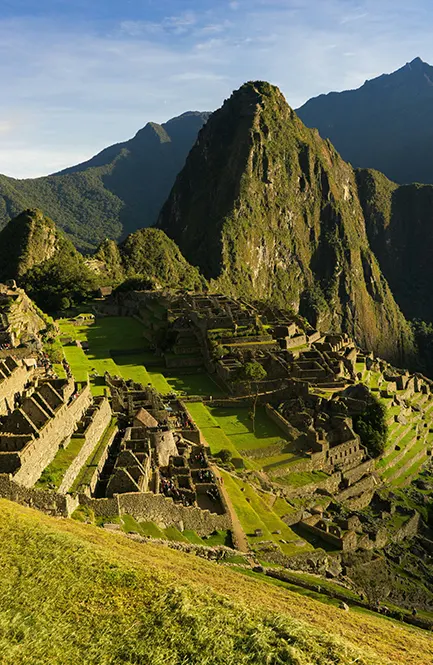
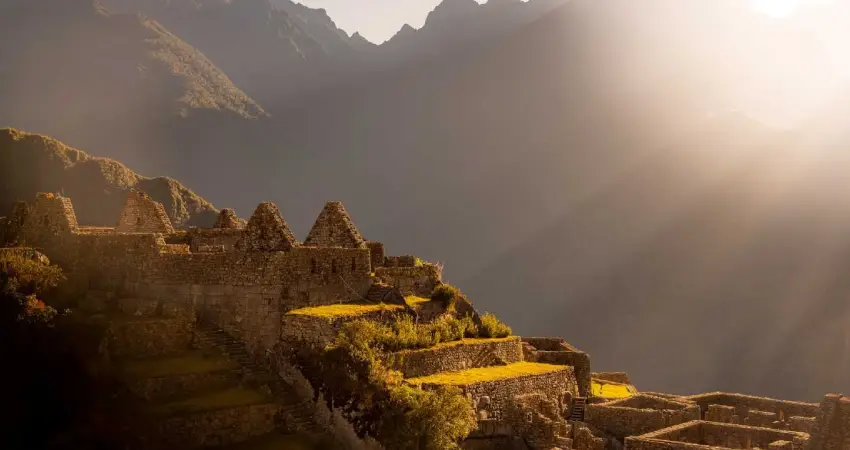
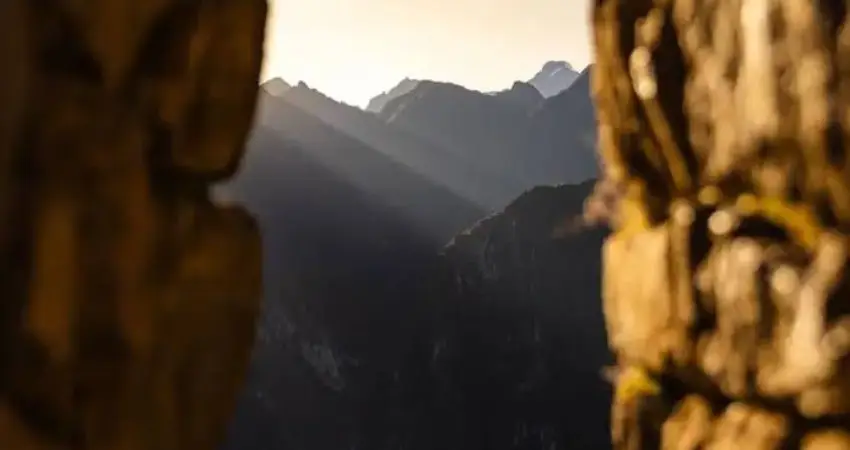
The sunset in Machu Picchu has become a privilege few travelers get to experience. This panorama, with its last golden rays, mystically blends with a curtain of mist as the mountains are gradually shrouded in mist, revealing a unique beauty in the vegetation. The result is a magical atmosphere where the sun’s hues perfectly complement the stones of the structures, highlighting their iconic beauty.
2.- Machu Picchu Opening and Closing Times
The main reason many travelers miss the sunset in Machu Picchu is that they are unaware of the specific opening hours at the archaeological site. Currently, the first entry time is around 6:00 am., while the last is at 3:00 pm. Most travelers, following recommendations, try to begin their experience during peak hours, from 9:00 am to 1:00 pm, each time slot being regulated by a different circuit. This is why most travelers generally leave the citadel well before sunset in Machu Picchu begins.
Another important and key reason why many travelers don’t have the opportunity to enjoy the sunset in Machu Picchu is essentially due to the regulations protecting the archaeological site. These regulations are designed to preserve Machu Picchu, and each ticket issued for access aims to limit the length of stay, directly linked to the established entry times. This also seeks to minimize the impact on this archaeological heritage. Furthermore, the varied geography of the area necessitates safety measures to ensure that each visitor can leave the archaeological site well before nightfall. Therefore, choosing a particular month of the year when sunset occurs earlier is advantageous, which is why the Machu Picchu in June sunset is quite popular and sought after by many travelers.
3.- WHY MACHU PICCHU LOOKS MAGICAL AT SUNSET
One aspect that makes Machu Picchu magical is highlighted during the last hours of the day when the sun begins to set behind the mountains, completely transforming the citadel into a unique place. This moment is special because it not only captivates the attention of the thousands of travelers who arrive each day, but it is also important and special for photography trips and those seeking to connect with nature. Each of the structures, the interior, the mountains completely surrounded by vegetation, and the clouds that still drift above the site transform into a dreamlike canvas. There is no doubt that at any time of day you can enjoy a unique view of Machu Picchu; however, the opportunity to experience the sunset in Machu Picchu in March is even more special, as you can enjoy a much more beautiful atmosphere where mystery completely envelops the archaeological site.
The combination of colors, from the golden hues to the more subdued versions of the buildings that gleam with an intense radiance, becomes a unique visual experience. The mist gradually rises, creating scenes and landscapes that are constantly changing, resulting in a different spectacle each moment. Thus, it becomes clear that each afternoon is distinct depending on the season and the time of day, providing a unique experience and one of the most important and unforgettable moments for those who visit this mountaintop citadel.
| “xplore the world with an open heart.” |
4.- Benefits of Sunset in Machu Picchu in March
One very important aspect, which we have already mentioned, is that very few people get to enjoy this spectacle, since the times are generally associated with the early hours of the day. Therefore, the feeling of a more intimate and tranquil stroll or visit gradually increases as the afternoon progresses. The spectacle is enjoyed in a special way with very few people, where the atmosphere simulates a more complete relaxation, in addition to a deep connection with the surroundings. In this way, you can get a clearer and more complete view of the city without other visitors. This aspect adds a touch of special emotion to the emblematic historical tradition that exists in the place.
5.- BEST PLACES TO EXPERIENCE SUNSET VIEWS AROUND MACHU PICCHU
For many travelers, Machu Picchu in June sunset is the perfect moment to capture the essence of this time of day. However, it’s important to understand that not all travelers stay until the exact moment this visual spectacle occurs. But there are ways to maximize the experience, as there are several natural viewpoints where appreciating the beauty of Machu Picchu is significantly enhanced due to their location.
5.1.- Upper Terrace
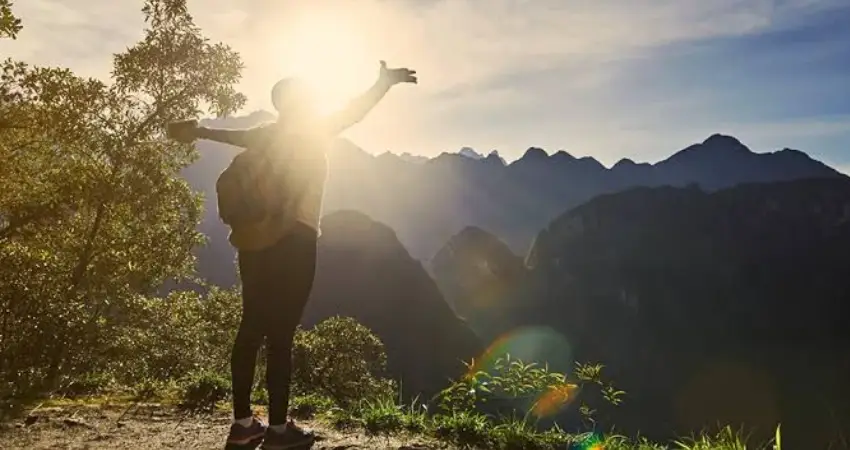
Located at the highest point of the Citadel, this terrace offers a panoramic view of all of Machu Picchu, as well as a much broader perspective of the surrounding mountains. When it comes to Machu Picchu in June sunset, this spot is truly special, as it allows a complete view of how the light gradually illuminates each of the stone structures, creating a much wider visual landscape of the mountains. The atmosphere becomes simply spectacular, and you can enjoy not only the citadel but also the expansive Urubamba Valley.
5.2.- Guardian’s House
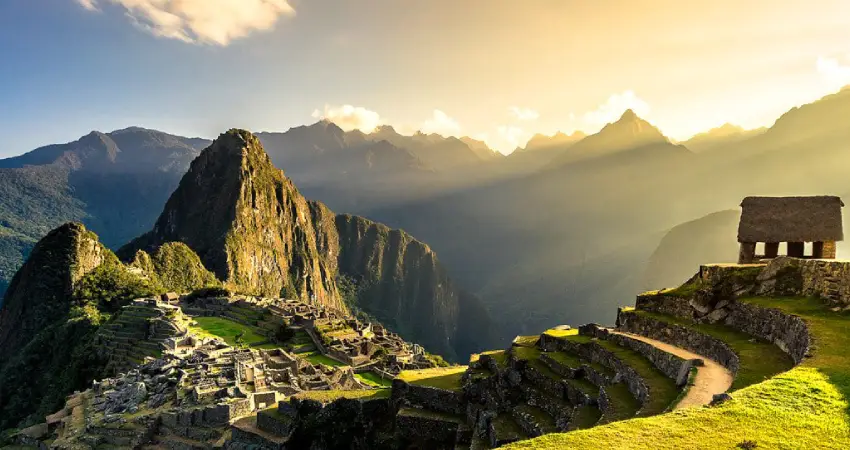
Listed as one of the most popular spots where thousands of photography enthusiasts gather to capture the coveted postcard photo of Machu Picchu, its location is situated on the upper part of the citadel. This area, which was once considered a control point for all access routes, offers a sweeping view of the entire citadel and the surrounding mountains. For many travelers, it represents an ideal spot to enjoy this visual spectacle, especially during the late afternoon, as the lighting reveals a different side of the citadel.
5.3.- Huayna Picchu Mountain and Machu Picchu
Classified as one of the sacred mountains offering a unique perspective of the citadel, it is considered one of the best viewpoints in Machu Picchu. It stands out primarily for providing unique photographs from its summit, located directly opposite the stone citadel. While it’s a great place to capture some of the best photos, there is a limitation: it’s only open in the morning. This prevents many tourists from accessing it and getting the popular sunset photo. The same applies to Machu Picchu Mountain, located behind the city. Considered one of the most emblematic mountains, it also bears the city’s name. Its altitude provides a much more panoramic view, not only of the site itself but also of the surrounding area, offering a collection of spectacular and unique landscapes.
5.4.- Sun Gate
This unique space is located on one of the mountains surrounding the citadel. It’s quite distinctive, as it’s the access point used by thousands of travelers hiking the Inca Trail. It’s one of the most important natural historical viewpoints in the area, where you can easily appreciate the spectacular sunset without much difficulty. On the shorter, two-day Inca Trail, this is the approximate time you’ll arrive at this spot, making it a strategic location from which you can enjoy a direct view of the city bathed in the golden rays of the sun.
6.- BEST TIME OF YEAR TO SEE SUNSET COLORS IN MACHU PICCHU
During this special time of day, a traveler’s perspective of Machu Picchu changes considerably. This also occurs simultaneously at various times of the year due to variations related to the climate and duration of sunlight in the Andean region. These factors can directly alter cloud cover, humidity, rainfall, and even air clarity, which can directly affect the intensity of colors and visibility during the last moments of daylight. Understanding this is crucial, as it directly impacts your experience, allowing you to enjoy it or, conversely, potentially leading to visual difficulties that completely diminish the experience.
6.1.- Dry Season
This is the world’s most renowned season for travelers to enjoy Machu Picchu. It occurs between May and October, when the sunsets at Machu Picchu blend perfectly with a more neutral style. As the natural landscape gradually loses its color, it resembles a golden citadel amidst the vegetation and stone structures. This time is also quite special because most of the day is bathed in natural light, illuminating not only the buildings but also the surrounding mountains, providing a unique and exceptional clarity. During this season, evenings often offer more favorable weather conditions, with sunlight flooding the buildings and giving the landscapes warmer tones. The lack of rain also makes for noticeably clearer skies, allowing for direct and unobstructed photography.
6.2.- Rainy Season
For many travelers, this represents a challenging season that can directly disrupt their plans for visiting Machu Picchu. Extending from November to April, the vegetation gradually transforms into a more intense green, blanketing the surroundings. Rainfall also increases, creating an environment full of drama and mysticism. Naturally, with this frequency of weather changes, the presence of clouds and fog shifts more rapidly, resulting in a more dynamic landscape that is particularly striking for travelers seeking the perfect photograph. Occasionally, this combination of clouds also helps create a more favorable image, as the sun’s rays pierce through the clouds and focus within the dense fog, resulting in a more striking contrast of natural light on the mountains, enhancing the composition of photographs.
7.- BELIEF IN THE SUN GOD
“For the Inca culture, the presence of the Sun was extremely important, as it represented the principal god of their faith, considered the source of energy and life. For this reason, within the Inca city of Machu Picchu, a special place was established to worship it and to offer ceremonies of gratitude. There is also a space known as the Intihuatana, where astronomical projections were made using shadow projections interpreted by an Andean priest to understand the outcome of the new Andean year.”
8.- FAQs
- Can you watch the actual sunset from Machu Picchu?
If you can enjoy this visual spectacle when visiting Machu Picchu, you should consider a few important aspects, starting with choosing the last entry time, which is scheduled for 3:00 pm. Also, always consider hiring a private guide to allow for a more leisurely visit at your own pace. Generally, travelers don’t stay until sunset, but rather until the moment the sun begins its descent, transforming its light into a golden spectacle.
- What time does the sun set at Machu Picchu?
The average time it takes for the sun to gradually set varies depending on the season. Generally, you can expect it to occur between 5:30 pm and 6:15 pm, though this can also vary depending on access regulations.
- Is sunset or sunrise better at Machu Picchu?
Both times of day are special and considered unique opportunities to experience the Inca citadel of Machu Picchu in a different way. While sunrise is generally associated with a gradual illumination, often accompanied by mist and a calmer atmosphere, sunset offers radiant light with golden tones that stand out as they reflect off the stone structures.
- What is the best month to see sunset in Machu Picchu?
You should consider traveling between May and August if you’re looking for a unique and unforgettable experience, especially if you want to combine your visit with sunset. These months are ideal because they are part of the dry season, with minimal rainfall, making them excellent options.
- Where is the best viewpoint for sunset photos in Machu Picchu?
The best place to enjoy a complete view and appreciate the visual spectacle of the sunset at Machu Picchu is primarily the Guardhouse, which is highly valued by photographers seeking an iconic and unique photo of the citadel. You can also choose to go to the upper terraces, which offer an equally incredible view.
- Can you stay inside Machu Picchu until dark?
No, guided tours are generally organized according to set schedules throughout the day. The last entry time is around 3:00 pm, allowing the tour to extend only until 5:00 pm as part of the protocol. This way, you can only appreciate the moment when the sun begins to illuminate the entire citadel with golden hues, but not until it disappears completely.
- Does Machu Picchu close before sunset?
This is generally the case at many times of the year, as the sunset time changes gradually depending on the season and weather conditions. For this reason, the citadel tends to close completely before the sun disappears behind the mountains.
- Is Machu Picchu less crowded in the afternoon?
Generally, yes, because many travelers choose to visit Machu Picchu in the morning for a better view and to make the most of their time. In the afternoon, you’ll usually find a very small percentage of visitors who stay until the very end to appreciate this spectacle.
A magical and unforgettable moment should not go unnoticed and must be part of your experience in 2026. Auri Peru can help you organize an adventure better suited to your needs, personalizing services and giving you the opportunity to enjoy its visual spectacle. Contact us and let’s take the first step together on your next adventure.
“Wander often, wonder always.”