


1.- THE RICH DIVERSITY OF PERUVIAN PRIMATES
The Peruvian Amazon is considered one of the most biodiverse places in the world, home to many species that are classified as unique. Among these are the Monkeys in Peru Amazon, who inhabit lush tropical forests. To date, around 50 species have been recorded, some of which are endemic to the area, while others are classified as endangered due to their rarity. Monkeys in Peru Amazon are characterized by their social behavior, unusual intelligence, and physical abilities, but they also play a very important role in the ecosystem that governs this territory. They are the main source of seed dispersal and natural control of the insect population. Whether they are the large, majestic howler monkeys or the small, cute tities, each of the monkeys in Peru is considered an emblem of nature that needs to be protected and treated with environmental awareness.
2.- JUNGLE MONKEYS
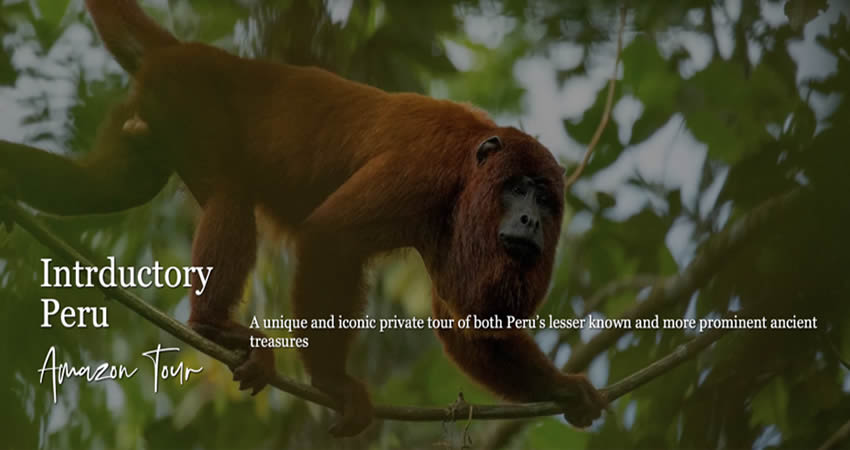
2.1.- Howler Monkeys (Alouatta)
This species is also known as Alouatta Seniculus and is mainly characterized by the loud vocalizations they can generate, which can be heard from miles away. This mainly occurs at dawn, which is the time of day when they are most active. These monkeys are mainly found in hierarchical groups that feed mainly on leaves, flowers, and fruits. When someone asks, Are there monkeys in Peru?, they cannot imagine that this species is one of the most representative of the monkeys in Peru, which usually inhabit the treetops of humid forests where they can be seen resting or feeding. They are also characterized by being quite territorial with intruders who enter their territory. Their main population is located within the Pacaya Samiria, Manu, and Iquitos national reserves.

2.2.- Spider Monkeys (Atales)
Among the species of monkeys that have been recorded, this one undoubtedly stands out for having a more slender body with the particular characteristic of long arms and a prehensile tail, which allows it to have greater agility and movement advantage when transporting itself through the treetops. Due to its grasping ability, this is one of the monkeys in Peru that has been classified as endangered, as multiple hunters and people have caused its natural habitat to shrink considerably, making it increasingly difficult to observe them. Traditionally, its population is found within nature reserves such as Tambopata and Manu, where primary forests can still be found today that serve as a natural refuge for this species.

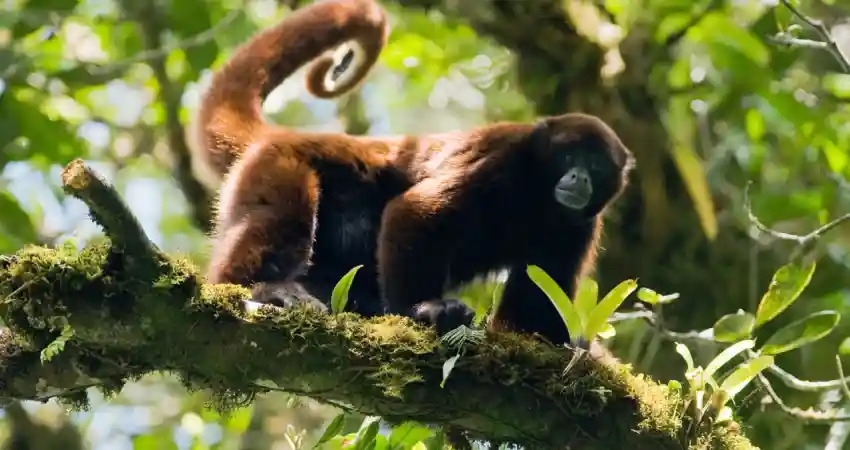
2.3.- Yellow-tailed woolly monkey (Lagothrix)
Although many travelers around the world still ask, Are there monkeys in Peru?, being able to see this unique primate in Peru is considered a great achievement, as it is a species that can only be seen in this part of the world. Scientifically known as Lagothrix flavicauda, its population is found in the cloud forests of northeastern Peru, and it is currently one of the 25 most endangered monkey species in the world. Its habitat is mainly restricted to between 1500 masl and 2700 masl in mountainous regions with dense vegetation. Of course, its main characteristic is its thick fur and striking yellow tail.
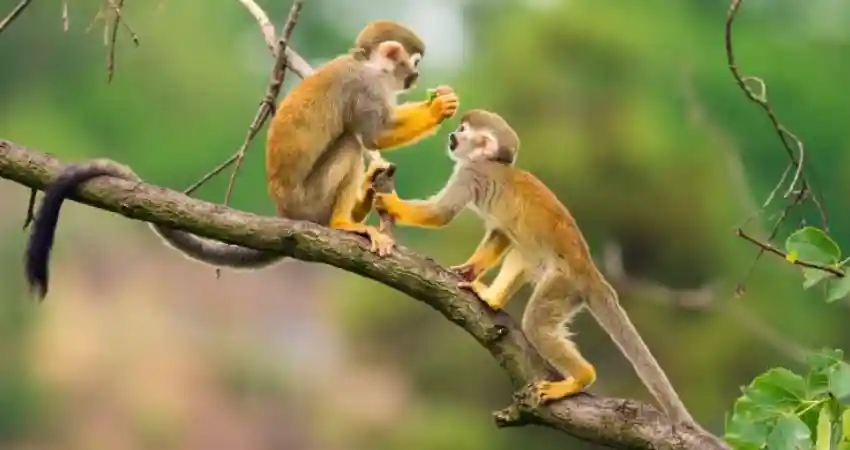
2.4.- Squirrel monkey (Saimiri)
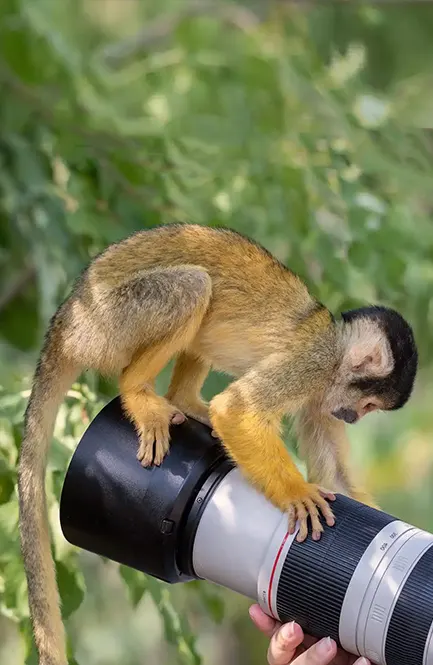
The squirrel monkey is also known as Saimiri Sciureus. It is one of the most curious and active members of its species. It is identified by its small size and lively gaze. They usually live in fairly large groups of around 50 individuals. It has also been observed that they communicate through vocalizations and are one of the few species of monkeys that have an established social structure. They are usually easy to spot during tours of the Amazon, at least in the Madre de Dios areas, where they can often be seen playing, which easily attracts the attention of travelers.

2.5.- Capuchin monkeys
The easiest way to identify this species is by the characteristic white spot on their forehead, they have a much higher intelligence and curiosity than the rest of the species since there is evidence that they use stones or branches as tools to open fruits and they have a non-theoretical capacity for learning and memory. The interaction with this species is more delicate than with others since it is always recommended to appreciate them without touching or feeding them because they can present aggressive attitudes or even become dependent which could affect their natural environment.

3.- BEST PLACES TO SEE MONKEYS IN PERU
When visiting Peru you can know that the biodiversity in primate species is quite wide compared to other countries within South America, this is mainly due to the wide geography that exists from dense Amazonian forests to high jungle spaces which are differentiated by ecological floors, thanks to this visitors can get to know an impressive variety of monkeys which live in their natural habitat.
3.1.- Manu National Park
This national park has been recognized as a World Heritage Site by UNESCO because it contains a high concentration of primate species unique in its kind, it is also characteristic that contains a geography of altitudinal variety from the Andes to the lower Amazon which makes the territory a natural refuge for multiple species having as main guests the Red howler monkey (Alouatta seniculus), Choro monkey (Lagothrix lagotricha), Squirrel monkey (Saimiri sciureus), Capuchin monkey (Cebus albifrons) and Titi monkey (Callicebus cupreus).
Trails can also be found in biological station territories such as Cocha Cashu, as well as others around the Manu River, which offer an exclusive view of these species. It is always recommended to plan your trip to this destination between May and October, as this is considered part of the dry season and is characterized by reduced rainfall, making the trails and paths more accessible and allowing for more frequent wildlife observation.

You can find more information about this destination in our article: Manu National Park: Peru’s Ultimate Biodiversity Sanctuary
| “Go where you feel most alive.” |
3.2.- Tambopata National Reserve
This nature reserve is located in the interior of Madre de Dios and is considered a paradise for multiple species of monkeys because it is an ideal space for the biodiversity of flora and fauna it contains. For travelers seeking an Amazonian experience without having to travel long distances, it is a great alternative since it has direct access from Puerto Maldonado. This is also associated with the activities, as it allows for more accessible travel in terms of logistics and coordination. One thing that certainly stands out about this place is the presence of clay deposits, also known as Collpas, which constantly attract multiple species, including monkeys, who are constantly looking for these minerals that are essential for their diet. As a result, the concentration of these species is higher and social behavior can be observed, which is recommended for travelers.
This territory is quite large, so it is always recommended to enjoy a stay of between 3 and 5 days in order to enjoy activities such as hiking or boat trips, appreciating as many of the registered species as possible. For monkey watching, the early morning and late afternoon hours are recommended, as they are the perfect time for photography or simply for appreciating these species.
You can find more information about this destination in our article: Tambopata National Reserve Peru
3.3.- Pacaya Samiria National Reserve
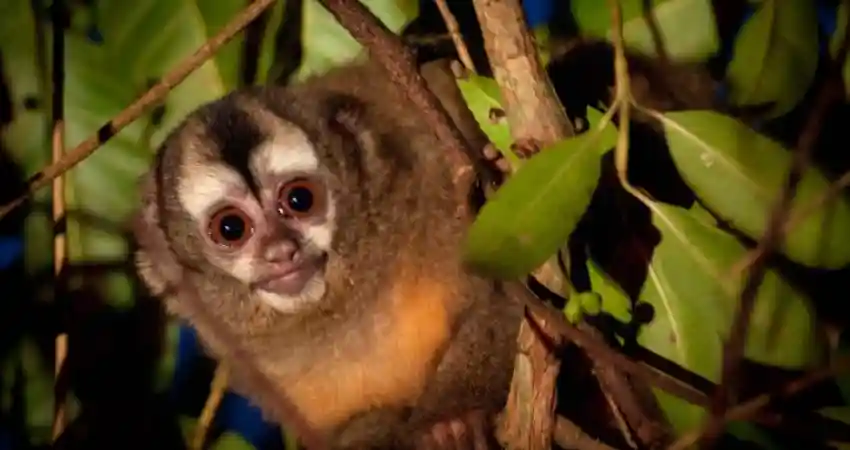
This place is commonly known as the jungle of mirrors due to the constant presence of water in most of its territory, which creates a mirror effect and has made it an ideal reserve for many species of primates that have adapted their lifestyle to floodplains. This place is ideal because it combines areas of dry land with areas that are constantly flooded, where primates can move around easily through the treetops, giving observers a different perspective on their behavior. These species are mainly observed by boat, as this allows visitors to see multiple species such as howler monkeys, titi monkeys, capuchin monkeys, and others while traveling along the extensive Ucayali and Yanayacu rivers. It is recommended to plan your trip between June and November, as these dates are known as the low water season, when access to trails and wildlife sightings are much more frequent and easier.
You can find more information about this destination in our article: Pacaya Samiria National Reserve Tours: Complete Guide To Peru’s Amazon Paradise
3.4.- Iquitos Region
In Iquitos, there are many places where you can see various species of primates, mainly because this place is considered the main point of access to the Peruvian Amazon. Due to its proximity to the Amazon River, it is the perfect place to see the many species of primates that inhabit this region. One of the best-known places is Monkey Island, a protected area and shelter for hundreds of species that have been rescued from poachers. It is also a center that promotes environmental education with the aim of protecting existing primate species. On the other hand, you can visit the Amazon Rescue Center and Pilpintuwasi, which are recognized for providing rehabilitation services to primates that are frequently rescued from illegal trafficking and, after examination, can be responsibly released back into the jungle.

You can find more information about this destination in our article: Ultimate Guide To Tours In Iquitos: Gateway To The Peruvian Amazon
3.5.- Rio Abiseo National Park
It is located in the San Martín region and is the least visited of all the places, but it is very important because it preserves and cares for the rarest species of primates in Peru. This national park is listed as one of the last refuges for species such as the yellow-tailed woolly monkey, which is currently in danger of extinction. For this reason, access is regulated and controlled because it is not an area with tourist infrastructure and only promotes scientific expeditions or authorized programs that seek to care for and preserve this species. With its wide biodiversity and geographical variety, this space not only protects primates but also has a special combination of high jungle with archaeological heritage where you can find sites of pre-Hispanic origin.

4.- CONSERVATION
“Thanks to the support of many NGOs and in conjunction with the efforts of the Peruvian government, many areas known as refuges or protection centers have been created to care for endangered species such as the yellow-tailed choro monkey. Among these is the private conservation area abra Patricia, which is dedicated to keeping this species safe.”
5.- FREQUENTLY ASKED QUESTIONS
- What is the best time of year to see monkeys in Peru?
The best time of year to see primate species is during the dry season, which occurs between May and October. This time of year is important and special because rainfall decreases considerably, making trails and paths more accessible and increasing monkey activity, which makes them easier to spot.
- How many monkey species are found in Peru?
There are more than 50 species of monkeys, which is why Peru is considered one of the countries with the greatest diversity of primates in all of South America.
- Are there monkeys in Machu Picchu?
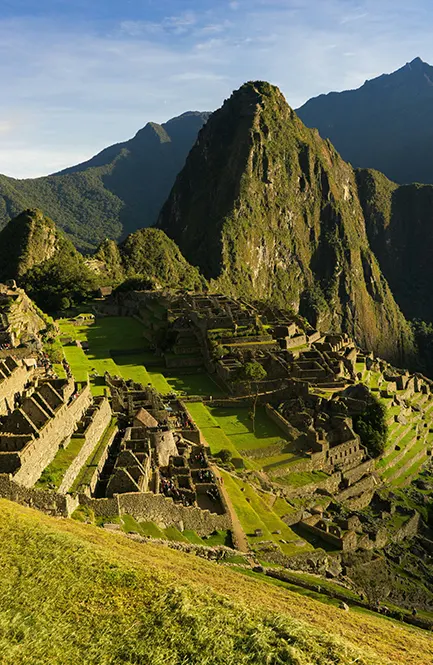
No, this is mainly because the Inca citadel of Machu Picchu is located in the jungle fringe zone and, due to its climate, is not an ideal habitat for monkeys. The nearby areas where this species can be seen are in sectors such as Vilcabamba or Manu National Park.
- Can you see monkeys in Lima or other coastal cities?
It is not common because coastal cities do not have a suitable habitat for monkey species. The only exception is inside zoos that are rescue centers for illegal trafficking.
- What’s the difference between monkeys and apes?
The main difference is that monkeys have tails and are smaller in size, which are characteristic of South America, while apes do not have tails and originate in Africa and Asia.
- How much does a monkey-watching tour cost?
There are many prices when it comes to enjoying monkey watching activities, with options ranging from one day to extended versions on luxury cruises. Activities can vary from $70.00 dollars per person to more, depending on the category you choose.
- Do I need a guide to see monkeys in Peru?
Yes, in fact, part of the environmental awareness and education promoted in this sector is that you always keep the company of a specialized guide who has the necessary permission to visit these places, thus ensuring that you enjoy a safe visit without disturbing the environment.

Of course, this information is very important when planning your adventure, but the experience of being able to see this species in person is indescribable. With Auri Peru, you can enjoy a responsible experience in the Amazon rainforest. Contact us now, and we will design a great adventure together.
“Explore more, worry less.”