

1.- WHY MACHU PICCHU IS EVERY PHOTOGRAPHER’S DREAM DESTINATION
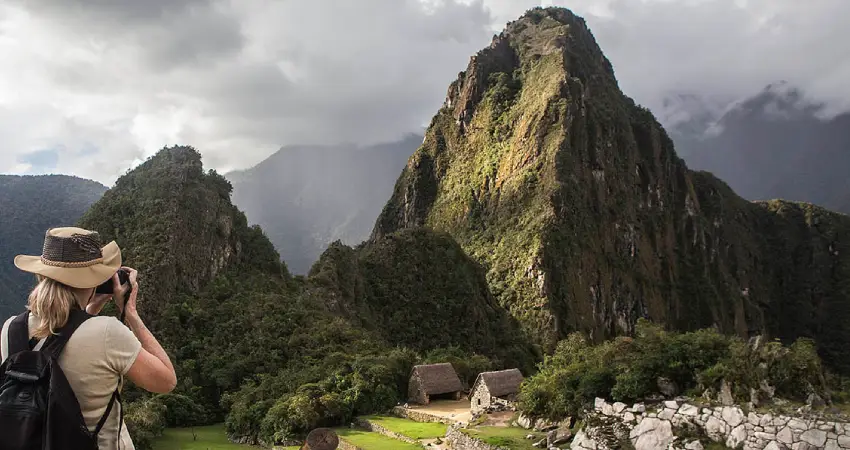
Capturing the best Machu Picchu photograph is one of the most coveted goals for travelers worldwide. Considered a unique architectural gem hidden in the Peruvian Andes, it undoubtedly stands out for its breathtaking surrounding scenery, making it one of the most impressive places on Earth. The unique combination of Inca architecture nestled amidst the mountains and close to the Amazon rainforest creates an ideal environment for content creators and photography enthusiasts to find inspiration in nature.
Very few places in the world offer the opportunity to create a landscape with such incredible visual composition as that found in Machu Picchu, an amazing citadel atop a mountain that provides a unique view of the mountain range that makes up the Peruvian Andes. Another incredible aspect that makes Machu Picchu photography special is the presence of the mist typical of the high Andean region, which constantly appears and disappears, resulting in a cinematic landscape where the light also creates an incredible environment, further enhancing the Inca architecture.
For photography enthusiasts, there are many elements of direct interaction between photographic equipment and the natural environment. Every stone that forms part of the Andean constructions reflects the natural light, from sunrise to the proximity to the Amazon region. The cloud forest is also visible, where each intense green texture stands out due to its direct connection with the Andean sky, which displays a deep blue with dense clouds and intense rays of sunlight. In this way, Machu Picchu becomes the perfect place to capture the best photos of Peru.
2.- Aspects that make Machu Picchu a visually unique place
Compared to other archaeological destinations located in remote and desert areas, Machu Picchu enjoys a privileged environment due to its proximity to the Amazon region. It maintains a direct relationship with a living ecosystem, and the combination of stone constructions and nature, along with its proximity to the mountains, provides a complete sensory experience that is impossible to recreate anywhere else in the world. This is why Machu Picchu photography is so highly valued by travelers worldwide. Its proximity to the Amazon region is also considered to give it a privileged climate and temperature, creating a unique and special environment that is worth visiting at least once in a lifetime.
3.- The Challenge Behind the Beauty of Machu Picchu
For many, this wonder of the world represents the perfect place to capture a great photograph. However, it’s also essential to know the best spots for photography in Machu Picchu so you don’t just get the traditional image, but one that is truly unique. These truly memorable photos require proper and strategic planning, as various factors such as the weather and even the number of visitors per season can compromise the quality of your Machu Picchu photography. Generally, crowds traditionally gather at the highest points, considered viewpoints, from where you can get a clearer photograph of the Inca citadel. However, this can vary depending on the time of day, making it difficult to achieve clean compositions.
Another important aspect to consider is the light and illumination, which can constantly change due to the varying cloud cover and diverse geography. It’s also worth noting that Machu Picchu photography is somewhat complicated due to the regulations of the Inca citadel, which include parameters regarding professional equipment and drone flights. Furthermore, the altitude of Machu Picchu can present a constant challenge during extended photo sessions. To capture a unique photo, it’s important to know some Machu Picchu photography tips that will help facilitate the process. These include patience, familiarity with the geography of the area, and, of course, careful planning. These tips are crucial for understanding the difference between a regular photograph and an unforgettable one.
4.- History of Machu Picchu
Every Machu Picchu photography has been iconic since its scientific discovery in 1911, when explorer Hiram Bingham revealed it to the world. He presented a series of emblematic photographs that remain fundamental to its global popularity. Undoubtedly, the Machu Picchu photograph released that year sparked the interest of thousands of travelers worldwide, transforming the ancient Inca citadel into a highly sought-after destination and placing it at the top of travel lists. These first photographs showed a city made entirely of stone, partially covered by vegetation and enveloped in an atmosphere of mystery and mysticism. From that point, technological advancements resulted in photographs that became more vibrant in color, including aerial shots that offer a different perspective on Inca architecture.
5.- PHOTOGRAPHY RULES & REGULATIONS AT MACHU PICCHU
When planning your Machu Picchu Photography Tour, you should also consider important aspects such as the citadel’s internal regulations for protecting each of its sites from the presence of professional photography equipment. The Inca citadel has a unique preservation protocol that safeguards its fragility and also takes into account the large influx of tourists during seasonal changes. For this reason, the Ministry of Culture established a series of specific regulations to directly regulate this activity, especially for passionate travelers seeking to capture the best photographs within the citadel.
6.- Considerations Regarding Prohibited Activities
You should be aware that Machu Picchu is committed to preserving all its archaeological structures within each area of the archaeological site. This means that its protection applies to all visitors at any time of day. Therefore, many of the existing restrictions are directly related to safety and the conservation of the natural environment.
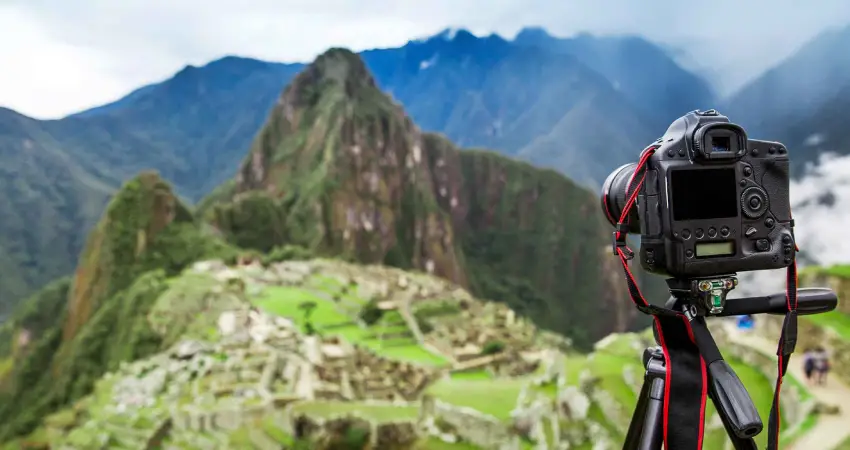
- First and foremost, the use of tripods, monopods, and even selfie sticks is strictly prohibited to avoid any obstruction of the marked trails. This can cause overcrowding, and in narrow spaces, it can disrupt order and even cause accidental damage to the archaeological sites. Therefore, one of the most useful Machu Picchu photography tips for your trip is to bring only a lightweight camera with built-in stabilization or a small handheld mount. This will allow you to capture candid, unique, and special photos.
- You should also be aware that the use of drones or any type of aerial photography is strictly prohibited during a Machu Picchu Photography Tour. This is directly related to the surrounding natural environment, which is designated as a protected The restriction aims to minimize the risks associated with overflights and also to protect against noise pollution and potential damage to the archaeological site.
- There is also a restriction on backpack size. You must take into account that there is a limit on the amount of luggage you can bring into Machu Picchu, with approximate dimensions of 40 × 35 × 20 cm. This facilitates movement within the archaeological site, and regardless of the chosen route, large backpacks are not permitted as they can cause problems for other visitors.
- The use of additional equipment such as flash units is also restricted in certain areas. The aim is for all visitors to have a pleasant and uncomplicated experience, and the use of flashing lights can cause visual discomfort. It is recommended that cameras be able to handle natural light well so that the photographs also turn out more natural.
7.- Professional Photography Permits
Most visitors opt for a more traditional visual experience, taking photographs primarily for personal use. However, professional productions with commercial interests require a special permit, which can only be granted by the authorities overseeing the archaeological site. This is especially important when large-scale professional equipment is used during the filming or photography session, typically for audiovisual productions, as well as when models are involved or commercial advertising is used.
Keep in mind that these permits require extensive planning before they can be issued. It is recommended to plan well in advance, at least several months, always considering the scale of the production. Naturally, each permit fee varies depending on the type of project, its duration, and the equipment involved in the filming process.
8.- Rules According to Established Circuits
As part of your planning, it’s also important to learn more about the best spots for photography in Machu Picchu. This will allow you to properly organize your visit. Each circuit has been designed to suit the needs and preferences of every traveler. Each circuit has a marked and assigned trail that must be completed; under no circumstances can it be changed or backtracked. This ensures that the flow of tourists is managed directly and without complications, while also reducing the impact on sensitive areas. Each visit is extended with enough time for photography enthusiasts to enjoy capturing the best shots. Therefore, you should consider the duration of the visit, which in many cases can last up to 3 hours and 30 minutes. Before booking your entry time, you should also consider the season to avoid any weather-related disruptions to your plans.
| “Go where you feel most alive.” |
9.- THE BEST PHOTO SPOTS AT MACHU PICCHU: A LOCATION-BY-LOCATION GUIDE
9.1.- Classic postcard photo
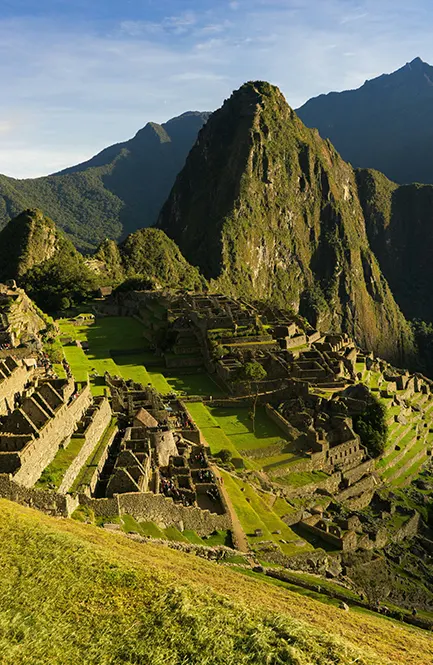
Machu Picchu is primarily characterized by a traditional image that, for generations, has been the iconic image that everyone wants to see. This popular photo is taken exclusively from the top of the famous guardhouse, considered one of the best spots for photography in Machu Picchu due to its strategic location in the upper part of the city. From here, you can enjoy a complete and panoramic view not only of the stone structures but also of the popular Huayna Picchu mountain. It is recommended that travelers who choose to visit this area purchase Circuit 1 or 2, as this is the only way to ascend to the top. Furthermore, those who have the opportunity to enter during the early hours of the day can also appreciate the sunrise, where a golden light floods the entire citadel before it fills with tourists and crowds, as the mist gradually dissipates.
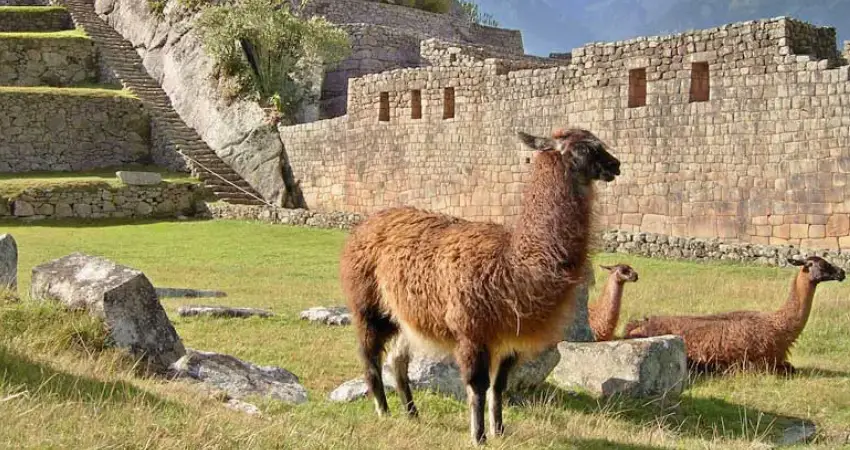
A great tip for capturing one of the best photographs of one of the wonders of the world is composition. Remember to position the citadel in the lower third of the frame, while Huayna Picchu mountain dominates the background. This creates a sense of visual depth, lending an impressive monumental scale to the surroundings. It’s also worth noting that llamas are commonly found near this area, making them excellent subjects for your photos.
9.2.- Sun Gate
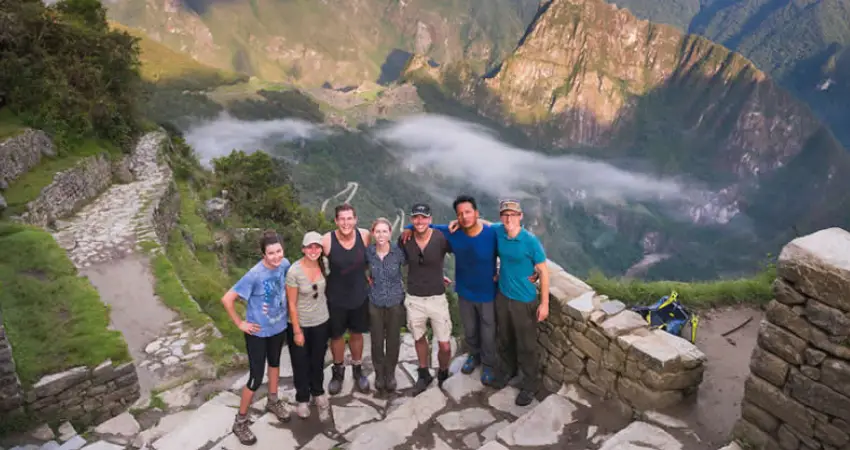
Very few people have the opportunity to reach this remote area, located at the highest point of the entire sector. It’s the traditional point that connects the ancient Inca Trail to the stone citadel. From here, you can appreciate not only a completely panoramic view of Machu Picchu but also the surrounding natural environment and mountain ranges. Travelers generally choose to hike the traditional Inca Trail or the shorter version to reach this point. However, those who purchase Circuit 1 can also do so, albeit with a tighter schedule. Be aware that the hike is quite demanding and is recommended only for travelers in good physical condition.
This experience is designed primarily to offer an iconic view worthy of a film production, providing a unique perspective of this emblematic Peruvian landmark. It generally takes about two hours to reach the highest point, where you can enjoy a direct view, and then return along the same path to enjoy your subsequent guided tour. You’ll undoubtedly find the scenery dramatic, but it’s truly worthwhile.
9.3.- Huayna Picchu Mountain
Of the many places where you can get a unique photo of Machu Picchu, the summit of this mountain is undoubtedly a visual gem. It’s considered the holy grail of photography because you don’t need a drone or to fly over the city to get a panoramic view. Its altitude provides a unique and unparalleled experience for all travelers who venture to ascend its narrow path. Reaching the top offers a different perspective of Machu Picchu, with a shallower depth that blends harmoniously with the varied landscape and geography, resulting in a glimpse of the relationship between architecture and nature. Keep in mind that access is limited to 200 people per day, so availability fills up quickly. It’s best to make a reservation several months in advance.
9.4.- Machu Picchu Mountain
It is one of the highest points in the entire Machu Picchu area. This natural viewpoint is located behind the citadel, and at 3082 meters above sea level, it offers a wide panoramic view of the immense citadel and its surroundings, which are teeming with biodiversity. Compared to Huayna Picchu Mountain, it provides a more dramatic perspective and allows you to forge a deeper connection with the mountainous environment. This mountain is generally recommended for travelers who suffer from vertigo or who cannot complete the steep trail on the other mountain. It is recommended to use a wide-angle lens for better photography, as it is the perfect way to capture unique moments and highlight the expansive Andean valleys.
9.5.- Agricultural Terraces
A fundamental part of this image’s composition is based on the visual patterns that can be directly observed. One of these is undoubtedly the collection of diagonal lines created by the platforms or terraces, which together result in an image of depth that easily draws the eye. Additionally, the natural light from the early morning hours provides lateral illumination, enhancing the textures and relief of the agricultural structures so they can be captured in a photograph with a camera. You can choose to photograph from above or below, as the gradual approach creates a sense of symmetry.
9.6.- Temple of the Sun
The popular Temple of the Sun is considered a sacred structure directly linked to the religious aspect of the citadel due to the fine craftsmanship of its walls. This location is one of the most prized spots for taking a unique photograph of Machu Picchu. Here you can also find a large semicircular window that can easily be used as part of the composition, offering a natural view of the surrounding landscape. For this reason, it is essential to organize the visit starting at 10:00 am, when the natural light penetrates the interior of the structure, highlighting its curvature and the texture of the stones.
9.7.- Temple of the Three Windows
One of the factors that determines the accuracy of a photograph is undoubtedly the symmetry within the structures. This temple is key, as it is a clear example of the architectural mastery that existed within the Inca culture. To achieve a perfect frame of the three windows, use the background mountains as a base and aid, as they contribute significantly to creating a geometric effect within the windows. Furthermore, if you manage to focus closely on the stones, you can appreciate the incredible work done inside this structure, resulting in a different perspective on the constructions within the Inca culture.
9.8.- Inca Bridge
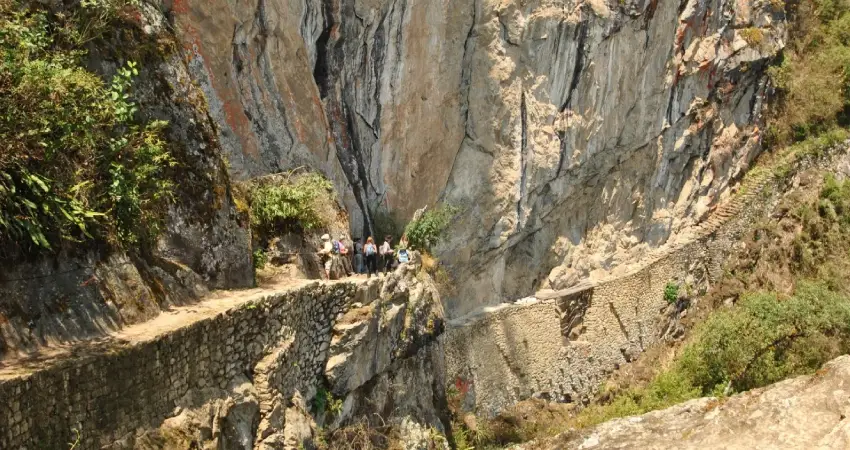
One of the most emblematic yet hidden places within the citadel, its existence known to very few, is located high up, connecting to one of the trails used by the Inca civilization to travel to the various sites that comprised the Tahuantinsuyo Empire. This iconic and striking site is situated near a cliff, offering a unique and breathtaking visual experience. Its presence amidst the rocks and its proximity to the abyss below creates a dramatic and tense image. From the upper platform, a short walk with direct access makes it easily accessible for all types of travelers.
9.9.- Sacred Rock
This area is primarily recognized for its symbolic importance as a miniature version of the immense citadel of Machu Picchu. Many people believe its surroundings directly resemble the mountain’s silhouette due to its similarity to some of the mountains in the background. It has also been interpreted as a complete reflection of Yanantin Mountain, which is widely recognized locally as one of the main protectors of the Andes. To capture this image, a linear composition is required, directly connecting the profile of the rocky mountain with the background. This is best enjoyed during the early hours of the day, as this is the perfect time when the projection of shadows also contributes to the contrast and lighting.
10.- NON-COMPLIANCE WITH RULES
“When the rules established by the Ministry of Culture are violated, there is always a degree of infraction. If it is something minor, it first leads to a warning from the park rangers of the Inca citadel. However, if it is something serious or persistent, people are asked to leave Machu Picchu immediately. In very serious cases, access is completely restricted for people on future visits.”
11.- FAQs: MACHU PICCHU PHOTOGRAPHY
- Can you take a camera to Machu Picchu?
Yes, all travelers visiting Machu Picchu have the opportunity to bring a professional camera. However, it’s important to keep in mind that it should be as lightweight as possible, as elaborate equipment is prohibited. This equipment can disrupt the flow of visitors and even damage the environment. Therefore, you should consider compact, DSLRs, and mirrorless cameras.
- Are tripods allowed at Machu Picchu?
Not all objects used to support or prop up platforms or other structures within the archaeological sites are completely prohibited. Therefore, you cannot bring tripods, monopods, selfie sticks, or walking sticks, as these can directly congest the trails, causing traffic jams and, in some cases, potentially damaging the archaeological structures.
- Are drones allowed at Machu Picchu?
The use of drones is not permitted due to the natural environment and biodiversity. Additionally, efforts are being made to minimize noise pollution and to ensure the safety of the environment and the comfort of other visitors.
- What is the best time of day to photograph Machu Picchu?
There are various times of day when you can get a unique and special photo; however, it’s always recommended to consider the early morning hours to take advantage of the incredible view at sunrise during the first rays of sunlight. This way, you can get an unforgettable photo.
- What is the best spot for photos at Machu Picchu?
Of all the sites and locations within Machu Picchu, the opportunity to get the famous postcard photo is undoubtedly a must. This is only possible from the iconic Guardhouse, located at the top of the citadel. There’s also the option of using the height of Huayna Picchu mountain for an even more exclusive photo.
- How do I get crowd-free photos at Machu Picchu?
The best way to get a clear photo without too many other visitors is to plan your experience carefully. Organize your visit for the early morning hours, which gives you direct and easier access to iconic viewpoints where you can enjoy a more complete panoramic view.
- Which circuit is best for photography at Machu Picchu?
The best option for your next trip is undoubtedly Circuit 2, as it allows you to not only enjoy the upper part of the citadel but also to immerse yourself in its interior, visiting each of its sites to capture exclusive photos.
- Do I need a permit for professional photography at Machu Picchu?
It will always depend on the type of photography you have planned for your trip. Generally, when it comes to personal photos, you can do so freely. However, if you are considering photographs for commercial use, which may include monetization, you will need special permission from the entities that protect and preserve the interior of Machu Picchu.
Now is the perfect time to start planning your next trip to Machu Picchu, as the favorite season for thousands of travelers is about to begin. Auri Peru can help you organize a complete and personalized experience so you don’t have to worry about a thing. Considering the popular entrance fee to visit Machu Picchu, contact us now. Remember that tickets are limited, so you must book in advance.
“Wander often, wonder always.”