

1.- WHAT IS A MACAW CLAY LICK?
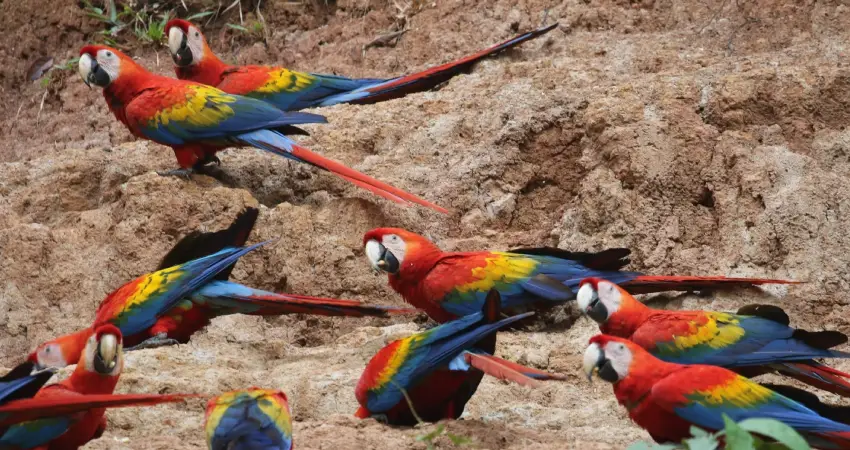
A Macaw clay lick Peru, also traditionally known as a Collpa, is a naturally occurring formation found primarily on mountain slopes near rivers. It contains a wide variety of minerals and is frequented by wildlife such as macaws and parrots. These licks can be observed near cities considered gateways to the Peruvian Amazon, such as Madre de Dios and Iquitos, and within nature reserves like the Tambopata National Reserve. This allows travelers to witness the diverse numbers of birds that gather daily in these areas to supplement their diet with small amounts of clay. This spectacle at the Macaw clay lick Peru is usually best appreciated at dawn and is considered one of the most breathtaking sights in the Peruvian rainforest.
| “To travel is to live.” |
The term “Collpa” originates from the Quechua language and refers directly to places where various animals find a concentration of soil for direct consumption. They seek to consume it due to its high mineral content. Of course, it’s also a colloquial expression for the natural formations visible to travelers, resembling large deposits of mud and silt. These terms are primarily used to refer to these important places that are vital to the life and ecosystem of the Peruvian Amazon, where nutrients difficult to obtain through a natural daily diet can be found.
2.- The Science Behind This Behavior
A Macaw clay lick Peru serves more than just a visually entertaining function; in fact, it is considered one of the most important places in the daily lives of wildlife, especially birds, as it functions as a detoxification center. This is because the variety of seeds and fruits that these species, such as macaws and parrots, consume are constantly exposed to naturally occurring toxic compounds. Thus, it is understood that clay works perfectly as a neutralizing agent, allowing the absorption and elimination of these toxins within their digestive system, enabling them to fully enjoy and utilize the variety of nutrients contained in the seeds and fruits.
Of course, the Macaw clay lick Peru also has a broader scientific explanation. It is believed that this mineral source is primarily a sodium emitter, which is essential in the routine diet of many animals and, at the same time, quite scarce, especially among bird species. Thus, when these birds congregate on a Macaw clay lick Peru, they can consume clay and simultaneously compensate for the deficiency of this mineral, which is extremely important for their development and well-being. The presence of macaws, parrots, and even parakeets can generally be seen, always moving in large groups, resulting in a breathtaking visual spectacle not only of colors but also of sounds. It is considered one of the most beautiful sights in the entire Peruvian rainforest.
3.- WHY MACAWS GATHER AT CLAY LICKS
The first and most important reason why various birds gather in groups at the Peru macaw clay lick is due to the variety in their diet and the release of toxins. Because their basic diet consists of seeds and fruits, they can experience problems related to their composition, as these foods naturally contain toxins such as alkloids and even tannins. Each of these substances is a compound derived from the plants themselves; however, when consumed regularly, they can cause harmful effects. Therefore, the birds have developed a unique feeding habit that has also significantly balanced their diet without compromising their health.
When referring to a Peru macaw clay lick, we mean a large, complete clay deposit, traditionally known as a Collpa, which plays a vital role as a detoxification center. This is primarily because the clay found there acts as a powerful absorbent, gradually eliminating toxins from food and significantly reducing their negative impact on the birds’ digestive system. Additionally, the clay provides other important minerals, such as sodium, which is crucial in the birds’ daily diet and quite scarce in the Amazon region.
It’s also worth noting that its function extends beyond the birds’ nutritional balance. It can also serve as a social gathering place where large flocks of macaws and parrots congregate, maintaining a heightened and constant state of alertness to predators and strengthening the bonds between groups. This is a common behavior, developed collectively, and crucial for the survival of this species, preserving its safety and teaching the younger members of the flock. It is known that the influx of birds in Peru macaw clay lick occurs mainly during the early hours of the day, at dawn, as this is considered the safest time.
This is important because there is less activity among predators, and the weather becomes more suitable. Furthermore, it is primarily related to the birds’ digestive process; after a night of fasting, it is important for them to begin neutralizing the toxins ingested the previous day. For this reason, travelers seeking to witness the visual spectacle of the Macaw clay lick Peru are best positioned to do so during the early morning hours.
4.- WHERE TO SEE MACAW CLAY LICKS IN PERU
4.1.- Tambopata National Reserve
Many recognize it as the best macaw clay lick in Peru, and it’s also the most popular due to its unique location within the Amazon region, in the Madre de Dios province. This is one of the largest protected areas in the country, a place where clay licks remain active for most of the year. It’s also known for having one of the most diverse displays of birds in the entire region where clay licks are active. Here, macaws and various other birds like parrots and parakeets congregate in a constant show of sounds and colors, showcasing the best of the rainforest’s wildlife to visitors from around the world seeking ecotourism activities.
4.2.- Chuncho Clay Lick
Besides being quite popular, the Macaw Clay Lick in Peru, which you can find here, is also recognized as one of the largest in the world. Its location is primarily along the banks of the Tambopata River, making it the ideal place to observe diverse bird species in large groups, providing an unforgettable visual experience for travelers, especially birdwatchers and photographers who constantly come in search of the rarest and most emblematic species in the world.
4.3.- Colorado Clay Lick
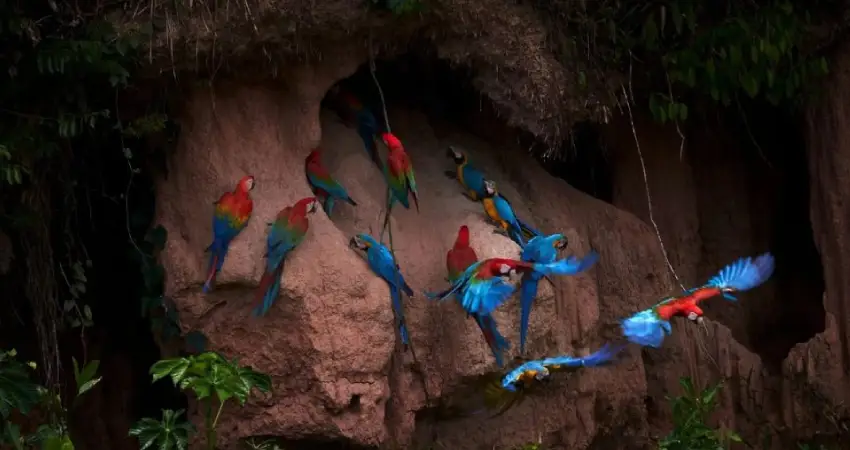
This is a rather special clay lick in Peru, also located within the Tambopata National Reserve. It’s a perfect destination for travelers passionate about exploring Peru’s vast biodiversity. It’s primarily known for its proximity to several eco-lodges, although much smaller than the one found in Chuncho. However, it offers a more intimate and close-up view of the birds, making it the perfect spot for travelers seeking a more tranquil experience.
4.4.- Manu National Park
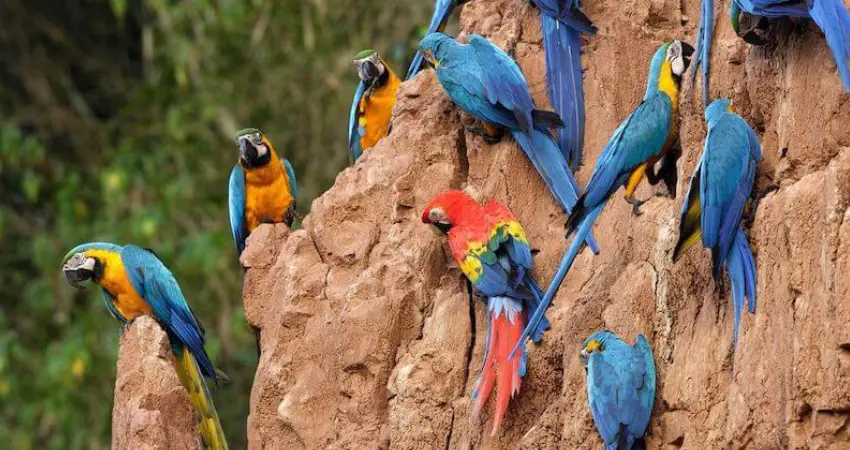
Considered one of the most biodiverse places in the world, it is also known as the best macaw clay lick in Peru for travelers seeking to completely disconnect from the world. It is also known for containing the most important macaw clay lick in Peru. Furthermore, its more remote location compared to other places requires a few extra days to reach from major cities. However, it is always a worthwhile destination due to its pristine natural environment, almost untouched by human intervention, as part of the virgin forest. Visitors can also appreciate a great variety of birds from the exclusive accommodations in the area, thus creating a deeper immersion between travelers and nature.
5.- TYPES OF MACAWS AND BIRDS YOU MAY SEE
A Macaw clay lick Peru is considered a natural area where a large number of diverse birds congregate, essentially seeking a balanced diet by obtaining special and very important minerals. Within the Amazon region, these areas are mainly found in exposed locations along rivers, making them ideal places to appreciate the large numbers of birds such as parrots and macaws that congregate there. However, there are also other, much smaller Macaw clay lick Peru that are discreetly preserved within the Amazon rainforest. Each visit to a Macaw clay lick Peru will offer a different experience, but all will be ecologically and visually incredible, providing a unique perspective on the diverse species that inhabit the environment.
5.1.- Scarlet Macaw (Ara macao)
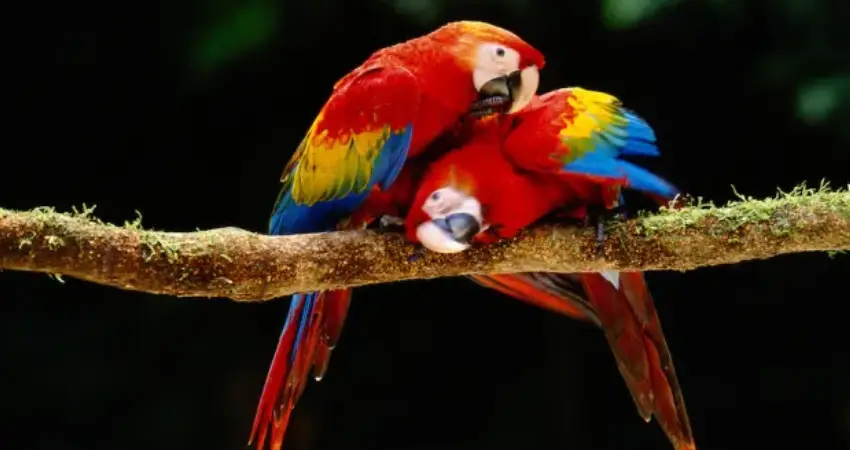
This macaw is quite special, as it is one of the most striking and emblematic birds of the entire Amazon region due to its intense plumage, a red color subtly blended with yellow and blue tones. Its presence is easily observed in large groups within open areas, where a particularly beautiful visual spectacle can be enjoyed during the early morning hours at dawn.
5.2.- Blue-and-yellow Macaw (Ara ararauna)
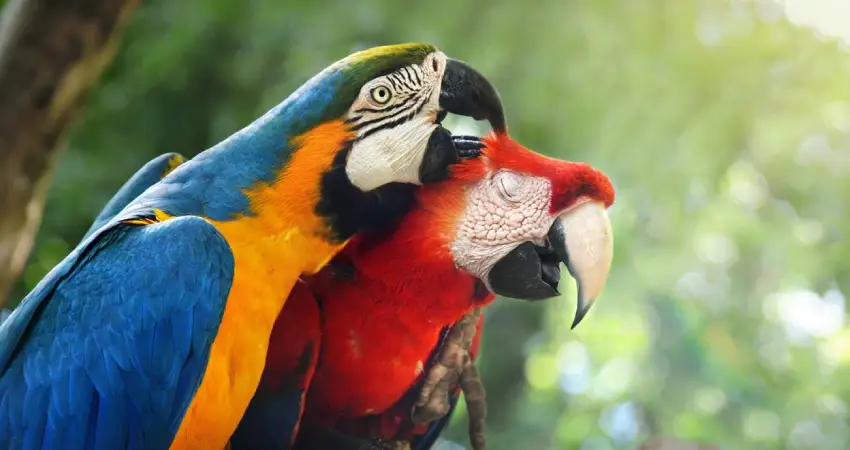
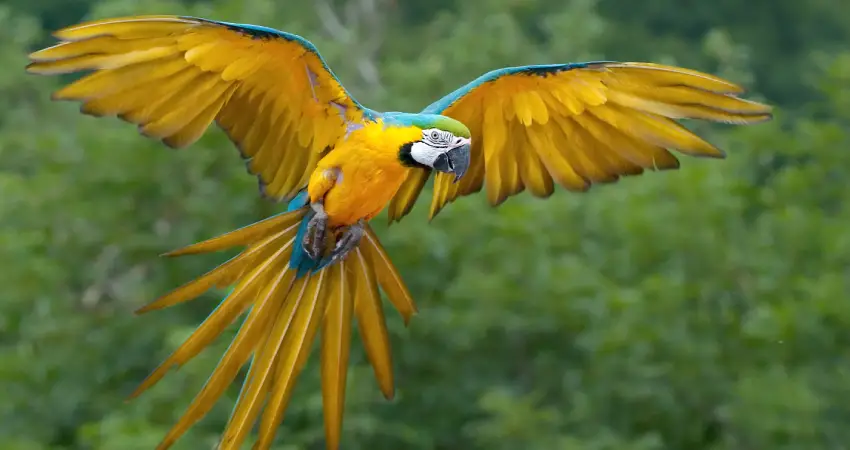
This macaw species is much more distinctive in some regions, characterized by the brilliant colors it displays inside the clay lick. It also exhibits a more sociable behavior compared to other species that can also be seen inside the clay lick. It can easily be observed approaching in pairs or small groups, where they position themselves on nearby branches before beginning to feed on the clay inside the Macaw clay lick Peru.
5.3.- Red and Green Macaw (Ara Chloropterus)
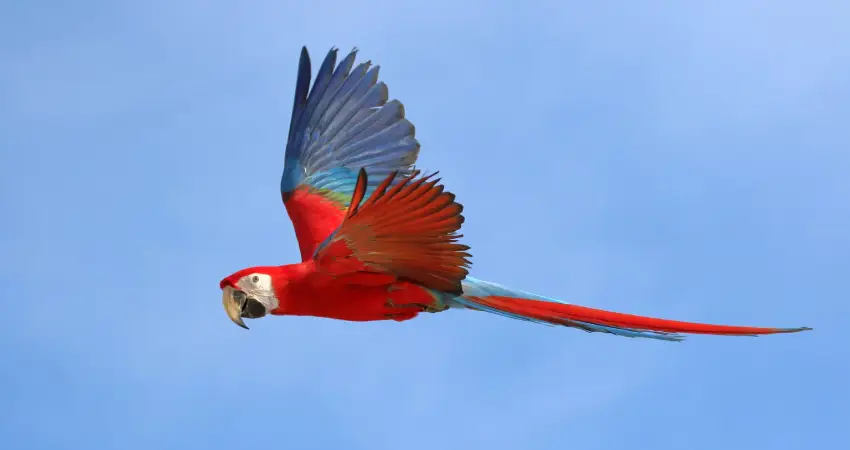
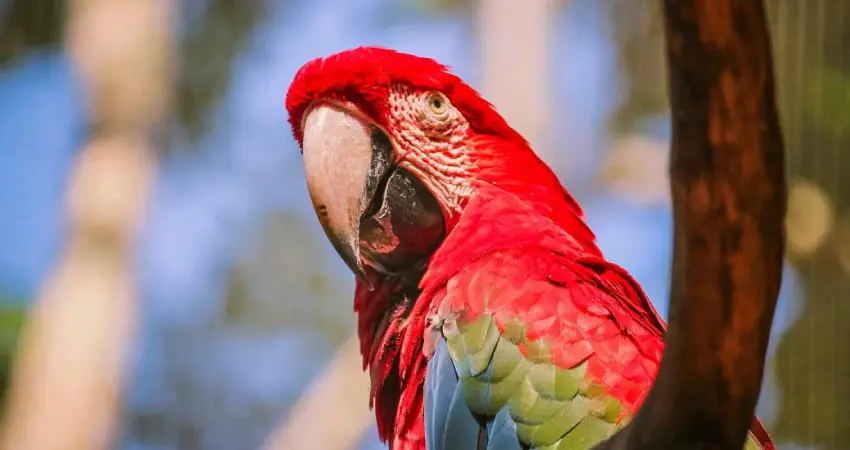
This bird species is distinguished primarily by its distinctive red and green colors, which are traditionally the most recognized. It is also considered one of the largest species in the Peruvian Amazon region. It has a dominant presence within the clay licks of its environment, being quite imposing and occupying a large part of the territory. However, it is quite sociable, sharing the space with other types and species of macaws, resulting in a diverse and visually spectacular display.
6.- IT’S NOT EXCLUSIVE TO BIRDS
“Although these natural areas are generally frequented by birds such as macaws and parrots, they are not exclusively for them. Various species of wildlife use them for the same purpose, so it’s possible to observe tapirs or small rodents, which also seek this mineral for the same reason.”
7.- FAQs ABOUT MACAW CLAY LICKS IN PERU
- What is a macaw clay lick?
It is a natural area characterized by a wall containing a large amount of minerals, primarily clay. This place is quite special because it is where large numbers of birds of various species, such as macaws and parrots, congregate to feed and simultaneously detoxify their bodies of toxins from fruits and seeds.
- Why do macaws eat clay?
It is a natural way in which these birds have learned to consume clay, seeking to neutralize toxins naturally present in the various seeds and fruits they eat in their daily diet. It has also been proven that this area is a source of sodium, which is quite beneficial for the birds’ health.
- Where is the best macaw clay lick in Peru?
There are several places where you can find this type of natural area; however, the most popular and well-known is the Tambopata National Reserve, with the Chuncho sector being the most recognized and largest.
- Can you see macaws all year round?
Generally, yes, parrots and macaws can be seen near these natural areas for most of the year. However, it is very important to note that this primarily occurs during the early morning hours, around dawn.
- What time of day is best to visit a clay lick?
It is recommended that all travelers plan their visit for the early morning hours, around sunrise, as this is the perfect time to observe the presence of diverse birds in groups, creating a unique spectacle.
- How many macaws can you see at once?
The number of birds varies depending on the chosen viewing location, ranging from dozens to hundreds of species that congregate simultaneously within these natural spaces in search of the highly prized mineral.
- Is Tambopata or Manu better for macaw sightings?
Both locations are iconic and unique destinations for enjoying this visual spectacle. It’s important to understand that while Tambopara National Reserve is much more accessible to travelers, Manu National Park offers a more intimate experience due to its remote location.
Your trip doesn’t have to be just for fun; it can also be organized with a special purpose. Remember that when visiting the Amazon rainforest, it’s important to have a sense of environmental responsibility, and all activities should be planned responsibly. Auri Peru has designed suitable options to help you plan a much more immersive and complete adventure. Contact us now, and we’ll provide you with all the available alternatives.
“Explore. Dream. Discover.”