

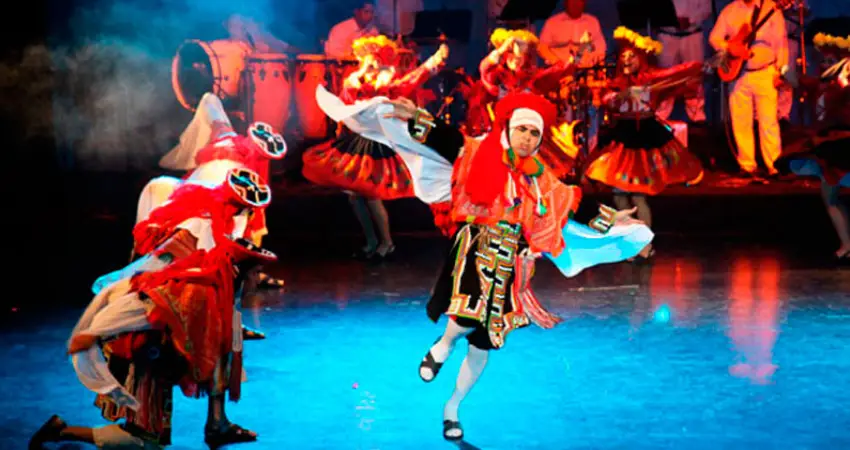
1.- WHAT IS THE CENTRO QOSQO DE ARTE NATIVO?
The popular Cusco Center for Native Art is considered one of the most important cultural institutions in the city of Cusco. Emblematic for its fundamental role in the city’s development, it has sought to preserve art and expression for over a century, promoting and disseminating diverse artistic expressions rooted in Andean tradition. This artistic expression has generally been based on folk dances, live music, and various cultural performances. It has successfully preserved the ancient traditions and ancestral memory inherited from the various Andean villages in the high Andes, thus serving as a unique cultural bridge connecting the past and the present.
Compared to other tourist attractions typically geared towards attracting international travelers, this venue primarily focuses on deepening its cultural foundation. It has also fostered a group of artists, musicians, and even dancers who have forged a deep commitment to Andean identity. Thus, every moment experienced in this performance is the culmination of years of research, practice, and cultural instruction, ensuring the preservation of ancient Andean traditions both within and beyond the country’s borders.
Many recognize this venue as a cultural gem, as it embodies and preserves the essence conveyed through dances, melodies, customs, and even aspects of history that have shaped Peru’s historical development. Each performance not only aims to entertain but also plays a vital role in education and the promotion of culture through the rich cultural heritage of the Andean region. Some of the dances even have ceremonial origins, seeking to further illuminate Andean beliefs.
2.- Part of the Cultural Heritage
Due to its significant cultural contribution, this establishment has also stood out for its historical and artistic importance, resulting in its designation by the Peruvian State as a national cultural heritage site. This designation seeks to further preserve the cultural heritage that has been part of numerous communities and places belonging to the Andean region, thus maintaining the collective identity that exists within this region. Currently, the operation and the Centro Qosqo de Arte Nativo Schedule depends exclusively on the management and collaborative work carried out by cultural directors, artists, researchers, and various teachers who preserve Peruvian folklore almost intact despite the passage of time and the various generations that have come and gone since its founding.
3.- THE HISTORY OF CENTRO QOSQO DE ARTE NATIVO
The long history of this cultural center begins with its creation in 1924 as a cultural institute whose essential purpose is to rescue and preserve Peruvian folklore, as well as to protect and disseminate each of the artistic expressions that exist within the Andean region, serving as a symbol of identity directly linked to pride and tradition. Its origins are also tied to the intellectual and artistic environment that emerged at the beginning of the 20th century. At that time, the fundamental participation was based on writers, researchers, musicians, and artists who sought cultural spaces where they could meet, discuss Peruvian identity, and find ways to protect Andean customs before the passage of time and modernization altered them.
An important aspect to understand is that the idea of creating an institution dedicated to the protection of folklore arose after the return of the Peruvian mission of Inkaiko art. This group sought to promote Andean traditions, primarily abroad, and in doing so, generated a positive impact through performances and increased interest in Andean traditions. This led many intellectuals to organize themselves to create an organization within a cultural preservation center. Among the most important figures of this period was undoubtedly Dr. Luis Pardo, who is also considered the first president of this cultural center. He had a vision focused on preserving the music, dance, and traditions that, within the Andean world, represented a fundamental part of its identity. His leadership was crucial in consolidating the center as one of the most important institutions dedicated to the study and promotion of Andean folklore.
4.- Golden Decade
After its founding, the institution experienced significant growth and popularity in the following decades, from 1930 to 1960. During this time, it undertook numerous tours throughout Peru, seeking to promote and encourage the artistic traditions of the Dina regime. This increased the national recognition of Cusco folklore and its impact on Peruvian cultural development and identity. This period also marked a golden age for various traditional dances, allowing them to be taught in diverse locations. As a result, the cultural institution achieved a much stronger reputation and became one of the most important cultural institutions in the country. However, a particularly noteworthy event occurred in 1969 when it participated in the Ambato Festival in Ecuador, winning the Capulí de Oro award. This moment was fundamental and significant, marking a historic turning point for the institution and giving it a much broader artistic value on the international stage.
5.- Currently
This institution remains a symbol of cultural resilience in the face of the passage of time and is recognized as one of the most popular in the city of Cusco. Of course, with technological advancements and social changes, it is natural that many aspects of Andean culture have been reinterpreted or reinstated. However, this place seeks to preserve what is most important, thus consolidating a symbol of Andean pride. For this reason, it is necessary to consider modifying the Centro Qosqo de Arte Nativo Schedule so that it can be ideally adapted to the schedules of guided experiences or activities within the city of Cusco, easily accommodating each traveler’s planning. Furthermore, the Centro Qosqo de Arte Nativo Tourist Ticket should be much more accessible to avoid complications when obtaining it.
5.- THE SHOW: WHAT TO EXPECT AT CENTRO QOSQO DE ARTE NATIVO
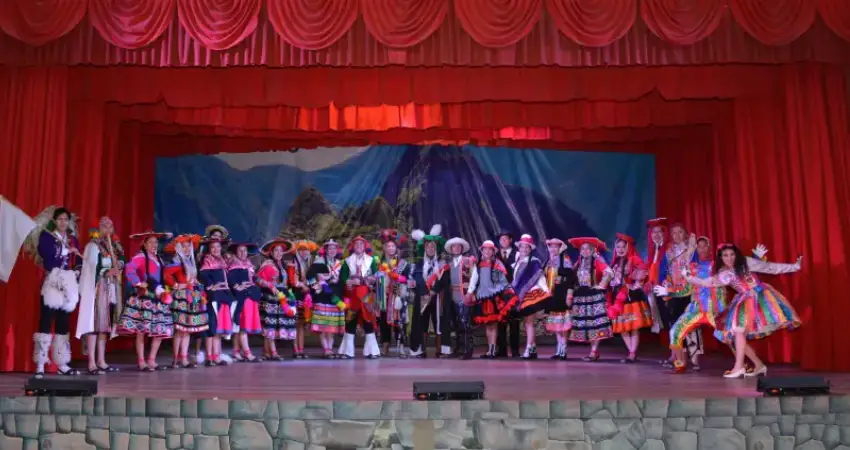
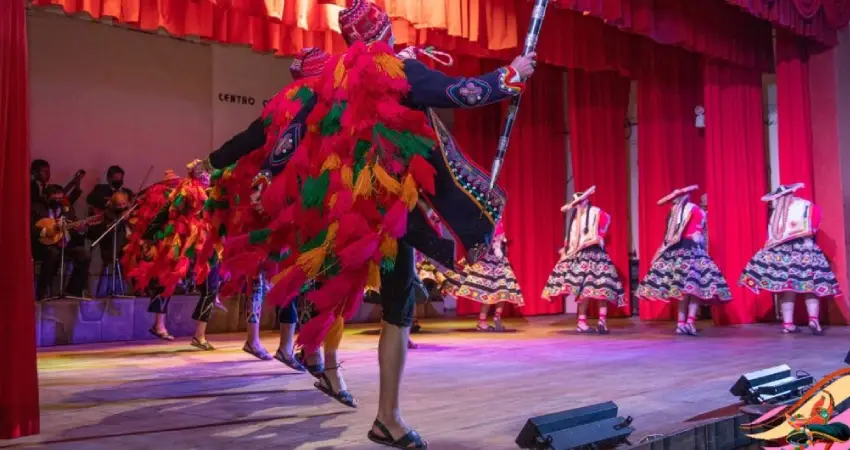
Visiting this cultural center today is not just about enjoying a live show; it’s about forging a special connection with the ancient Andean culture and traditions of this part of Peru. Generally, when you purchase the Centro Qosqo de Arte Nativo Tourist Ticket, you’ll be informed that entry is primarily at night, when musicians and dancers of various disciplines gather to present a performance that represents the history, spiritual essence, and cultural diversity of the region. This unique combination of dance, live music, and vibrant costumes expresses transcendental ceremonies, allowing the audience to learn more about this special artistic legacy. Many people are unaware that this spectacle is truly unique, making it one of the most authentic cultural experiences a person can enjoy during their trip to Cusco.
| “Life begins at the end of your comfort zone.” |
Please note that this experience lasts approximately 1 hour and 30 minutes, generally starting daily at 7:00 pm and ending around 8:30 pm. This allows each visitor ample time to fully enjoy the show and then experience some of the nightlife. The show essentially begins with a musical introduction, followed by a series of traditional choreographies representing the diverse regions of Peru. Each dance conveys a unique narrative through its costumes and musical style. This narrative culminates in a grand finale where each artist and musician expresses their joy for Andean cultural diversity. Each performance includes a brief introduction in both Spanish and English, ensuring that all participants have the opportunity to experience a taste of the traditional essence of the Peruvian Andes.
5.1.- Diverse Traditional Dances
There is no doubt that the presentation of dances and artistic expressions at this cultural center is truly varied, as each one showcases a part of history and how its importance has been consolidated over time. Some are so traditional that they maintain their pre-Hispanic roots, while others have perfectly reflected the passage of time and how multiple Andean traditions have seamlessly blended with the colonial legacy.
5.2.- Cusco Huayno
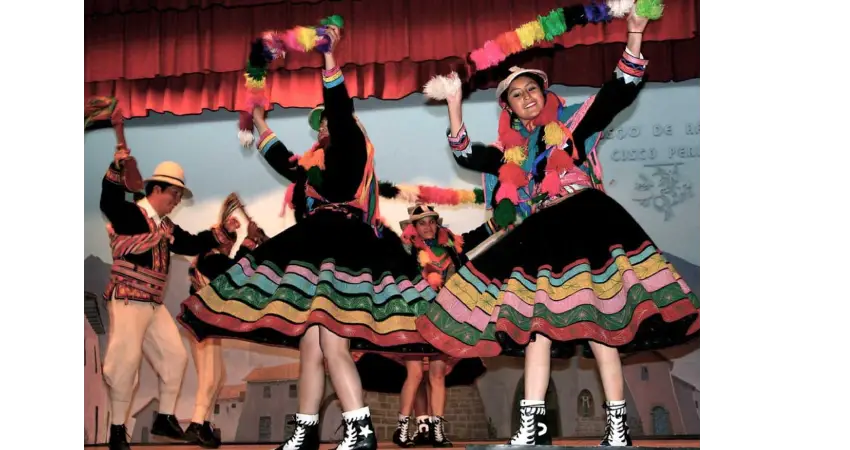
The list of the most recognized dances at this venue undoubtedly includes the Cusco Huayno, which is considered one of the most emotive in the Peruvian Andes, mainly due to its melodies, which evoke melancholy but are simultaneously accompanied by joyful movements that are a vestige of traditional love, nostalgia, and a connection to the community.
5.3.- Cusco Carnival
It is also important to highlight the Cusco Carnival, which stands out primarily for its vibrant colors, joyful and festive music, and strong sense of community. Its melodies mainly convey joy and a collective celebration, which is generally held before Lent.
5.4.- Scissors Dance
It is also very emblematic to appreciate the popular Scissors Dance, a unique combination of acrobatic movements and a meaning much more closely linked to the spiritual. Thanks to UNESCO, it has been recognized as an Intangible Cultural Heritage of Humanity, a perfect representation of the connection between the Andean world and the spiritual world.
5.5.- The K’achampa
This is a traditional dance from a province within the Cusco region known as Chumbivilcas. It is primarily known as a war dance that seeks to symbolize bravery, pride, and strength in every energetic movement.
5.6.- Contradanza
It is an example of how the European presence was considered a reinterpretation of the existing tradition; its influence was a very important aspect that deepened as part of the cultural expression where colonial tradition and Andean symbolism are elegantly combined.
5.7.-Tarpuy
This is a traditional dance from the Andean region, representing agricultural traditions beginning with the planting process and the centuries-old connection with Mother Earth. This dance is deeply cultural, featuring ceremonial movements where each participant simulates ancient rituals associated with agricultural processes, rituals that remain part of Andean tradition to this day.
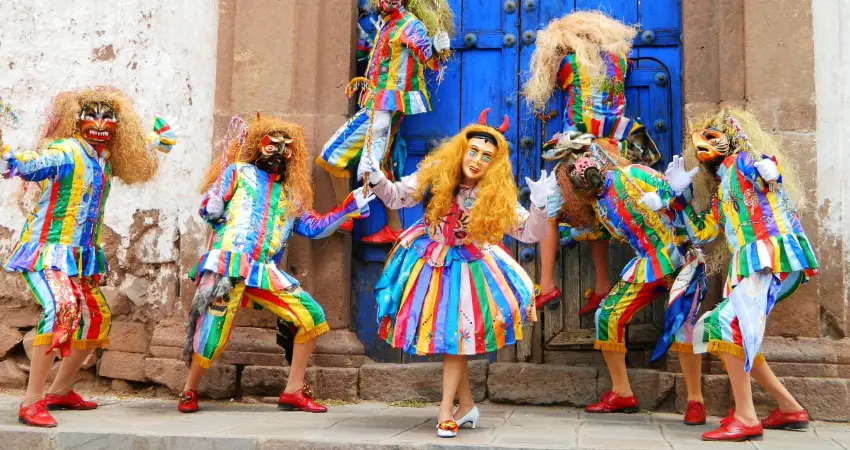
5.8.- Saqra
Considered one of the most striking dances, Saqra stands out primarily for its demonic masks and surreal movements, which can be interpreted as theatrical. It combines various religious elements with satirical humor, all considered a spiritual representation.
5.9.- Wallatas
This dance not only incorporates cultural aspects but also reflects the biodiversity of the Andean region. Inspired by the birds of the Andean highlands, it features elegant and synchronized movements that blend seamlessly with the natural environment and the communities located high in the Peruvian Andes.
5.10.- Anti Tusuy
One of the few Amazonian dances that are also part of the Andean tradition due to their proximity, this dance showcases the use of unique elements of Amazonian culture within an Andean performance. This diversifies the culture within the country and reinforces the enduring connection that has existed for generations between the enigmatic rainforest and the impressive Andean region.
5.11.- A little about the music
You should also know that one of the fundamental aspects of this performance is undoubtedly the harmonious melodies that permeate every corner of the setting, creating an emotional atmosphere that seeks to strengthen the connection between the traditional dances and the visual spectacle. In this way, it’s possible to appreciate how musical instruments belonging to the Andean tradition, such as the quena, charango, bombo, and zampoña, are generally used on stage. These are essentially the most important instruments when it comes to bringing an Andean sound to life. Each of the tones seeks to convey diverse emotions directly related to the natural environment, the immense mountains, and, of course, the daily life of the local people. This live performance aims to create an authentic and real connection with each presentation, resulting in a more positive energy and allowing artistic improvisation to forge a stronger bond between the audience and the artists.
5.12.- Aspects of the Costumes
Each dance also showcases a different aspect of artistic expression, as each piece of the dancers’ attire is generally presented as a work of textile art. This art is not only functional for the dance itself but also a clear reflection of the historical process, as well as the Andean worldview or beliefs. Each character displays the use of diverse colors, elements, and symbols that are constantly present in the costumes, carrying cultural significance that is generally related to nature. In other cases, a more symbolic meaning is also conveyed, such as fertility, Andean mountains or protectors, the spiritual world, and even various cultural festivities held throughout the year. The variation in clothing always depends on the region it represents, as well as the ceremonial context. In some cases, the presence of colonial garments can also be observed, which seek to preserve Andean designs but with the influence of the colonial era.
6.- FIRST FOLKLORE INSTITUTION IN THE COUNTRY
“It is important to know that this is the first folklore institution established in Peru that has sought to delve deeper into the research and dissemination of traditional Andean arts. For over 100 years, it has become an emblem of intangible cultural heritage protection, which is very important within the country. Since its founding in 1924, it was supported by intellectuals, artists, and even local citizens of Cusco who sought to rescue and preserve Andean traditions that, over time, can often disappear. It is the perfect place to complement your visit to the most important sites in the city of Cusco during your next trip.”
7.- FAQS: CENTRO QOSQO DE ARTE NATIVO
- What is Centro Qosqo de Arte Nativo?
It is a cultural institution recognized in Cusco and throughout Peru as the country’s first folkloric organization, dedicated primarily to the dissemination and preservation of ancient Andean traditions through artistic expressions such as dance and live music.
- What time does the show at Centro Qosqo de Arte Nativo start?
Performances at this cultural center begin around 7:00 pm daily and last approximately 1 hour and 30 minutes. This duration allows ample time to enjoy all the day’s performances.
- How much does it cost to enter Centro Qosqo de Arte Nativo?
Admission prices vary depending on the type of visitor. For foreign visitors, the price is generally S/20.00 per person, while for Peruvian citizens, it is S/15.00 per person. A 50% discount is typically offered for children.
- Is Centro Qosqo de Arte Nativo included in the Cusco Tourist Ticket (Boleto Turístico)?
Yes, for travelers who purchase the full tourist ticket, which is valid for 10 days, in addition to historical sites like museums and archaeological centers, there is also the opportunity to attend a performance at this cultural center.
- How long is the show at Centro Qosqo de Arte Nativo?
It lasts approximately 1 hour and 30 minutes, which is ample time to properly plan a sequence of dances with live music and to enjoy a cultural interlude with a performance and brief introductions between each dance.
- Is Centro Qosqo de Arte Nativo worth visiting?
Yes, every minute inside this cultural center is truly worthwhile and is geared directly towards travelers and people seeking to forge a stronger connection with Andean culture in an authentic and intimate way. This show undoubtedly offers the opportunity to enjoy not only traditions and festivities but also a genuine artistic display that has been preserved intact for generations.
- Do I need to book tickets in advance for Centro Qosqo de Arte Nativo?
It’s not necessary to purchase tickets in advance; you can buy them directly on the day. However, you should consider coordinating your visit beforehand to avoid any complications.
Cultural trips to Cusco offer travelers the opportunity to connect with an ancient legacy within a culture that has remained vibrant for generations. Auri Peru is one of the few companies that allows you to create these purposeful journeys of discovery, ensuring that every minute of your trip is unique and unforgettable. Contact us, and we’ll help you create a great adventure.
“Leave the road, take the trails.”